profile in poetics: Danielle Vogel

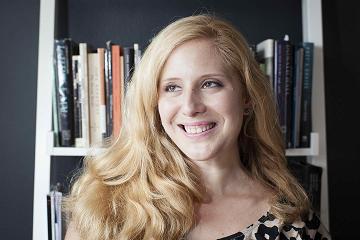
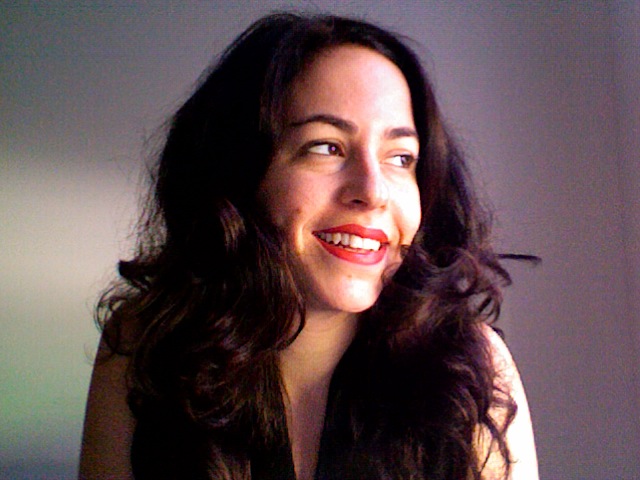
2Danielle East Beach August 2014

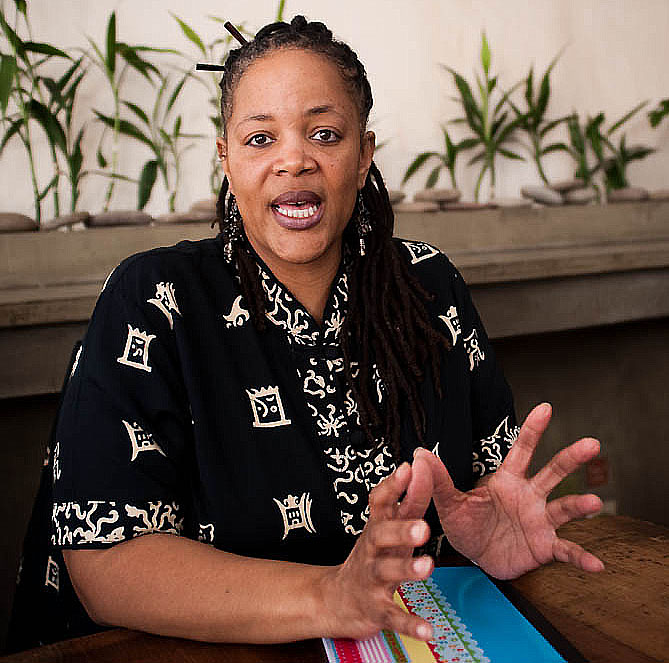
Danielle Vogel

Websites:

daniellevogel

lavaguejournal.com/lavague01/vogel

noemipress

How the writer processes life informs language. The molecular cerebral-woven sensuality of moments brings to fruition capacitates of life in both trauma and commemorating materializations of concrete beauty. In an essence of life that is distributed to the page, inscription is not only an act of love, but also the ebb and flow in the ways in which it holds the reflections of the sky with branches of shooting stars; swimming in the middle of a school of circling fish; speeding on a motor scooter through the rain. Danielle Vogel is a writer inspired by how language is able to participate in a conversation with the self. The cellular and the spiritual act of reconstructing the prisms of self-definition and how the integration forms, heals, and embraces the divine in both life and writing. In this way language is matter, with the ability to hold balance and inspire a change of greatness.

As a child, Vogel was deeply connected to her mother, she states, “my senses were an extension of her senses,” and in this sense, she “learned to let language shore up around [her],” in the same way that she “liked to drag [her] fingers over the [newsprint] until they became stained with ink.” In this way the cognitive reasoning and instability that she found within her bones was able to slow and organize. She says this shadow: “gave [her] a sense of tactility, a skin to encase [her] thinking;” to experience language “viscerally.” The viscerally places the body back into the language of mind and body, experience and story, language and enumerative living of one in both words and ligaments.

The body in this way is then returned to a state of elements in the same way that it is processed through sensory living. She iterates, “I want to make bodies and meet bodies through words … I want to return language to the elements, to their origins. I want to return my body to the elements … I try to energize new synaptic patterns through the contortion of grammar.” She highlights the focus of our interview with her book, Between Grammars, forthcoming spring 2015 from Noemi Press. The lineage of the letter and the self and the body is contained in the expression of communication that we choose to enumerate. She states, “I believe each letter contains an archive, a lineage of all its origins. I believe language is capable of being changed and of changing. Of design and reformation.” The transformative possibility of this in life and lesson is one of being aware and open to possibility. And, as she states it calls upon the reader, “to become an active participant—almost a possessed lover—in the construction of the absent character,” one that is at once in focus and out of focus as they participate in the adventure.

Danielle Vogel is an artist and writer who grew up on the south shore of Long Island. She is the author of Between Grammars (Noemi Press 2015), Narrative & Nest (Abecedarian Gallery 2012) and lit (Dancing Girl Press 2008) and has exhibited her work at RISD Museum, The University of Arizona’s Poetry Center, and Abecedarian Gallery. She is currently a visiting writer teaching at Brown and Wesleyan Universities.

.
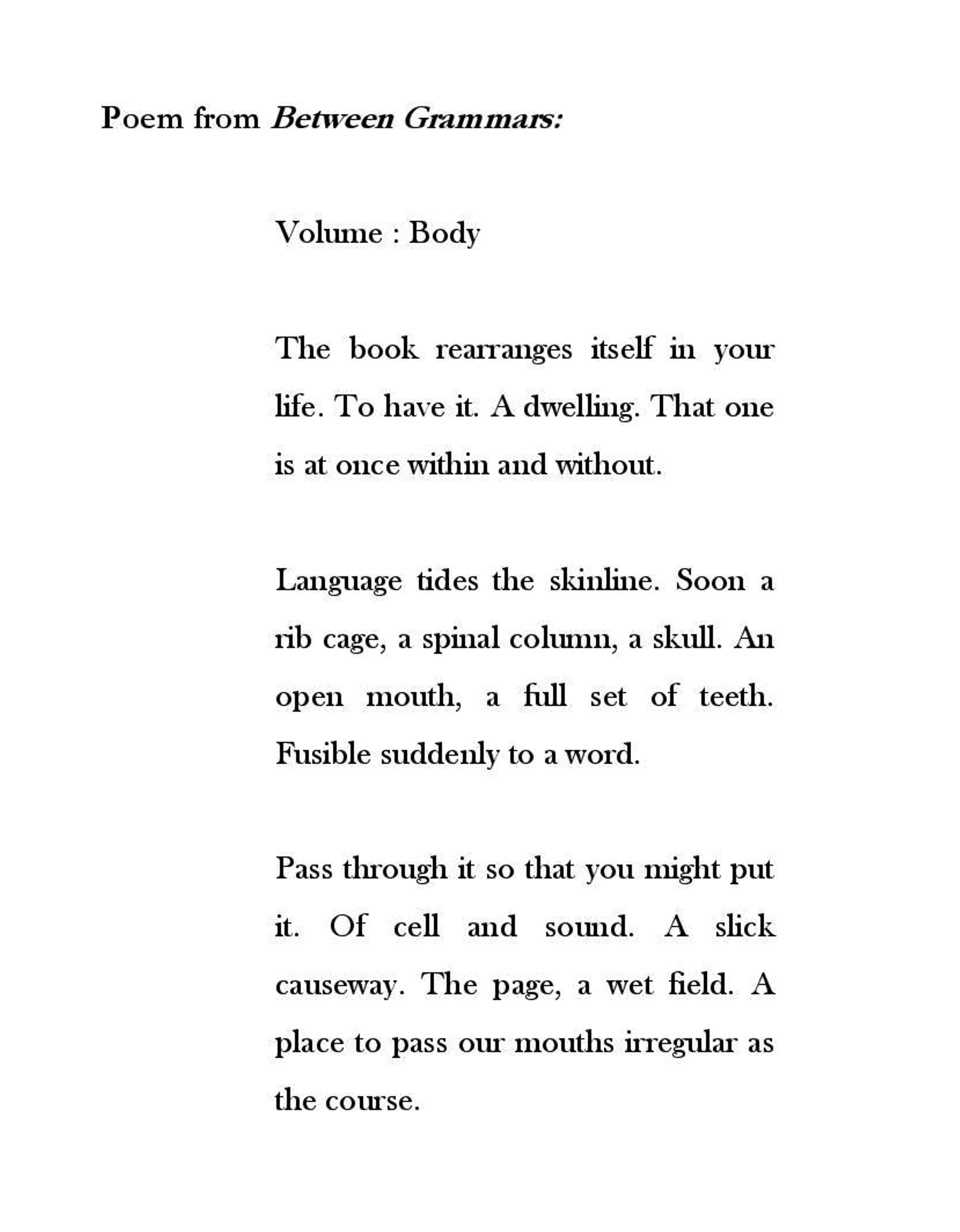
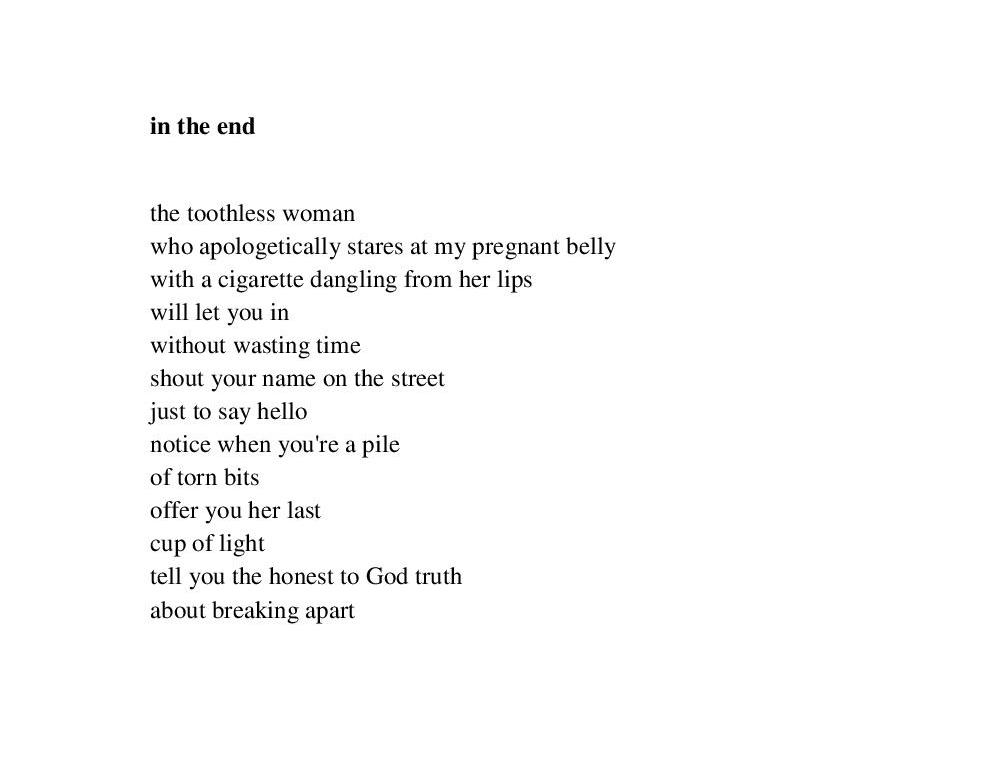
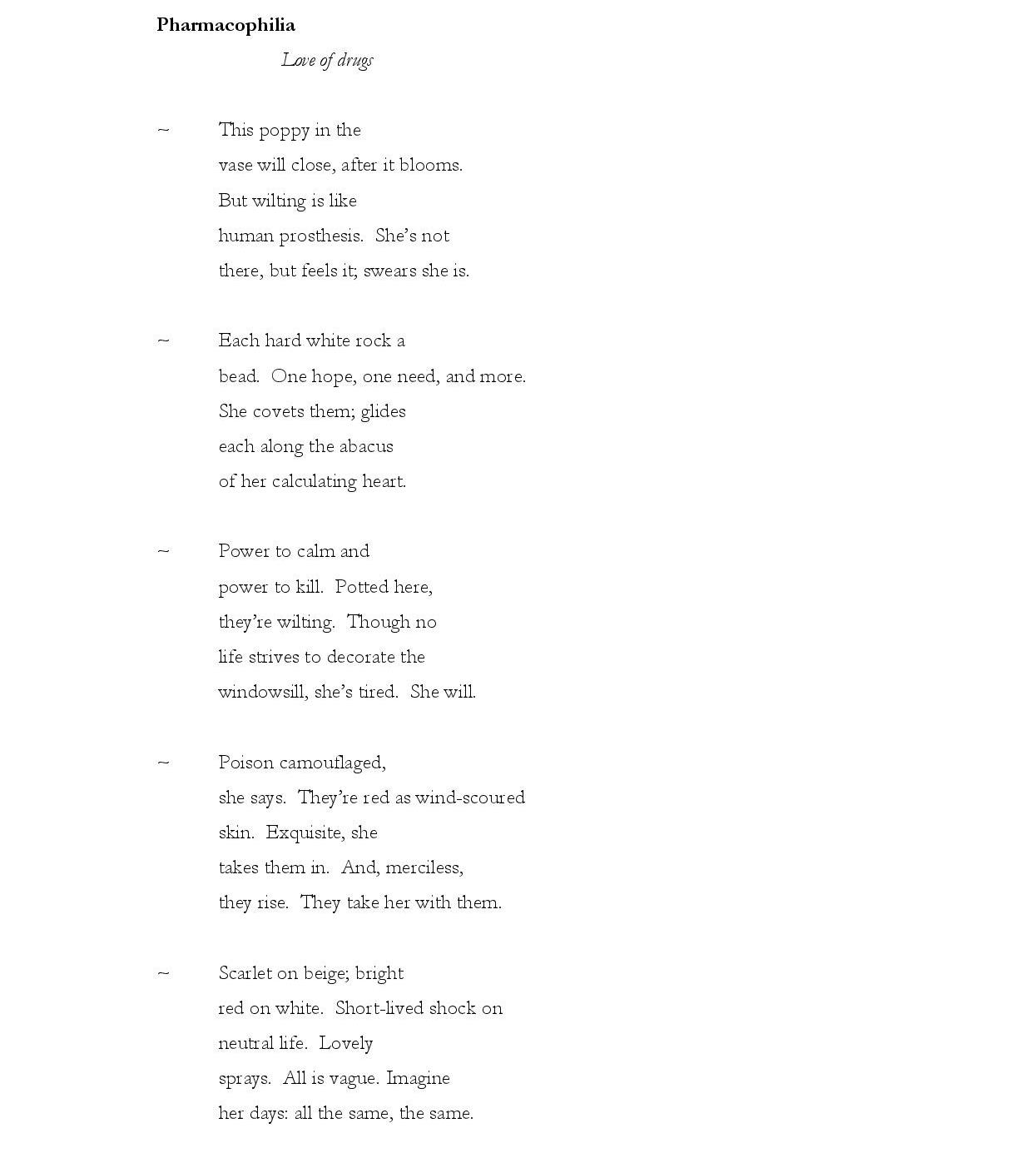
5Poem from Between Grammars-page-001

.

  • What were the first inspirations that made you desire to become a writer?

My desire to write began when I began. I grew up on the south shore of Long Island where I was an only child for nine years. I shared most of those years with my mother. We had an unusually close relationship. The result of our connection was that the only physical body I understood to exist was my mother’s. My senses were an extension of her senses. My experience of being a person began through my consciousness, which seemed to have no skin to enclose it. Whatever linked most people’s voices to their forms didn’t seem to exist for me. My thinking was my body. I was composed of thought-experience, a spectral sensitivity that felt to me like a concentration of light and electricity. 

As a child, I was sometimes afraid of my own living. I existed. I was alive. And for some reason I held a lot of panic, shame, and guilt about that reality. Living—in my body—didn’t seem to belong to me somehow. In order to mediate that feeling, I learned to let language shore up around me. Language gifted me a corporeality that my own bones and skin couldn’t. At 3 years old, I can remember sitting on the floor with a newspaper spread out in front of me. I couldn’t read, but I could pretend to. I liked to drag my fingers over the print until they became stained with ink, with the act of inscription and reading.

My mother also loved words. She kept notebooks of words, their definitions, and etymologies. Before I could write, I would watch her write in these notebooks and feel myself writing. As a child and young adult, the only time I experienced my own private form was in the practice of reading and writing, even if I was only pretending. As I read and wrote, I became a home within a house. I was within my own living in a way that felt safe. It wasn’t that I was living inside what I was reading or writing, but that these acts composed a kind of internal intimacy for me. As I read, I felt organized, contained; I felt touched. It wasn’t about imagination—my reality wasn’t transformed—but instead it was about a bridging between my voice and my body. Somehow, through those acts, I not only experienced a kind of communion with whatever was being read or written, but I also met myself in a way that felt impossible at most other times. Language slowed the world for me; it gave me a sense of tactility, a skin to encase my thinking. I know now that this was a form of dissociation, and, over time, I’ve realized the many gifts of this way of experiencing the world. This feeling of living at the sill between presence and non-presence is why I’m a writer, why I’ve chosen language as my primary medium. It’s these feelings that I’ve been working through in my first three books: Between Grammars (Noemi Press 2015), Clasp (under consideration), and A Library of Light (in-progress), books I’ve been writing for the past eight years.

.

  • Who are your favorite writers and how did they change over time?

The first books I remember—and this is pre-reading time to the time I was about 9—are a pictorial-dictionary outlining the Rider-Waite Tarot deck (this was my mother’s book when she was a teenager), a children’s bible with a bright yellow cover, and a book about the lives of women saints, which I still have. I received the bible and book of saints from my mother’s mother who was very religious—she voluntarily cleaned a catholic convent and church weekly—and thus was mortified that I lugged around this Tarot book whose cover was foxed with mold. The children’s bible terrified me. There was so much blood! There were so many wounds. I became obsessed with those gaps into the body. I used to touch the pages, close my eyes, and imagine that I was sealing up all the wounds. The book of saints deeply affected me. As I read, I felt as if I had known all of these women. In 2nd grade, I was able to bring something in for show-and-tell once a month. For some months, I brought myself in dressed and acting like one of the saints I was in awe of.

As a teen, I kept what I called “holy books” on a shelf directly above the head of my bed. These were Walt Whitman’s Leaves of Grass, Kahlil Gibran’s The Prophet and Sea and Foam (again, my mother’s books from when she was a teen), Francesca Lia Block’s Dangerous Angels, Sylvia Plath’s Winter Trees, Virginia Woolf’s The Waves, Annie Dillard’s Holy the Firm, and Anaïs Nin’s House of Incest.

In my twenties, I fell in love with women who wrote about the act of writing. Women who helped me to understand that language—in all iterations—is always a physical act; language is always a verb. These women are: Marguerite Duras, Clarice Lispector, Hélène Cixous (who I didn’t read until I was 29! I felt like I had just been given the biggest gift.), Jeanne Hyvrard, and Carole Maso.

Now, in my thirties, I’ve mostly been reading books on visual artists to help me better understand my writing practice. How language looms us through sight and sound to time, to presence, and also non-presence. I’ve been looking especially to artists whose work acts simultaneously as a tool for divination: Hilma af Klint and Emma Kunz. But also to artists who work primarily with grids, hinges, and clasps like Gego, Lenore Tawney, Ruth Asawa, and Agnes Martin. These artists have helped me to think not only about the invisible implications of language, but also about its bulk, its physicality—how it knots, clasps, extends.

.

  • Who have been the creative inspiration / mentor writers in your career?

My teachers: Anne Waldman, Akilah Oliver, Selah Saterstrom, and Bhanu Kapil.

Anne and Akilah for holding space. For demanding that we—their students—do the work required to make change in the world. To see and speak for the voiceless places in history. Selah for helping me to see better. For teaching me to track and learn from my writing tendencies. And for helping me understand that each and every manuscript arrives with its own blueprint, we need only to open ourselves to communicating with our work in order to read and learn from that blueprint. Bhanu, who told me during my first year at Naropa University where I received my MFA that I already had all I needed within me to be a writer. That charged my writing life. I’m sure she’s said that kind of thing to many writers, but for years, whenever I felt desperate, I was able to call up that sentiment.

These women are fierce in their living and in their work; in fact, the two are often impossible to separate. I feel blessed to have been able to learn from and work beside these artists, to carry what I learned—and continue to learn—from each into my practice of living, writing, and teaching.

Outside of the writing community, my father’s mother has been one of my greatest supporters. Her name is Violet. I still send her all of my work. She also gave me my first divinatory tool—a pendulum—when I was five years old.

.

  • How has your own work changed over time and why?

My work is directly influenced by my practice as a visual artist, ceremonialist, and diviner. Alongside each of the books I’ve written, and am currently writing, there have been physical components—textile and ceramic exhibitions, public and private ceremonies—that have helped me to understand what my books are trying to become as I write them.  

I have also been fortunate enough to be a part of innovative writing communities that have nourished me. My work is in direct communion with the Front Range writers in Colorado (especially those involved with Naropa University’s Summer Writing Program, The University of Denver, and Counterpath), those who run and come through the Poetry Project in NYC, the Belladonna* Collaborative in Brooklyn, and, most recently, the writers and artists in Rhode Island and Boston.

.

  • Have you been influenced by different genres, and if so how?

Oh, definitely. I have been influenced by everything and write through many genres. I especially love to read etymology dictionaries, the diaries of naturalists and clairvoyants, artist daybooks, artist monographs, books about natural sciences, animal architectures, ancient herbals, lamentation and trauma theories, and books on divination.

.

  • What are your plans for the future?

Goodness. To keep my heart open and to write from and for that openness.

More specifically, I want to finish A Library of Light, which is the barest and most vulnerable book I’ve written so far. I am also writing an extended version of Narrative & Nest, an artist book published in 2012 in conjunction with my ceramic exhibition at Abecedarian Gallery. I am working toward future exhibitions in porcelain and hand-harvested clay alongside the writing of A Library. As well as working with Iceland/Los Angeles-based Theater Artist Samantha Shay as she adapts A Library of Light for the stage.

.

  • What are your views on writing by women as it has occurred in the past twenty years?

I don’t know how to answer this question. I don’t feel qualified somehow! But I am a woman and I have been alive longer than twenty years. I am carried by this writing. I am in constant conversation with it. I am a writer because these women have made room for my voice.

.

  • Who are promising women writers to look at in the future?

There are so many that I could never name them all. Some presses that I look to are: Dorothy, a publishing project; Belladonna* Collaborative; Noemi Press; Rescue Press; Nightboat; Counterpath, and Kelsey Street. Poet Jennifer Pilch runs an incredible online all-women’s journal bridging visual art to poetics called La Vague. And Two Serious Ladies is an online journal I visit frequently.

.

  • If you were asked to create a flexible label of yourself as a writer, what would it be?

Writer. This word contains all possible iterations.

.

  • If the field of the page is infused, as you say, in your poem, “Volume : Page,” “in space through the / speaking. The wet membrane, / syllables sound,” we internalize and embody our language. Language then becomes knotted on the cellular level. In this way to change language do you think it is possible to embody, as you say, “the present tense. / A trellis of water. A wet column of / words to walk through,” if the encounter of the word is a body within itself?

I think I’ll be answering this question for the next twenty years in my work. It’s one of the reasons I write. I experience language viscerally. It feels like a body against and inside of my body. I feel conjoined, deranged, unhinged, soothed, cleaved, and presenced to and by it. For a long time, language was the only sensual body I felt safe inside of. So much happens on the bodily level—physically, through desire, invisibly at the level of my cells and synapses, and whatever this electrical feeling in my body is that animates my thinking—that I’ll never understand. And all of it happens in a continuous present where I am reaching out—with my thoughts, with my language—in all directions through time and space and desire. I imagine a halo. I imagine a mandala of light. I imagine something with heft and a life of its own: my thinking and all it encounters.

I want to look at these questions through language. I want to place my thinking and my physical desire next to it in my books. I want to make bodies and meet bodies through words.

.

  • Can you describe your motivation for placing this animal “hide” of language in a landscape underwater? We read, “She is learning to breathe underwater. / With each sound, a surfacing. She / says:,” and later, “maybe ) ( your ) ( arrival ) ( my ) ( / body a ) ( thick ) ( rope ) ( of noise ).” How do you view the relationship between the molecular structure of sound, self, and language, and its movement through water?

I began a ceramic practice in 2006. Alongside the first vessels I sculpted, I wrote a tiny book called lit, which Dancing Girl Press published in 2008. That book places language underground where the words take shape and erode and cast light in this buried landscape. That book was a small investigation into language’s relationship to disassociation and its ability to both erode and repair the landscape of a body. Between Grammars is an extension of that early investigation. Here I pull language through the element of water while thinking about the symbiotic relationship between a writer, language, and her reader. And I continue this investigation in my next two books: Clasp and A Library of Light. In Clasp, I pull language through the places where water meets land. And in A Library, I pull language through light and ether. I am doing this for many reasons. I want to have more bodily understanding of the somatic interdependence between language and presence. Between form and disjunction. Between the physical and ethereal parts of a body. Between people. I want to return language to the elements, to their origins. I want to return my body to the elements. And in doing so, I have this idea that I’ll better understand my own physicality. That I’ll feel healthier or more in and of the world.

.

  • The intimate relationship that the writer has to her language is reciprocal. She, you write in the poem, “Volume : Book,” is “waiting. Flooded by the book./ She floods the book in return. / Watershed, she floats below the lip. / And the little words are with her in the / dark.” The body as it is pronounced through the field of the page is a bit of her, a whole of her, a song of the ligaments of an inhalation. Language then becomes a limb, a cerebral cortex, an emotive extension of the self. How do you believe that language, as we read, “Unblotted through the body. / So exposed. A piece of her. A letter, / liable. On paper or on language,” changes the writer? Do you believe that the writer changes the letter or the letter changes the writer? In broadening the canon, then, does language become part of the feminine? How does the imagination interplay with this space? What part of the writer lives her life as a poem? Is there a difference and what is the importance of the difference?

First, I just want to say how honored I am to have my work read and responded to in these ways. Your questions get at the marrow, the very cellular structure of my work. And because of that I find myself writing alongside your questions instead of answering them outright; I hope that’s okay.

I don’t know if the physical act of writing changes the writer, but I’d like to believe it does. I think it does. What I understand is that memories compose synapses within in the body. When we learn something new, strings of synapses are created or old sequences are adapted to include the experience. As I write, I try to energize new synaptic patterns through the contortion of grammar. I write in a way that, for me, might heal through a reconfiguration of past experiences. I believe language holds this capacity. Or, at least, I really want to believe that it holds this capacity. That it can enter the body and rework the muscle of past experiences. That it can locate areas of numbness and release residual traumas. That it can create endless opportunities for proliferation and reparation.

I believe each letter contains an archive, a lineage of all its origins. I believe language is capable of being changed and of changing. Of design and reformation. Language imagines through us and remembers all of its imaginings. It is a living and mutable archive. I think all of this transcends masculine and feminine binaries. But the feminist in me wants to say, yes, writing is entirely a feminine act. It is beautiful and bloody. Sexy and guttural. Entirely of the body. But the parts of me that do not feel like a woman, those parts that feel more like electricity and light, want to answer this in a different way. The act of languaging is not feminine; it is what happens at the limit, the threshold of the self. And in that place, at that juncture, we—all of us—are neither male nor female.

I’ve said elsewhere, in another interview, that I don’t see much difference between a book and a body. So when you ask: “what part of the writer lives her life as a poem?” I want to answer that I believe—as I write, am written, and read—I expand through sound into the space of language. And that that sound-space is of me and of the reader, simultaneously. I am gatherable, utterable, alive. Met and meeting.

.

  • Is the relationship to language as you say to, “( someone’s ) ( lover ) ( / someone’s reader ) ( each sound ) ( a / ) ( skin ) ( myself ) ( through a voice ) / ( one of us ) ( opens ).”? If this is the case, how do you view cross-cultural encounters of language? What happens when the encounter is not one of love-making and what happens when language does not have words for the body that it inhabits?

It is as if you are seeing into the future of this series. I wrote Between Grammars in a fit of deep loneliness. I was mourning the death of my mentor and friend Akilah Oliver as well as mourning the passing of a six-year partnership. I wrote the first (very rough) draft of Between in one ten-hour stretch. I had never lived alone before. I had never—literally—had only my writing to keep me company. So Between was a conversation with that loneliness. I was already six years into the writing of Clasp, which, secretly, I consider a translation project. Not a cross-cultural exchange, but the translation of an untranslatable absence, silence, and vacancy. It seeks to gather and transcribe the voice that cannot be heard because it does not have a conveyable logic. Clasp is written at the intersection between language and the unutterable. It is concerned with the inherent violence and sensuality embedded within the act of languaging. And it calls upon the reader to become an active participant—almost a possessed lover—in the construction of the absent character: this girl who cannot arrive or come into focus. I have so much more to say about this. I want to take apart the word violence for you, but I’ll save that for another time, I think. 

And while I cannot speak directly to translation projects between languages because I am not a translator, I do study translation theory. Gayatri Chakravorty Spivak, in “The Politics of Translation,” writes: “Translation is the most intimate act of reading. I surrender to the text when I translate … The task of the translator is to facilitate this love between the original and its shadow, a love that permits fraying.” I experience the act of writing in this way. When I write, I feel the weight of an atmosphere in my body, almost like a wet bolt of fraying cloth, and I aim to translate that dissipating atmosphere into sense as closely and as faithfully as I can.
profile in lingusitics: Soma Mei Sheng Frazier

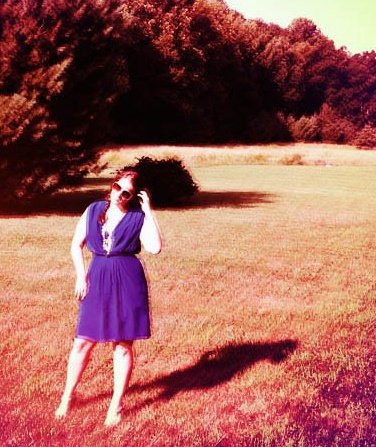
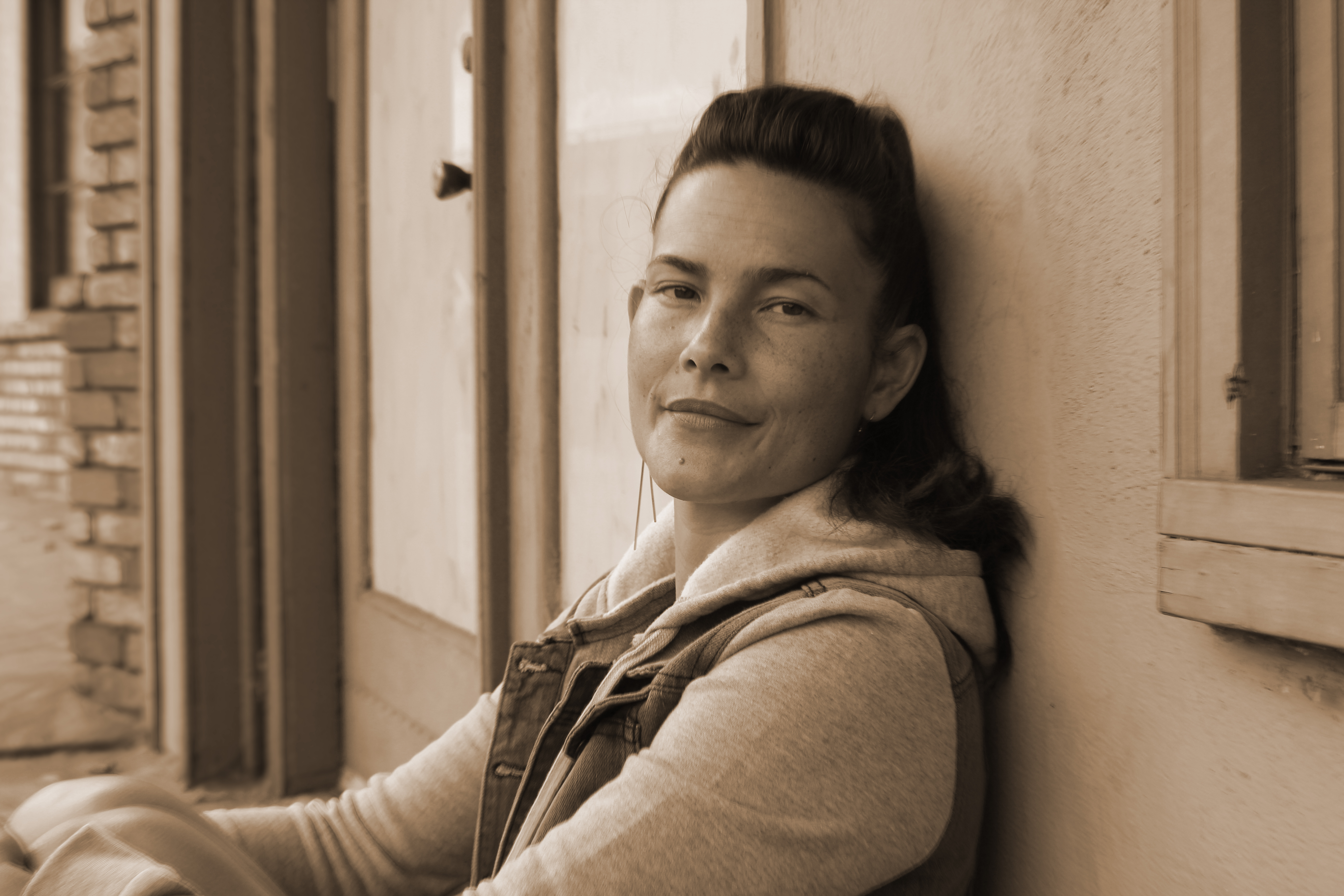
FrazierAuthorPic0714Soma Mei Sheng Frazier

Websites:

wikipedia.org/Frazier

somafrazier.com

I realize if we lived here we could be home by now. So how do you suggest we communicate? Do we receive and appropriately reciprocate the words of another? Do we communicate the internal gestures of our own healing or projection of trauma? How are we loved? In each encounter we address elements of verbal and nonverbal communication. Soma Mei Sheng Frazier is a writer who focuses on the rigidities and relaxations of our verbal and nonverbal cues and how this intimacy is shaped through the body of our words as well as our actions. In this interview we take a close look at Frazier’s fiction chapbook Collateral Damage: A Triptych, winner of the RopeWalk Press Editor’s Fiction Chapbook Prize in where she intimates, “every protagonist in Collateral Damage: A Triptych answers a single question: Can I do what needs to be done?”

Some characters need to “hit rock bottom, in a way that [they] wouldn’t forget.” Some characters have found “peace, so there’s little left to write about”. There are gender tensions present in the work to which Frazier points out, “I think it’s fair to say that, out here in the world, men are expected to act with emotionless certainty and mask pain. Internally, though, they’re as baffled and hurt as we are. It’s an interesting tension.” Gender aside we are reminded how, “as adults, perhaps some of us lose touch – forget how few words can cut like a lover’s sharp glance; how few mumbled funeral parlor condolences can affect us like a squeeze of the hand.” Perhaps it is more about the patience we have with others and how we learn to live in our sentences as well as our bodies.

Soma Mei Sheng Frazier’s debut fiction collection, Collateral Damage: A Triptych, won the RopeWalk Press Editor’s Fiction Chapbook Prize of 2013 and earned high praise from Nikki Giovanni, Daniel Handler (AKA Lemony Snicket), Sarah Shun-lien Bynum, Antonya Nelson and Molly Giles. Soma’s writing has placed in literary competitions including Zoetrope’s and the Mississippi Review’s, been nominated for the Pushcart Prize, been named a Notable Story of 2009 by the storySouth Million Writers Award and won nods from Robert Olen Butler, Jim Shepard and others. Recent work is available in Glimmer Train (Issue 89) and online, at Glimmer Train (Bulletin 72) and Carve Magazine. New stories are forthcoming inZYZZYVA this year and Glimmer Train in 2015. Soma is at work on a novel that walks the line between traditional and urban lit.

.

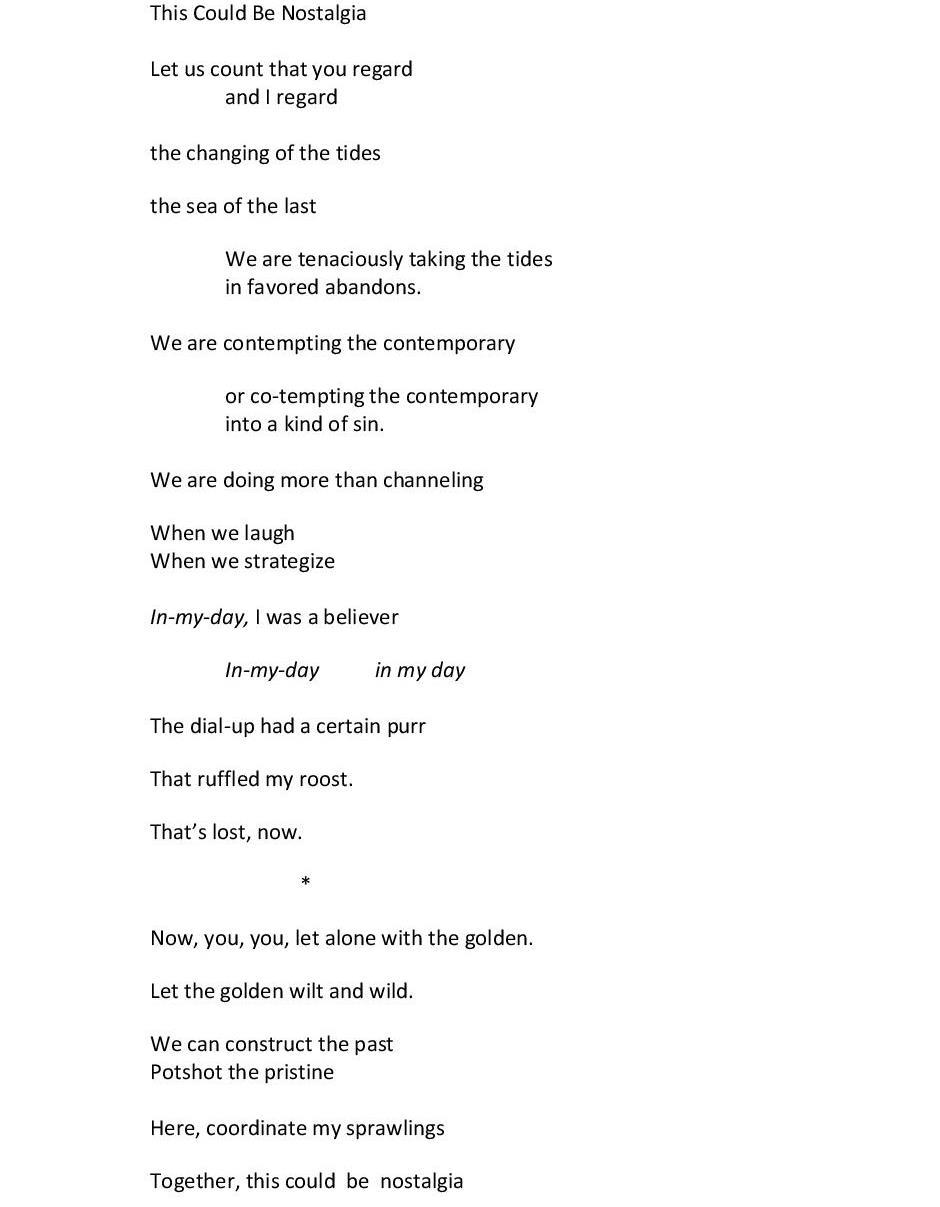
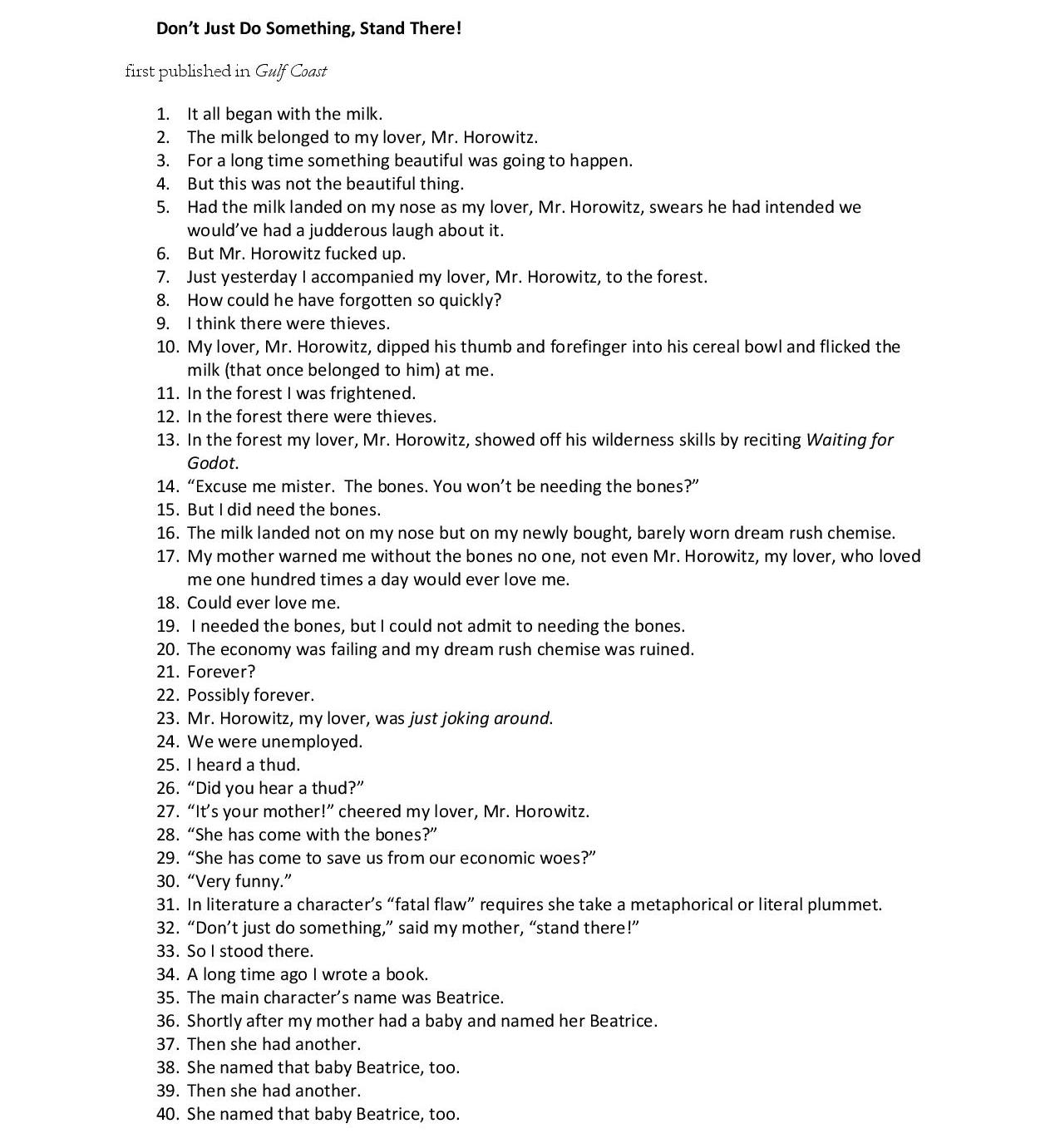
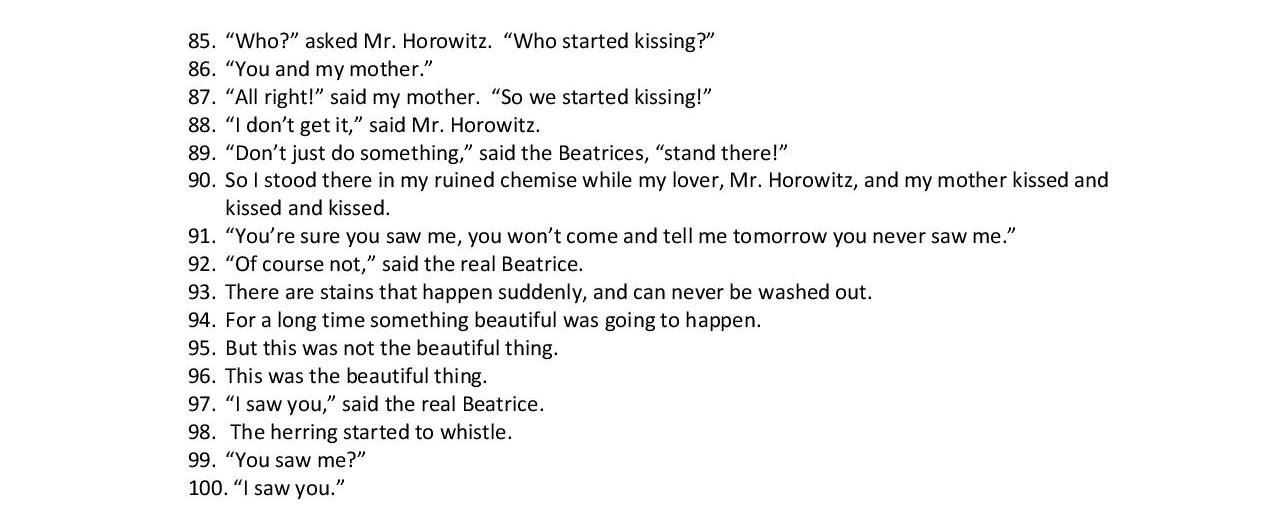
TOMATO-page-001

.

1.)      What were the first inspirations that made you desire to become a writer? Who are your favorite writers and how did they change over time?

When I was four, I played boys’ games and wore boys’ jeans: Toughskins, and at least two pairs of dark denim monstrosities whose tag, “Husky,” stuck straight up from the ass. Given my odd interests, stout form and not-so-swank style, I found myself with plenty of alone time.

That year, I picked up the Edgar Rice Burroughs Tarzan series – asking my dad for help with larger words; persisting even after Burroughs cracked civilized Tarzan on the head with a rock so he could start from scratch again – and somewhere around Tarzan and the Leopard Men I started wanting to write too.

Once I devoured Grace Paley, Joy Harjo, Nikki Giovanni, Raymond Carver, Maurice Sendak, Judith Budnitz, Kiese Laymon, Kobo Abe, Louise Erdrich, Bob Butler, Tupac Shakur, Milan Kundera, Toni Morrison, Yasunari Kawabata, David Foster Wallace, Stephen King, James Baldwin, Ryunosuke Akutagawa, Denis Johnson, Maxine Hong Kingston, Edwidge Danticat, Shel Silverstein, Molly Giles, Uwem Akpan, Richard Bausch, Paulo Coelho, Simone de Beauvoir, Sara Teasdale, Joy Williams, Thomas Hardy, Richard Wright, Sylvia Plath, Anais Nin, Ann Beattie, Sarah Shun-lien Bynum, Molly Giles. Many more. Nowadays I’m so fickle or time-strapped or both that I can barely make it through a book. I read a lot of anthologies, piecemeal, as well as poems by Charles Bukowski and Charles Simic (I do like me some Chuck). I have an enduring fascination with Daniel Handler, who was kind enough to blurb my little fiction collection, Collateral Damage: A Triptych, and my favorite writer to talk with in person would have to be Arisa White.

2.)      Who have been the creative inspiration / mentor writers in your career?

Hmmm. Burgious Frazier; Shannon Williams-Zhou; Candice “Antique” Wicks, of Antique Naked Soul; Colleen Chen; Marty Rippens; Arisa White; Robert Mezey, who once told me I had “the ear;” Sarah Lawrence College mentor Myra Goldberg, who pointed out that if I was too stubborn to write accessible stories I might as well keep my work to myself; Lisa Schiffman, author and friend; Dartmouth professor Li Hua-yuan Mowry, AKA “Mom.”

3.)      How has your own work changed over time and why?

My work was once vivid; striking. Now it’s factual and quirky, as I’m disenchanted with drama. What is it that Queen Latifah said in “U.N.I.T.Y?” “Uh, and real bad girls are the silent type.” I guess I like work that sneaks up on you to get its hand around your throat.

4.)      Have you been influenced by different genres, and if so how?

I have a hard time delineating genres, but I’m interested in translation – from gut feeling to motion, understanding to imperative, experience to page and screen.

5.)      What are your plans for the future?

But of course, world domination. Muahahaha!

I’ll be completing a novel this summer. Shortly thereafter, I’m hoping to secure a full-time, tenure-track teaching gig someplace in the Pacific Northwest.

6.)      What are your views on writing by women as it has occurred in the past twenty years?

I’m always getting surprised by women’s work – Lori Ostlund’s, last week – and I’m hoping that the industry will surprise me as well, by correcting the imbalance that leads to more men’s books being reviewed than women’s, and more males being commissioned write reviews. Women are, after all, the primary consumers of American literature. Another lingering disparity is the industry’s disproportionate whiteness.

7.)      Who are promising women writers to look at in the future?

Akemi Johnson, Muthoni Kiarie, Arisa White.

8.)      If you were asked to create a flexible label of yourself as a writer, what would it be?

Oriental Cracker Mix. (Delish!)

9.)      “leave,” is a short prose story about an aggressive abusive familial relationship. Jason we learn, “is an alcoholic; but it’s not the drinking that’s the problem. It’s the problem that’s the problem, and drinking is what he does to avoid thinking about it. […] The problem is that our government trained him, and neglected to untrain him.” The feminine persona here, Sarah, is first mothered by her child, Lilli. Sarah lost her breasts to a double mastectomy when she was eighteen. Her mentally abused passive personality regularly leaves their home to avoid physical domestic abuse when her daughter tells her, “Mama, leave”. But Jason is not a machine. Sarah tells us, “And that is how I knew that the military had left some part of him untrained, and that, if I ever needed to, I could touch that part and be rid of him.” And she does. She traces his humanity, insulting him and calling him a “sodomized friend-killing LOSER!” He hits her repeatedly; close to the point of death. She tells us, “Oh free oh free oh free. I smile up at him, just for a moment, and let my face fall slack.” And then it is she who tells him, “Jason, leave, […] evenly.” And she knows that these words will keep her safe. I am at point most attentive to the juxtaposition between Sarah and her daughter. The transfer of responsibility, and how both parents seem to have gone through degenderizing identity creates friction; Jason, through his military experience, and Sarah through the removal of her breasts. When you were creating Sarah as a character, what do you believe gave her the strength to sacrifice herself, to address Jason? And also why he knew, that what she spoke to him was in fact the pain he needed to face, in order to allow her to leave?

I think Sarah’s devotion to Lilli led her to provoke and abandon Jason. I’ve watched people kick bad habits when faced with a child’s reliance – even conflict-averse, starry-eyed addicts who aren’t fully sold on their own worth. A kid is a strong incentive. Hell, I’ve kicked a few habits myself for my daughter Zoe: people, substances, Flamin’ Hot Cheetos. (Okay, I lied about the last one. But I eat them furtively now, and mainly in the winter so I can blame my red fingertips on the cold. Brrr.)

Jason – he needed to hit rock bottom, in a way that he wouldn’t forget.

10.)   When we enter into, “everyone is waiting,” we see how spectrums of suffering effects how we are able to relate to one another. The main character Dan is in a fruitious relationship that ends tragically and unexpectedly with his partner Lena when she vomits blood and passes away almost immediately. He is befriended by a woman who is the only one he feels can relate to his most intimate soft spots. Similar to “leave,” even though here the woman is only a friend, we see how the experience of trauma can unite people in a space that is alien to most. Ancanit, who we learn was in the LRA was kidnapped, most of her family was killed, and she was abusively held captive to save her family. There is a dissonance between Ancanit and Dan. While she is able to comfort him, we are left we a startling image of her with a gun at the end of the story. One that seems to haunt her. The women in both of these stories seem to assume responsibility for the pain of their male counterparts. Why do you believe the stories evolved this way, and why do we not hear more about the muted counterpart to the relationship?

Every protagonist in Collateral Damage: A Triptych answers a single question: Can I do what needs to be done? I wrote “Leave” as Sarah’s story and “Everyone Is Waiting” as Dan’s. The secondary characters are less visible, but in some cases more solid. For example, Acanit is practical. At thirteen, she’s withstood more pain than Dan. She handles business and lives with the repercussions, and she’s also a very direct person – whereas he’s tentative; skittish; prone to hiding in facts and figures, turns of phrase. No matter how precarious her situation, she’s found her peace, so there’s little left to write about her, whereas we can still speculate about Dan finding his.

I hadn’t noticed that both Sarah and Acanit took on more emotional responsibility than the men in the first two stories, so your question gave me paws. Meow. Perhaps I was writing from the experience of watching women step up to deal with emotional matters on men’s behalf. I think it’s fair to say that, out here in the world, men are expected to act with emotionless certainty and mask pain. Internally, though, they’re as baffled and hurt as we are. It’s an interesting tension.

11.)   “charlie golf, charlie golf one” is the concluding story of this chapbook in which we meet Mike and Celeste. Mike narrates the relationship and describes, “I’m the one who enlisted at eighteen, shipped out at thirty for one last tour in a field artillery MOS and stepped on a goddamn pressure plate.” The story is one of a “perfect wife” relationship, until the trauma. And Mike cannot tell her, he does not want to tell her about his memory. That after the explosion he heard: “‘Holy shit! His legs! His fucking legs! Where the fuck is fucking Medivac?’ Over and over he shouted those words, but I heard what he was really saying. I love you, Mike. I love you. I love you Mike.” He admits, “I want to tell Celeste this story. More importantly, I want to say that I need her—Charlie Golf, Charlie Golf, for God’s sake, don’t watch me sink—but it’s like I lost my language when I lost my legs. Both of us lost our language.” The language of disaster is loss. Communication is lost. He needs her to listen, but in a way he also knows just as in the previous stories that his words will somehow falter to the devastation of trauma. There is a shift in the story when both characters realize that language is not enough, but the relationship and love through eye contact is. They speak to each other through their eyes. Can you please speak to how we utilize language to intimate the trauma, where it stifles, and how bodies possess the ability to speak past language, to something perhaps more human that allows us to persist in love?

I have a Pit Bull. He’s sentimental: smiles up in the way that Pits do; leans into our legs without language. At night, the dog sits quietly at the window in our stairwell, listening to creaking trees and other questionable sounds that might harm us. His expressive ears twitch. They stand up and sometimes he does too and then, slowly, he sits back down. When friends come to the door he rolls over and submits – lets their children grab his tail. The kids hear him loud and clear,and take advantage. Yet when we go walking, there are always a few pedestrians who flinch away from my tail-wagging dog. Some step off the sidewalk entirely, right into the street with the cars.

My husband is a black man and people react to him the same way, sometimes even while saying Nice to meet you. So I’m guessing most folks who own dogs or are attuned to racism, classism or other under-the-radar isms already understand how bodies speak past language.

But for politically insensitive readers with dog allergies, I will simply defer to multiple studies indicating that human communication is heavily sight-based; less than 10% conversation-based. Even our speech is shaped by nonlinguistic elements: voice quality, pitch, volume, rhythm, intonation, accent and pace. When we’re babies, we’re fluent in all of this. As adults, perhaps some of us lose touch – forget how few words can cut like a lover’s sharp glance; how few mumbled funeral parlor condolences can affect us like a squeeze of the hand.

While some courageous, desperate, immodest or impatient people always take full advantage of language, most of us only gesture toward trauma with words.

My father was quick to use his hands, we might say, on both me and my mom. And then comes the rest of the communication, in micro and macro expressions; a slight lean forward or a slow lean back.

profiles in poetics: Tamara J Madison

in discussion colorTamara J Madison

Websites:

www.tamarajmadison.com

facebook.com/TamaraJMadison

twitter.com/TamaraJMadison

google.com/+TamaraJMadison

linkedin.com/pub/tamara-madison/73/265/795/

Historically intact structural architecture promotes the climate of our values & bias. The courageous act of deliberating these conservative and experimental systems takes courage and empathy. To converse with dialogue of the past means that we are confronting aspects of ourselves that may affront the traditional view of our perception. In this interview with poet Tamara J. Madison, we access the structural boundaries of her own past, as well as how this creatively motivates the way she is able to address the post traumatic environment of slavery in America and the ramifications of this volatile attack on the most intimate of humanity, family.

Madison states, “Despite the progress and change, it will obviously take continuous personal, social, spiritual, emotional and creative commitment across cultures, races, for decades, scores, and maybe even centuries to heal and eradicate that ripple effect.” This responsibility is personal and public, daily and universal; one that requires continual evaluation of our stories.

Madison accesses her passion for performance and spoken word to extend the conflicting emotional sphere of racism, motherchild relations, violence, and what this means in both the mental health of those who experience the trauma and the way the world is shaded by these warping perspectives. She uses music as a way to break down the emotional urge to reject the uncomfortable. The jazz soaked musicality of her line breaks pause, stretch, and reflect, with syncopation, silence, and melodic lyric. The invitation promotes a communal space for the reader/listener to embody both the message of the idea and the destructuralization of thought.  This illuminates the need to address the whiteness of skin, what the visibility of color and trauma means pertaining to the past, and movement to adjust the spectrum of light to restructure our world with empathy.

Tamara J. Madison is an internationally traveled writer, poet, performer, and instructor.  Her critical and creative works have been published in various journals, magazines and anthologies including Poetry International, Web del Sol, Tidal Basin Review, Temba Tupu (RedSea Press), and SisterFire (HarperCollins).  She has performed and recorded her work for stage, television and studio. She holds a BA from Purdue University and a MFA from New England College and is a former English instructor of Fairleigh Dickinson University in New Jersey.

.

4Women's Quarterly Poem - Madison TJ (1)-page-0

.

From Kentucky Curdled

.

1.)      What were the first inspirations that made you desire to become a writer? Who are your favorite writers and how did they change over time?

Writing seemed to be a pretty natural ability for me early in school.  I understood the magic and power of it at an early age. As a teen for community talent shows and local beauty pageants, I often wrote and performed a dramatic poem for my talent. Everyone else was singing, dancing or roller skating.  I knew that if I wrote my own piece, it would be unique and attention-grabbing.  THAT WAS FUN!  I was doing spoken word on stage before I knew there was such a thing as spoken word!

My favorite writers have definitely changed over time.  I loved the work of Maya Angelou and Ntozake Shange very early on when I stumbled upon them at my neighborhood library.  I later fell in love with the fierceness of Sonia Sanchez and the dense imagery of blues poet, Sterling Plumpp during my years in Chicago. I love the elegance of Poet Gwendolyn Brooks and the wicked risk of Ai.  Home is Lucille Clifton for me.

I am absolutely in awe of the work of francophone poet, Aimé Césaire from Martinique. The density and intricacy of his imagery and the commitment of his life to poetry and the culture of Martinique are a continual inspiration to me. I am a big fan of Toni Morrison, Bernice McFadden, Tananarive Due, and Octavia Butler as well.

2.)      Who have been the creative inspiration / mentor writers in your career?

Poet Sterling Plumpp of Chicago was a definite mentor in my youth.  I related to his southern background and mannerisms and his creative focus on the blues. His intensity of imagery blew me away, and I knew that was something that I wanted to do as a writer.

Music was a very potent influence in my writing in the early years and remains so.  During grad school, all of my instructors served as mentors to different dimensions of my being a writer.  I know that is rare, but it is so very true for me.  Poet Carol Frost challenged me to see observations in poetry as brilliant. Writer/Poet Paula McLain strongly encouraged me to “surprise” myself rather than play it safe.  Poet Ilya Kaminsky insisted that I question my feelings about language and be clear about my intimate relationship with it.

3.)      How has your own work changed over time and why?

(Laughing) My first response to that is that my work has changed greatly over time because I have changed greatly!  Thank goodness!

In my earlier years, my focus was rhythm, music and the stage. I even traveled with a band was the featured, bilingual (French/English) vocalist and performance poet.  Later, I longed for a different type of intimacy in my work. I also realized that I needed other tools to craft certain stories.  At that point, I committed myself to the page.

On the page, the focus of craft is different. I began to focus more on line breaks, white space, and intentional imagery with clearer purpose. The music remains ever present, but it is less predictable complimenting stronger imagery in my work.

4.)      Have you been influenced by different genres, and if so how?

I have a thing for the paranormal/fantasy, but it has to be rooted in in something earthly and accessible to me.  That’s why I love Octavia Butler and Tananarive Due.  Those fantasy and paranormal elements show up in my writing as well.  I have written poems and stories where inanimate objects talk and people fly away and babies sprout from plants.

Musically speaking repetition, call and response, and rhythm patterns of gospel heavily influenced my earlier work. In later years, jazz, juxtaposition, and syncopation became much more of an influence.

5.)      What are your plans for the future?

My plans are to publish more and travel much more widely with my work. I have two poetry manuscripts that I want to complete within the next 5 years. I have a companion recording planned for one of them as well. The other project, I would like to do a film adaptation of it. In my travels, I want to share my writing and do workshops with others who feel they have a story to share, whether they are professional writers or not.

I love to inspire “the art of story.”  I feel that the intimacy, power, and magic of stories are slowly being lost to our culture.  Many people feel that their stories are not valid or worthy of sharing without the backing of Hollywood or celebrity bling! NOT TRUE!  We come here to experience this life and share our stories with one another whether at the kitchen table with a cup of coffee, in the beauty/barber shop, or across the pillow or pulpit. Our stories uplift, heal, inspire, and encourage us to continue dreaming.

6.)      What are your views on writing by women as it has occurred in the past twenty years?

Women are continuing to be more and more adventurous with their own personal writing as well as with the business of their writing and supporting other women writers. Many are no longer waiting for traditional publishing houses and institutions to honor and support them. Women are starting their own networks to grow, support, publish and produce their work. Women’s Quarterly Conversation is an example of that. (Thanks, Jillian.)

7.)      If you were asked to create a flexible label of yourself as a writer, what would it be?

At the risk of possibly not understanding this question, I am going to say “gypsy/griot/cat-o’-many-lives/adventure-poet”…

8.)      Kentucky Curdled grew out of a brutal, tender and gritty story from your true Southern lineage. Can you describe your interview process? How did you poise the illuminative heart of the work: family? How many of these sources are still living and did you find it difficult to unearth non-conflicting concrete sources? How did the research component of this experience evolve your creative process?

I learned the story of Kentucky Curdled (a tragically mother murders her child) as oral history from a relative who shared it with me.  The same relative also had a photograph and portrait of the main character. I later researched and found evidence of the life and death of this woman by way of an obituary.  There were very few details about her life and the crime other than the dark skin of the child.

I decided at that point to follow the advice of writer/poet, Richard Hugo (The Triggering Town) and his quote, “Knowing can be a limiting thing.”  I allowed myself to use the little that I did know as a catalyst or starting block. The rest I embraced as an adventure allowing the muse of the poem to chart and oversee the rest of the journey.  From there, characters came as visions and voices like puzzle pieces slowly forming and finding their place.  Not having “concrete sources” encouraged me to step into very new territory:  persona poems, personification of animals and inanimate objects, and even more intricate form.

As far as managing the darkness of the subject matter, the greatest darkness was the lack of compassion in the way that the story was shared with me. When I asked the storyteller/family relation, why the crime, I was told that the elder auntie was merely, “mean, evil.” That response felt felt heartless and dismissive to me.  It was far too simple.

Illumination came with each new poem in the sequence.  Each poem/persona and the journey of its crafting shed light on the subject matter and on me.  It lightened the burden of carrying the story, which I had done for many years before writing the first poem.  Each new voice, no matter how painful the testimony, lightened the load and carried a bit of the story along with me. The whole process was so new and dynamic for me as a writer that I didn’t have the time or need to be lost in the darkness or grieving of it.

From my research I believe the story happened in the late 1800’s (post-slavery) yet in the heat of post-traumatic slavery disorder. I also believe that the story relates to oppression, depression, and trauma of all kinds that weaken mental health.  Such has existed in various cultures around the world, ancient to the present.  We often simply do not know the stories of those who have been traumatized. Because of death, madness, illness, etc., many were/are unable to articulate and record their own histories.  Many others have had their history erased or crucially revised.

9.)      Kentucky Curdled is a chapbook and spoken recording. I am particularly interested in how the experience shifts from the spoken word to the written word for both the reader and the listener. As a listener, it was easier to digest the emotive spectrum of the work. Was this intentional? What inspired you to create a recording? I am also interested in why you did not choose to add music, only sparse sound effects?

The aural and oral nature of poetry come natural to me and continue to influence in my work.  Even when revising poems that I may never read to an audience or record, I read them aloud to see/hear if the music and voice I hear in my head are translated effectively on the page.  At various readings, a number of people suggested that Kentucky Curdled would make an interesting performance. Before adapting the poetry for a script or looking at anything on stage, I heard it first, so I wanted a recording or audiobook to be the next stage of development for the work.

When I first heard one of the final stages of the recording, I experienced it differently as well.  I have recorded a number of times before and am used to hearing my voice recorded, but this was different.  It affected me.  This caught me by surprise because I am the writer and was the one in the sound booth.  All that I can say is that this project feels to have a life of its own, and I am blessed to be a part of it.

I agree that there is some “ease” in digesting the project audibly.  Something about the sound ushers you through the pain.  That was not at all intention, but I am most grateful for it.  That is part of the magic of poetry for me. It is a multi-dimensional language in whatever language it is spoken or written.

I purposefully chose not to have a lot of music and background in the project.  I wanted the sparseness to reflect the time period. I also wanted the raw feel of the project.  The final product is reminiscent of an old school radio listen where the family is gathered around and glued to their seats until the story is finished.  It is a sacred and powerful space that our culture has lost. I hope that this project revives some of the power and fellowship of those kinds of moments.

10.)   The processional unfolding of the character Rachel is at the core of the sequence. Rachel kills her child because he is “too black”. We read in “Beulah”, an interrogation of “black”. How black is “too black”: “ass-black”, “ink-black”? We are asked to consider what the linguistic focus is actually masking: the invisibility of white.  We hear from Rachel. In the poem “Rachel:” we listen to her monologue: “What you ‘spect me to say?  Sorry? / Sorry was snatched from me the day / the devil yanked me from my mama’s bed, / from her arms. // Before I could even see my own blood, / the devil seent it, / snapped my body like a twig / as kindling for his fire. / He broke me, bed me, / come with 12 different faces.”  How did working the violence of your family history affect you? How do you believe language has to shift in order to illuminate and make visible the “white” dialogue? How much do you think that the linguistic component of racism constructed in language has shifted from Rachel’s voice to the present? What steps do you believe we have taken and which ones are we missing?

As a person of color growing up in the United States, “white” is always visible in everything. What you describe as the “’white dialogue” is always loudly audible and remarkable for me as a person of color. Part of the intention behind Kentucky Curdled is that it is not at all matter-of-fact or simple. Such circumstances are never that black and white, right and wrong with regards to the human brain, human behavior, and trauma. Add the intensity of slavery, oppression, and racism on top of that and the “matter” is all the more complex.  I don’t believe any of us can fully understand such matters, but we have to try.

With centuries of oppressive and violent racial history, the linguistic and other effects of racism are still painfully existent around the world.  We see the residue of such all over the media, in conversations, and behavior of people of all races. Even within the Black/African American community there is the term, “color struck” which describes a person of color having color prejudices and not wanting to associate with a person who is too dark or too light-skinned.

Despite the progress and change, it will obviously take continuous personal, social, spiritual, emotional and creative commitment across cultures, races, for decades, scores, and maybe even centuries to heal and eradicate such a ripple effect.  I think that understanding is what is missing—the fact that it is ongoing, daily personal, interpersonal, cultural, social, political, etc. work and commitment to change these things. It does not disappear because we have “friends” of a different race or because legislation changes. It takes more work than most of us are willing to imagine.

Kentucky Curdled’s process was enlightening and invigorating.  The lack of compassion around such stories was/is the most challenging for me.  Rachel might have been abused or traumatized, especially given the time period in which she lived. How might that have affected her choices?  What about the possibility of post-partum depression or mental illness?  For us in this age to not consider such regarding our ancestors and their challenges is absent-minded and irresponsible. We can and should afford to be more thoughtful and informed regarding their histories simply because they survived in order that we might be here.

I had a very prominent literary journal send me a rejection letter telling me how respectfully they read Kentucky Curdled but ultimately refused to publish it because it reminded them too much of Toni Morrison’s, Beloved.  I was initially offended because it said to me that we should only be allowed one such story when in reality for everyone that we may catch a glimpse of, there are hundreds that we may never know, yet they haunt us.  Kentucky Curdled is poetry, not a novel. There are no slave catchers hunting this woman down at the time of this act.  There is no jealous or vengeful ghost here. This is not a reminder of Beloved, though it reminds us all of the horror in our collective history. One story is simply not enough.  Many thanks to aaduna and And/Or for taking the risk and publishing very generous excerpts of this work.

My intent is to honor those who endured such horror, to give them all a sacred space to come forth without my judgment or anyone else’s.  I wanted to share and release the story and those haunted by it without exploiting anyone or anything.  I also wanted to creatively illustrate how our choices affect the environment (living and inanimate) all around us, thus we must move responsibly.

I hope that somehow the story inspires productive conversation and behavior around the issues of racial/cultural oppression, domestic violence, and mental illness and moves us to greater health and wholesomeness in our human experiences.

Lastly, I pray that it makes the souls of my ancestors smile and the souls of my children enlightened.

profiles in poetics: Arisa White

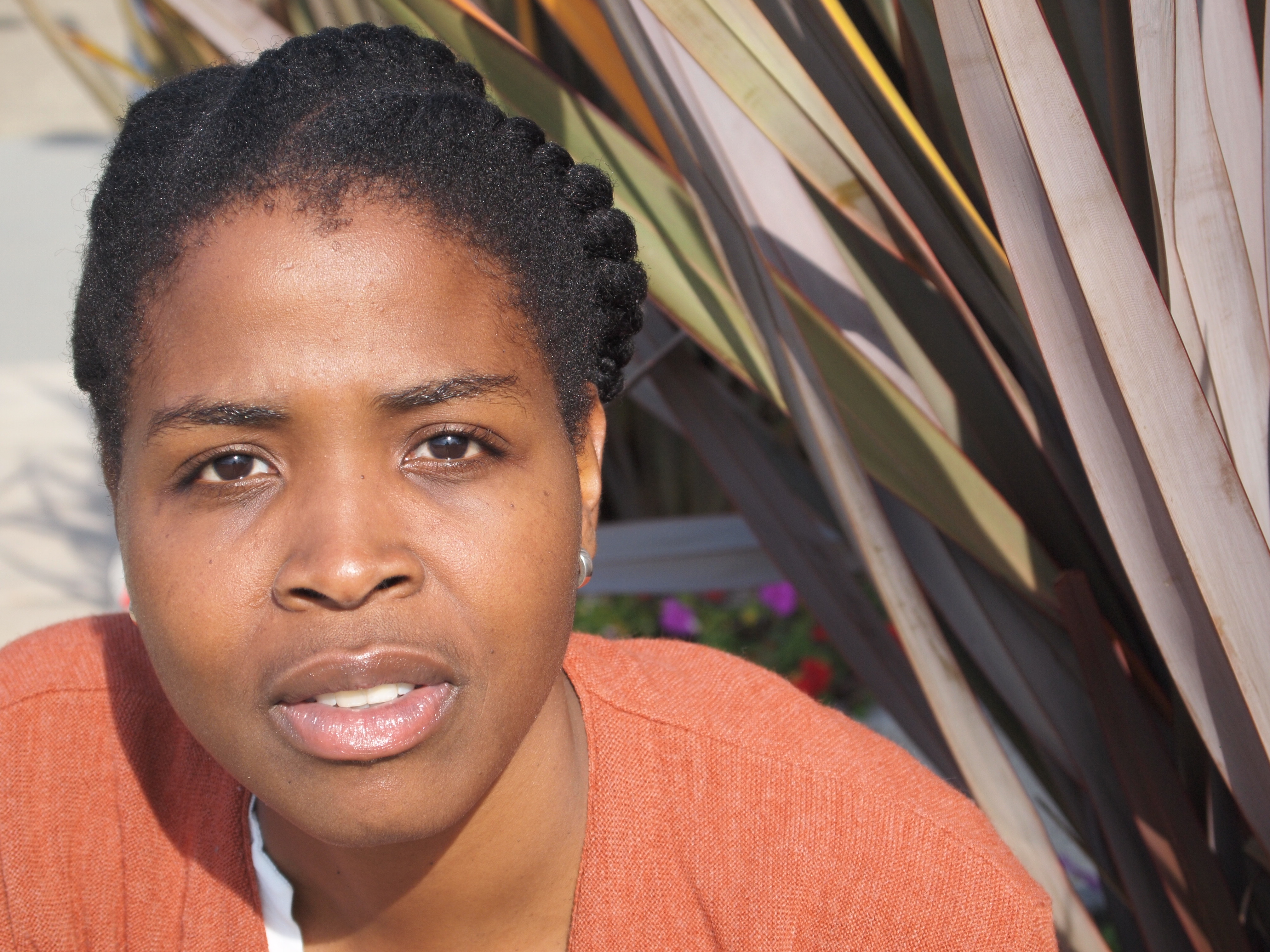
OLYMPUS DIGITAL CAMERA

Arisa White

Websites:

facebook.com/Arisapage

arisawhite.com

Seeing is an act of love. Arisa White is a writer of empathic impulse seeking to break down destructive cultural perceptions and personal conduits as they take place in speech and language. She views women writing to be “more daring, more vulnerable, more rational, more chick, more dick, more mindless, more mindful, speculative and absurd, funny and thorny, ugly and navel-gazing and it is reaching into various corners and ways of being woman in this day and age.” In a similar manner, White establishes her own, “emotional rhythmic-textures” in style and content. The outcome enables her to simulateously traverse trauma and empowerment. This shared love and loss permits the extremity and mutual narratives of our private and public spheres.

In this interview we focus on White’s latest book out from Willow Books, A Penny Saved, motivated by one of the worst documented cases of domestic violence in the United States. Her inspiration becomes a vehicle of wonder, “about [Penny’s] daily life, surviving torture, creating family, and continuing, how best one can, in such circumstances, to cultivate love.” She states: “It all felt so contradictory to me. Confusing.” The story allows her to unwind notions of intimate violence and how this affects personal and civil liberties.

When we take responsibility for our common fear, nostalgia, desire, failure, and triumph, we are able to witness movement; change, and accessibility to difficult tangibles of historically shattered and abrasive actions. She intimates, “I think this is the conversation we are having and needing to have across cultures and countries.” This dialogue manifests the transformative power of personal healing. Self-compassion, “is a part of being an adult. No longer are we children, expecting the unconditional love of those around us. That time is over—begin the necessary grief work, so you can go about the world being more responsive/responsible and less reactive, acting from old beliefs and behaviors that are no longer serving you, and all of humanity.” This means actively seeking the courage to be vulnerable and speak to the vertigo and calm experienced in both balance and imbalance. We awknowledge the rips and thread back together bits and pieces of our world. If left unaddressed, according to White, writing “[misses] out on what their mamas gave them. And that intelligence is vital.” Active witness has the power to heal a world; much smaller and larger than ourselves.

Arisa White is a Cave Canem fellow, an MFA graduate from the University of Massachusetts, Amherst, and is the author of the chapbooks Disposition for Shininess and Post Pardon (which is being made into an opera), as well as the full-length collections Hurrah’s Nest and A Penny Saved. Her debut collection, Hurrah’s Nest, won the 2012 San Francisco Book Festival Award for poetry and was nominated for a 44th NAACP Image Award, the 82nd California Book Awards, and the 2013 Wheatley Book Awards. Member of the PlayGround writers’ pool, her play Frigidare was staged for the 15th Annual Best of PlayGround Festival. One of the founding editors of HER KIND, an online literary community powered by VIDA: Women in Literary Arts, and the editorial manager for Dance Studio Life magazine, Arisa has received residencies, fellowships, or scholarships from Headlands Center for the Arts, Port Townsend Writers’ Conference, Rose O’Neill Literary House, Squaw Valley Community of Writers, Hedgebrook, Atlantic Center for the Arts, Prague Summer Program, Fine Arts Work Center, and Bread Loaf Writers’ Conference. She is a 2013-14 recipient of an Investing in Artist Grant from the Center for Cultural Innovation, an advisory board member for Flying Object, and a BFA faculty member at Goddard College; her poetry has been widely published and is featured on the recording WORD with the Jessica Jones Quartet. Arisa is a native New Yorker, living in Oakland, CA, with her partner.

.

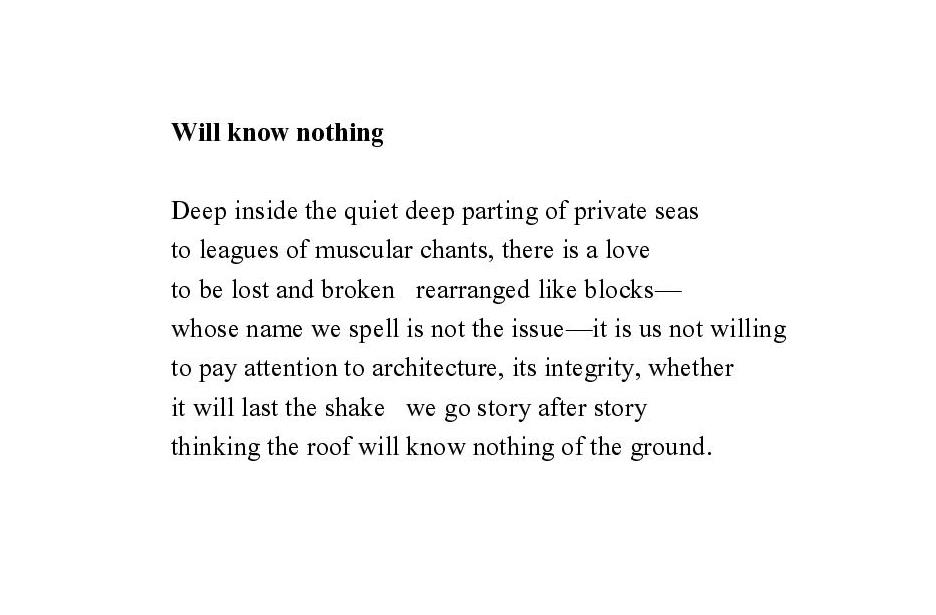
Will know nothing-page-001 (1)

1.) What were the first inspirations that made you desire to become a writer?

Reading Rainbow with LeVar Burton—“go anywhere, be anything.” That’s the perfect invitation for this restless spirit of mine. For this body that has been told it cannot do or it will have to concede in order to justly be—the written word offered an escape, so the writer must be Harriet Tubman.

I was a 4th grader—I recently transferred from another public school in Brooklyn—and I decided to run for school president. Another girl from my class ran too, and for her election-day speech, she beautifully rapped it, in front of the entire school, K-6, faculty too. And of course she won—who wouldn’t vote for her after such a grand performance! (It also worked in her favor that she attended the school since kindergarten and everyone thought she was so dope.)

My 6th grade teacher, Ms. Williams, had us write stories every week, using words from our Vocabulary List. Plus, this large cardboard fabricated treasure chest, filled with treats and goodies, which she gave to those that read the most books each week. I was sure to be the one with the most golden stars.

For a borough-wide contest, I wrote an essay for my brother, who was in 5th grade at the time, so I was in 8th, about diversity. I used a garden metaphor, and my brother won! (I also wrote a similar essay for my grade, and didn’t make the cut.)

Spending summers as a young kid bored out of my mind, curled up on the couch reading whatever was on my mother’s book shelf: Jamaica Kincaid, Toni Morrison, Terry McMillian, Agatha Christie, Ishmael Reed, Iyanla Vanzant, Gloria Naylor . . . and my brother’s comic books, which I wasn’t supposed to be touching. I liked X-Men the most.

2.) Who are your favorite writers and how did they change over time?

Including the writers mentioned above, there is, in no particular order, Nikki Giovanni, Saul Williams, Hart Crane, Jessica Care Moore, Audre Lorde, Toi Dericotte, Pema Chodron, Rebecca Seiferle, Tyehimba Jess, Terrance Hayes, Dara Wier, Harryette Mullen, bell hooks, Junot Diaz, Edwidge Danticat, angle Kyodo williams, Alice Walker, Nikky Finney, Reginald Shephard, Adrienne Rich, Bob Kaufman, Medbh McGuckian and the list continues to expand, in all sorts of ways, over time. I keep meeting writers who point me in the direction of other writers and I keep looking and reading and being willing to encounter what I did not know before.

3.) Who have been the creative inspiration / mentor writers in your career?

Nila Grutman, India DuBois, Tracie Morris, Chikwenye Ogunyemi, Regina Arnold, angel Kyodo williams, Dara Wier, Rebecca Seiferle, Nikky Finney. Dear friends: Darrell, Sulay, Geimy, Serena, Matthew, Alicia, Rosebud, Soma. My family. My fiancée is quite a muse! She reminds me to pay attention, and sometimes that isn’t so easy, but always rewarding. All these folks have offered me ways of seeing and distinct ways to language it.

4.) How has your own work changed over time and why?

Nikky Finney once asked me, after reading my graduate thesis project: “What is Arisa’s natural swimming style?” To find out, I had to accept that I wasn’t really swimming. When I got in the water, I panicked, let fear instruct, and did whatever strokes that would get me to safety. Over the years, I have learned to pay attention to what I do, why I do it, and learn to accept more of my natural impulses when I write. I’ve embraced more of the rhythms of my voice and the quirks of my imagination and given myself more permission to be, let go, and let down the censors. I think each time I’ve pushed through or knocked down a wall within myself, a new pathway for speech was formed, and I considered new ways to approach it (and define and reimagine what it is) and with that came the confidence to write and say it.

5.) Have you been influenced by different genres, and if so how?

Fiction, for its use of narrative and plot—I like story. I think about how to take the time to evolve the telling.

Short-form playwriting has made me consider how the poem occupies space. Or how can the poem occupy the reader—how does it emotionally shape inside her? Thinking in this way, I try to create emotional-rhythmic textures that make the body/reader consider one’s presence, place, and time.

6.) What are your plans for the future?

Currently, I’ve adapted my chapbook, Post Pardon, published by Mouthfeel Press in 2011, into a libretto. NYC-based composer Jessica Jones is developing the score. All of this with a cultural funding grant from the City of Oakland; and in July 2014, for two nights, we will have a concert of songs. Although having to do a little fundraising for this event is daunting, I’m excited to be doing this. Jones and I have never done opera before, and she’s a great collaborator to make discoveries with.

This fall I was awarded an Investing in Artist grant from the Center for Cultural Innovation to write a collection of poems inspired by my estrangement from my father who currently resides in Guyana. I’m taking what tidbits of story that was shared with me over the years about him and making my own mythologies. It is my way to make sense of his absence; to construct a grand story of why he’s not here that’s rooted in histories of Venezuelan slavery, Guyanese police culture, and U.S. immigration and extraterrestrials.

With this grant, I will invite the public to participate. This is the first time I’ve ever thought to do something like this—to incorporate other voices in my writing process. But there was something about this project that made me wonder, how have others made sense of their fatherlessness? If given the chance, as I was, to write your father, what would you say? How would you say it? Midway through this project, I will send out a call for submissions for letters addressed to estranged fathers. I will select 33 letters, and mail each a copy of the poetry collection. Using the letters, I will do an epistolary mash-up for a later manuscript.

7.) What are your views on writing by women as it has occurred in the past twenty years?

I’m speaking in a general sense, with no specifics in mind, the writing is what it is. I don’t have much of an opinion about what has occurred or hasn’t occurred. I can say, the writing is more daring, more vulnerable, more rational, more chick, more dick, more mindless, more mindful, speculative and absurd, funny and thorny, ugly and navel-gazing and it is reaching into various corners and ways of being woman in this day and age.

8.) Who are promising women writers to look at in the future?

Rosebud Ben Oni, R. Erica Doyle, Soma Mei Sheng Frazier, Natalie Baszile, Roxanne Gay, Kiki Petronio, Kamila Aisha Moon, Remica L. Bingham, Emily Pettit, Emily Kendal Frey, LaTasha Natasha Diggs, Lauren Allende, Camille Dungy, Karen Rigby, Sharon Suzuki-Martinez, Cassandra Dallet, Minal Hajratwala, Katherine Hastings, francine j. harris, Metta Sáma, and so many, many more.

9.) If you were asked to create a flexible label of yourself as a writer, what would it be?

Lyrical writer.

10.) We begin A Penny Saved out from Willow Books with a quote from David Richo: “When God is seen as a rescuer or parent in the sky, we may depend on him for protection and lose our faith if he does not come through. When we give up the childhood version of life, we stand on our own surrounded by others but not necessarily defended by them against life’s disturbing threats. With no “parent” on the lookout, we notice that we sometimes have to bear more than we can handle, and we may fold under the pressure. This too requires a yes. Our purpose in life is not to remain upright at all time but to collapse with grace when that is what has to happen. The fact of impermanence gives us the hope that we will rise again.”

Can you please describe your motivation for writing a book inspired by Polly Mitchell’s story? She was held captive for 10 years in her house by her husband David with whom she had a family of four children with. Her story is documented as one of the worst cases of domestic in the history of the United States. Many of these stories remain undocumented. Many of these women do not survive. We hear stories from Penny herself, her daughter’s emotional bereavement, and later in the story from her husband himself. Here, as you say in the title of a poem, “Questions are rabbits”: … one leads to many more”. Everyone wants to know why she stayed. On her Larry King interview she says she stayed because she loved him. The layers of emotional complexity I know here are in a way unanswerable, so as a poet, how and why did you choose to illume this particular story? How do you see this conversation interacting with other cultures?

Mitchell’s story is one that is extreme and because it is extreme, we pay attention to it. My attention was captured and with that came the questions, the wondering about her daily life, surviving torture, creating family, and continuing, how best one can, in such circumstances, to cultivate love. It all felt so contradictory to me. Confusing. How to live with those contradictions? Having grown up with a mother who was in abusive relationships, Mitchell’s story was another way to investigate intimate violence. To create a persona that must find ways to survive in these extreme circumstances. Even though, as a culture, we may act as if our lives are OK, we are living intimately with violence—the constant erasures of our and others civil liberties, the distractions of race and class and all those isms that force use to view ourselves and others as separate, we learn each day how to be in radical denial of what’s going on around us and the failure to accept, is violent. What is going on in our homes, in the personal, in the private—does it match up with the face we wear in the world? So I wonder, what has patriarchy taught us, showed us how to be, and how are we showing up for others and ourselves in this? And I think this is the conversation we are having and needing to have across cultures and countries.

11.) A good portion of the poems are dedicated to the exchanges that we have with Lizzybeth, the daughter and Penny concerning her imaginary friend Jewelie. In the poem, “Jewelie can’t be her friend anymore” we listen to Lizzybeth, “[Jewelie] was doing it all night. She had sweat on her. She put it in my nose too. Then she put dead bodies in there like I was a grave.” How did these stories develop and why are they most focused on the make-believe world created by the daughter?

I can’t really say how the stories developed—most of them just came to me and during the first draft. I was on retreat at Hedgebrook, on Whidbey Island, and having a lot of uninterrupted time in nature to daydream, trained my brain to see things differently. . . . I knew I was working with a persona who was using her imaginary friend as an interlocutor. This enables Lizzybeth to gain authority over her voice, to feel empowered to speak and speak out against the violence she is witnessed to in her home, as well as do some creative problem solving about how to deal with the things she hears and sees. How to make sense of her father’s aggression and her mother’s perceived passivity.

12.)   One of the most the most simultaneously chilling and evocative moments emits from the narrative of David. He says, “I ashed you. Your scalp birthed red dots – I smelled the hair I ripped. You removed from the force of constellations, obeyed the temperaments of my bursts – I loved you for that.” In this space we view the body and negotiation of intimate and universal pain and violence. At once we are placed in a binary of trauma and compassion; ambiguity and the specific. The goal of this piece is not necessarily redemption, but rather the fracture of the wound and the power of survival. What do you believe is the message of this book?

We need to make personal transformation. Take time to heal our personal wounds, those deep, dark, shadowy parts of who we are—embrace them. Be a compassionate witness to yourself and love you in the ways you need to be loved—that is a part of being an adult. No longer are we children, expecting the unconditional love of those around us. That time is over—begin the necessary grief work, so you can go about the world being more responsive/responsible and less reactive, acting from old beliefs and behaviors that are no longer serving you, and all of humanity. Be vulnerable. Lets stop resting in our comforts, thinking we are a-OK, because our failure to look critically at our selves, is the reason we have so much violence going on around us.

13.)   Have you tried to connect with Polly, and what does she feel about her story?

No, I haven’t. I have taken her story as inspiration to create A Penny Saved, which is by no means Polly Mitchell’s story. Only Polly knows and can write her story.

14.)   How does sharing her story affect you as a writer?

My debut book, Hurrah’s Nest, was a collection of memories in verse. It was important for me to share my story first, so that I could write about other people. That appeals to my sense of fairness. So, when I am sharing, I’m sharing an expanded part of myself. A broader I/eye. I feel like my voice houses a chorus, echoes, and bottled notes.

15.)   I would also like you to take some time to describe how your work and how you identify yourselves in the world affects the work that you do for VIDA.

I’m trying to be a better citizen with my work (as poet, editor, teacher), a part of something larger than myself. It’s a way to balance all that time I spend alone, writing away. When a manuscript is completed, I really think I’ve done something for the greater good. (It’s the Aquarian in me—which is why I get offended when I’m told that what I do is nothing, a waste of time, or stupid.) As a black, queer woman to speak often feels like “I’m chewing on rocks”—and to push up against all those master narratives requires a fluid language, and finding your own way, that validates your multiple selves. We are all on those individual journeys, so it’s good to share field notes, the experiences life has offered so far. VIDA is this opportunity to create a community that supports women who are developing a public writing voice, finding their style, alongside those who have one, and to put into praxis that all women’s words are heard and welcomed.

16.)   How do you see the literary community changing to include more voices for women and how and why is this so vital?

Critical look at the conditions, systems, and beliefs that make the community lacking. Honest assessment of whether or not more women voices is wanted and why. . . . Changes in technology is changing the way we make, identify, and name community, women will create the communities they need to sustain them . . . There will be some dedicated activity involved. A commitment to go the miles, to seek, search out, to go beyond what is known and convenient, comfortable. Look, find, discover, and be active in, across, and between communities: give workshops, forge collaborations, and honor what is important to the voices you want to attract. (More verbs to be used, I guess.) But all that activity is going to remind the literary community that it’s a living body, with living consequences, and when it’s not functioning from the whole, it’s missing out on what their mamas gave them. And that intelligence is vital.

17.)   What in your point of view needs to happen in our larger cultural communities to continue to address these topics and promote change?

To slow down so we’re not so reactive, take the time to recognize your privileges and how you benefit from them and are limited by them each day. Identify your powers and decide how you will use them. And there is no half-stepping. You need to commit. You need to see how your behaviors may not align with your missions, visions, goals, objectives, beliefs, thoughts. Do you take responsibility for your words? Know how corruptible you are and what silences are deadening up your truth.

.

Photo: Photo by Samantha Florio

profiles in linguistics: Amber Dermont

Amber Dermont for Inprint 2Amber Dermont

Websites:

.

As a child, Amber Dermont grew up in the resonant renaissance of rare book dealers. Poems, she intimates, “taught me how to feel, how to handle my loneliness.” This intrinsic revelatory relationship between story and text nurtures her admiration of, “writing that doesn’t give up its secrets”. Take for example one musing inspiration she had for her book Damage Control, out from St. Martin’s Press; Bette Davis. Dermont describes her affinity towards the, “beautiful, difficult, often unlikeable woman who was completely transfixing and divine. She scared the hell out of me and I loved her for it.” These sentiments reflect her personal linguistic style, dreaming brightly in a wildfire.

Dermont’s view on writing by women as it has occurred in the past twenty years? She states: “In 1926 Coco Chanel creates the little black dress and fashion is never the same … Say what you will about gender and fashion but the little black dress created a revolution.” For Dermont, “Being a woman is a political act.” There is an advantage sitting in the reams of marginalization: “I suppose I look innocuous and nonthreatening, but inside I am all blowtorch and mass destruction.”  This is a position one cannot take for granted.

Damage Control is a political pro-choice investigation highlighting the geometric tensions evident in domestication and women’s bodies. Our landscape takes place in an etiquette school between a teacher and his three passion stricken girls who refuse to quiet their desires. Mr. Foster falls for the girls he fosters. He falls for their intellect and their permissive humor. Ultimately, we learn, “the girls are in control. I wanted to write a pro-choice story and knew from the start that the last word would be choice, but I also wanted to complicate the narrative.”

Dermont reflects, “Abortion Clinics are curious spaces to me. Hospitals—which all too often have religious affiliations—have outsourced surgery and women’s health issues. By creating a clinic where reproductive rights are exercised, we’ve created a space where those very rights can be protested, challenged, threatened, assaulted, condemned … Women’s lives are more complicated than men’s because we are called upon to make more complicated decisions. Our decisions place us in danger.” The story is one that honors and respects the courageous act of exalting flaw and freedom.

Amber Dermont is the author of bestselling novel, The Starboard Sea, and the short story collection, Damage Control. A graduate of the Iowa Writers’ Workshop, Amber received her PhD in Literature and Creative Writing from the University of Houston. She is the recipient of fellowships from the National Endowment for the Arts, the Bread Loaf Writers’ Conference and the Sewanee Writers’ Conference. Damage Control was a New York Times Book Review Editor’s Choice and The Starboard Sea was selected by the New York Times as one of the top 100 Notable Books of 2012. Amber lives in Houston, Texas where she serves as an Associate Professor of English at Rice University.
.
Amber Dermont Excerpt Damage Control-page-001Amber Dermont Excerpt Damage Control-page-002Amber Dermont Excerpt Damage Control-page-003.

1.)    What were the first inspirations that made you desire to become a writer? Who are your favorite writers and how did they change over time?

I’ve only ever wanted to be a writer. My parents are rare book dealers and I grew up in a home filled with first editions. As a child, I spent most of my vacations hunting for literary treasure in red barns and antique fairs all over New England. We’d speed around in the family Fiat listening to books on tape—short stories by John Cheever, Saki, Guy de Maupassant. A semi-charmed literary upbringing but one that made me take the business of books and writing seriously from a very young age.

Even though I write fiction, my first love is poetry. Many of the poems I have memorized are the ones my father read to me as a child—“The Idea of Order at Key West,” “The Emperor of Ice Cream,” “The Woman at the Washington Zoo,” “The Bat,” “High Windows.” My father is a fan of subversive verse. When I was nine, my Daddy actually handed me Sylvia Plath’s “Daddy” then asked, “So, what did you think? Pretty cool, right?” Poems taught me how to feel, how to handle my loneliness. My mother specializes in children’s books. She has an encyclopedic knowledge of stories and if you tell her the half-remembered plot of your long-forgotten favorite childhood tale, she will know the title and the author. My parents taught me how to care for and about books and I am forever in their debt. They are my first inspirations.

I’m less interested in playing favorites with writers and more invested in what I can learn about storytelling, craft and narrative complexity from authors who take real risks in their writing. As a reader, I’ve come to greatly admire difficulty and am particularly engaged by writing that doesn’t give up its secrets. Claudia Rankine’s Don’t Let Me Be Lonely, Sabrina Orah Mark’s Tsim Tsum, Caryl Pagel’s Experiments I Should Like Tried at My Own Death, Natalie Diaz’s When My Brother Was An Aztec, Holiday Reinhorn’s Big Cats, Natasha Trethewey’s Native Guard, Jennifer Chang’s The History of Anonymity, Melissa Febos’s Whip Smart, Melissa Ginsburg’s Dear Weather Ghost, Ramona Ausubel’s A Guide To Being Born are books I return to over and over again. These are complex, ambitious texts that warrant multiple readings. Ideally, I want a book to invite me back; to demand more from me as a reader.

2.)    Who have been the creative inspiration / mentor writers in your career?

My friend Amy Margolis has taught me the most about storytelling, pacing, word choice, dramatic enactment and defamiliarization. Amy is the director of the Iowa Summer Writing Festival and when I was a grad student at the Writers’ Workshop, I sat at her feet and listened. Amy’s lessons were always immediate and life changing. She understands how to turn/detonate/deliver a story and she has a singular relationship with language. No one is a better storyteller. No one. At the moment she’s working on a memoir and it’s the one book I crave daily and cannot wait to read.

As a child, I watched a lot of classic Hollywood cinema. Bette Davis was my ideal. Here was a beautiful, difficult, often unlikeable woman who was completely transfixing and divine. She scared the hell out of me and I loved her for it. “Number One Tuna,” a story in my collection, Damage Control, is an homage to Bette Davis’s incomparable filmography. Barbara Stanwyck’s sadness and her unhappy childhood—actually, her entire unhappy life—are a source of constant concern and amazement. She’s my current muse and I long to honor her work. Jean Seberg haunts me and moves me beyond measure. Her political activism probably cost her her life—a gift of basketball uniforms to the Meskwaki nation sent the FBI after her—imagine that.

A dear friend and a cast of Hollywood icons all taught me how to dream brightly and warned me about the dangers of doing so.

3.)    How has your own work changed over time and why?

I never want to write the same story twice. Though writers are the crummiest and most dubious authorities on their own work, I might hazard that my novel, The Starboard Sea, is different in style and tone from my collection, Damage Control. Hopefully the short stories are each their own animal. Maybe my greatest wish as a writer is to escape all categorization. Yes, I wrote a novel about a prep school (a guilty pleasure for most) but writing The Starboard Sea was like setting my childhood on fire. A controlled burn is often the only way a writer can create new worlds but sometimes you need a wildfire. With Damage Control, I challenged myself to learn something new with every story. Each narrative pays tribute to someone I love or loved and lost or loved and temporarily misplaced then found hiding under my bed. The stories are an attempt to reconcile this longing.

Most writers are strange people and I am no exception. I am riddled with contradiction. I’m incredibly shy but I feel most at home on a stage. I would give my shoes to a stranger and walk home barefooted but would prefer to never put on shoes or leave my home. I loathe humanity but an enthralled by the human condition. I admire profound and complex human intelligence but nothing is more moving to me than a wild, open heart. My writing will probably always reflect these contradictions.

4.)    Have you been influenced by different genres, and if so how?

When I was a child, you could sit me down with a stack of Archie’s comic books and I’d be very happy. Over time, I’ve tried to heighten my reading powers—though I would still feel at home at the malt shop with Betty and Veronica. I’ve always had eclectic taste and am inclined to read books that others might dismiss as pulp or genre—not for hipster cred but rather for serious appreciation of form, plot, world creation. Raymond Chandler, Dashiell Hammett, Patricia Highsmith, Phillip K. Dick, Samuel R. Delany and Octavia Butler have been claimed by the academy as literary writers but I loved them first when they were marginal mavericks. I adore British novels about class and privilege especially those by Evelyn Waugh, Martin Amis, Alan Hollinghurst, and Edward St. Aubyn. Their books play with satire and point of view in daring ways. Lately, I’ve been drawn to the power of fairytale especially Kate Bernheimer, Aimee Bender and Kelly Link. Ultimately, I just wish I could be Alice and write through my own looking glass.

5.)    What are your plans for the future?

I’m drafting another novel. It’s terrifying and literally keeping me up at night. Last week, I was doing research and discovered a fact that actually confirmed one of my fictional details. I felt invincible for two glorious days and wrote with conviction. Don’t worry: all of that glory has worn off by now and I am back to my old terrified self.

Recently, I’ve been developing an original screenplay with the novelist Teddy Wayne. I’ve also written with the author and screenwriter, Mark Jude Poirier. Film is a collaborative art and passing drafts of a screenplay back and forth is particularly challenging and invigorating. Most of the time, writing is isolating and no one knows if you’re keeping honest working hours. It’s comforting to have a comrade in arms—someone who urges you on, helps you meet deadlines, fights your worst instincts and benefits from your minor gifts. Mark and Teddy are both blisteringly funny and sharp but they also have big hearts. It’s a curious thing to be able to write with another person—we enjoy shared sensibilities but we also each need to have something the other doesn’t. Mark and I had been friends for over a decade before we wrote together and the intimacy of that friendship made collaborating a real pleasure. Neither of us has any ego so we both wrote in service to the script. Teddy and I barely knew each other when we began our project but we share a similar drive and instinct for storytelling. Teddy has an extraordinary work ethic. You need to sustain that level of commitment if you hope to write a film worthy of production.

6.)    What are your views on writing by women as it has occurred in the past twenty years?

In 1926 Coco Chanel creates the little black dress and fashion is never the same. Prior to that the color black was used to distinguish a widow or woman in mourning and dresses were meant to hide a woman’s body and hinder her movements. Say what you will about gender and fashion but the little black dress created a revolution.

I’m looking for a literary equivalent.

In the past twenty years, seven women have won the Pulitzer Prize in Fiction and nine in poetry. Ten women have won the National Book Award in Fiction and five in Poetry. Seven women have won the Booker Prize. In that time, six women have won the Nobel Prize in Literature. What does any of this mean?

Women buy/read more literature than men (this is a fact) and female writers often top the best sellers lists. More women are being heard but I fear we are still losing voices especially in terms of race, class, ethnicity and sexual identity. For years, I taught at a women’s college and I encouraged my students to not only be writers but to infiltrate the publishing world and make significant changes in terms of who and what is published. All too often when women achieve some degree of power, they give that power away to a man—either by championing his work or privileging his heart and mind over their own. I write this as someone who has worked with male writers and supported their efforts (at great sacrifice to my own) so I myself am guilty as charged.

Writers benefit from maintaining an outsider status. Women, as a rule, are outsiders. We may make up more than 50 percent of the population but we hold 10 percent of the world’s wealth (who knew that this answer would include so much math). For me, the advantage of being marginalized is that I can observe the world and no one really expects me to comment. “Oh, we didn’t see you there with your notebook writing down all of these terrible things we’ve been saying. How dare you?” I suppose I look innocuous and nonthreatening but inside I am all blowtorch and mass destruction.

Being a woman is a political act. Writing, speaking in public, telling stories are all acts that can result in a woman’s death. I take my position as a writer very seriously and try not to take my privilege for granted. This past year I gave a reading with Jesmyn Ward and I remain in awe of her storytelling, her lyricism and her capacity to understand the good and evil we do. Ward’s writing is one of the great gifts of the last twenty years. She gives me hope.

7.)    Who are promising women writers to look at in the future?

I’m a big fan of Madeline McDonnell’s novella Penny, n. and her short story collection There is Something Inside, It Wants to Get Out (both from Rescue Press). McDonnell’s writing is all razor wit and wild heartache. No one has a better command over language or double entendre.

Kelly Luce has just published a dreamy and daring collection Three Scenarios in Which Hanna Sasaki  Grows A Tail (from A Strange Object) that I recommend to anyone who loves magical toasters, imaginative leaps, outrageous honesty and miracles, miracles, miracles.

Melinda Moustakis won the Flannery O’Connor Prize for her collection, Bear Down Bear North and her writing is in direct dialogue with O’Connor’s work. Moustakis is fearless. She will take you into the darkness then teach you to love the white nights of Alaska.

A. Naomi Jackson has two novels that are about to be published and her words will light

up the sky. Her writing carries the wisdom of the ages.

Laurie Watel writes with profound strength and narrative authority. Her sentences contain a clarity and purity that readers hunger for but Watel never makes easy choices. She complicates her narratives in brilliant and surprising ways.

Megan Mayhew Bergman dazzles me on all fronts. She understands the natural world better than anyone and draws on our relationship to animals in surprising, harrowing and delightful ways.

Periel Aschenbrand is one of the funniest, dazzling and most uncompromising memoirists around. Her two books, The Only Bush I Trust Is My Own and On My Knees will keep you laughing, screaming and reeling but they will also teach you how to take better care of yourself.

8.)    If you were asked to create a flexible label of yourself as a writer, what would it be?

I am searching, always searching for the next story.

9.)    In your short story “Damage Control,” there is a triangulation between the relationship to Landon, the boss’s daughter, and the girls in the Sis and Hasty Breedlove School of Southern Etiquette. The school is based around the curtsy; the performance of the comfortable. As the main character, teacher, and boyfriend Mr. Foster elucidates, “manners are neither commonsensical nor elitist, but rather an inclusive, complex methodology for making people feel comfortable.” The established frictive pull to the girls is intensified by their utter lack of manners. Can you describe this tension, why it feels solidified in a genuinity that contrasts Mr. Foster’s statement, and how this relates to the connection he has with his lover Landon?

I’m very grateful for these questions but I also want to say at the start that I do not believe that my opinion regarding any of my stories is any more valid or informed than any other reader’s. What will follow are merely thoughts—not explanations.

Years ago, I was struck by the relationship between gender and etiquette. I was teaching a class on gender studies and used an old etiquette book to illustrate the social construction of gender. If there’s an etiquette around a subject matter then that subject can and will be discussed according to the rules of etiquette. However, if there is no etiquette, there is no discussion. I wanted to write a story with a happy ending where the happy ending was not just one but three abortions. The girls in the story refuse domestication. They are audacious and reckless but they are also smart and funny and in control of their bodies. Mr. Foster believes he can control the world through etiquette and charm but he is merely a servant to these girls and their desires. It’s a strange story; one that I never thought would actually be published (never mind turn out to be the title story in my collection.) I thank Jill Meyer from American Short Fiction for taking a chance on a coven of untamable teenaged girls.

Love stories require triangulation and conflict. Mr. Foster has to choose between his lover Landon and the girls he fosters. I hope he makes the right choice.

10.)    The dialogue of the girls in the etiquette school is robust, overtly sexual, and encompassing. We ruminate between lines such as, “my mom knows how to swim. She thinks I’m a lesbian,” to “Molly showed us her bikini wax. Want to see it?” to “Molly thinks I’m polymorphously perverse”.  And as he himself admits, draws him into their world. The relationship is reciprocal; they need each other. One student tells him, “Mr. Foster, we should all sleep with a picture of you at the bottom of your beds. If your face was the first thing that we saw every morning our lives would, like, totally improve.” Does he want them to improve though and what does that mean? Is he, not in a way improving, further seduced by their inappropriate nature? Can you please describe how you utilize the dialogue of the girls to present this unraveling?

I believe that characters should only speak when they absolutely have to and only when they have something revealing to say. I love a great one-liner, a bawdy non sequitur. From Mae West and Moms Mabley to Joan Rivers, Wanda Sykes, Margaret Cho, Sarah Silverman and Amy Schumer, so many women in stand-up comedy have made heroic advancements in feminism by saying smutty, outrageous and transgressive assertions regarding our bodies, our desires and our disappointments. I love that Mr. Foster falls for these girls—not for their bodies but for their good humor and wit.

11.)    These girls, Mr. Foster admits, “are a mystery to me. Their rituals and desires terrify me, and I feel myself getting lost among them.” He goes on to say, “Everything will go as planned, as ordered and conceived by me. These girls are my future and my family, my destiny, my choice.” But are they really his choice? The connection to the girls seems an unswayable trance yet he remains in a position as facilitator. Can you elaborate on this relationship? How do you see Mr. Foster and the girls participating in the teacher student dynamic? Who is in fact the guiding factor and how does this relate to the title of the story?

Ultimately, the girls are in control. I wanted to write a pro-choice story and knew from the start that the last word would be choice but I also wanted to complicate the narrative. Mr. Foster isn’t entirely reliable—he has his illusions/delusions.

Frequently, rumors emerge about anti-abortion politicians who have secretly arranged for and insisted that their partners or mistresses have abortions. “Do as I say, not as I do” is a classic patriarchal rule of etiquette. I feel obligated to call out hypocrisy wherever I see it. Years ago, I heard a story about a famous ex-president who (allegedly) arranged for his girlfriend (pre Roe V. Wade) to have an abortion. It’s an extraordinary yet all-too-predictable story, well-sourced and most likely true and it speaks to a particular culture of American hypocrisy. I had that story in mind when writing “Damage Control.”

Abortion is legal but states make it harder and harder to achieve access. I wrote this story while living in Texas and—at the time—if I’d wanted to get an abortion, I would have had trouble finding a doctor willing to perform one. Yet again I find myself in Texas and yet again reproductive freedom is under siege. (Wendy Davis for Governor!) Abortion Clinics are curious spaces to me. Hospitals—which all too often have religious affiliations—have outsourced surgery and women’s health issues. By creating a clinic where reproductive rights are exercised, we’ve created a space where those very rights can be protested, challenged, threatened, assaulted, condemned. Hospital administrators don’t want abortion protesters on their front lawns and so we live in a world where a medical procedure is criminalized.

Women’s lives are more complicated than men’s because we are called upon to make more complicated decisions. Our decisions place us in danger. A pregnant woman is most likely to die at the hands of the person who made her pregnant. I wanted to write an unapologetic story about abortion but I also, more importantly, wanted to create a world with wounded, complex characters willing to exercise and exalt their freedoms.

profiles in poetics: Renee Angle

DSC_0064Renee Angle

Websites:

The Volta

Renee Angle’s poetics ground immanence in a braid of corporeal plateaus that are connected to the fable and non-sequential congruence of the soul. Here we question what it means to witness. Can we possess witness or the voice of a child? And in the field of the poem how are interchangeable freedoms unable to “lose their souls”? These questions, Angle describes are at the center of her manuscript The Orphans.

The Orphans poems cohere because they don’t fit. This interview identifies the trauma that one can experience in language and how this merges fluidly into a Deluzian denial of transcendence. Here, “truth and absurdity (the absurdity of truth),” are distinctly malleable from the inside out. In this respect, “childhood is no longer of the future, each thought is or is not an orphan, ‘parents,’ if they exist, are interchangeable, temporary, fragmented, gutted of their middles, which is middle too.” There is admittedly “insufficiency” here and yet, the soul is retained. The witness is not a choice, yet it exists.

Renee Angle resides in Tucson, Arizona where she works for The University of Arizona Poetry Center. Her poems have been published in The Volta: Heir Apparent,DiagramPractice New Art + WritingSonora ReviewEOAGHI’ll Drown My Book: Conceptual Writing By Women, and in the chapbook Lucy Design in the Papal Flea (dancing girl press).

.

EXCERPT FROM-page-001

.

1.)    What were the first inspirations that made you desire to become a writer? Who are your favorite writers and how did they change over time?

I know it gets said a lot, but I didn’t desire to be a writer, I just sort of was.

2.)    Who have been the creative inspiration / mentor writers in your career?

Wallace Stevens, Stevie Smith, Frank O’Hara, William Carlos Williams, Sor Juana Inez de la Cruz, Laura (Riding) Jackson, Djuna Barnes, and many, many others.

3.)    How has your own work changed over time and why?

I hope that my work has become more focused, crystalized, and intentional. In terms of process, I now spend time devising contratints/methods to thwart ingrained habits whereas before I was cultivating habits. I spend time trying to forget what I’ve learned.

4.)    Have you been influenced by different genres, and if so how?

I try not to classify books by genre when I read and when I write I try to have the same mindset. I don’t think texts have genres—we give texts genres–and so in that way, while they can be helpful classifications, they are very artificial and more about marketing than anything else. I’ve thought about how both of the words genre and gender come from the same root. They both mean “kind.”

5.)    What are your plans for the future?

I’m working on a play about motherhood as an act of plagiarism, a YA novel about child labor and the Great Pacific Garbage Patch, and a novel based on a 7 hour movie based on a novel in Hungarian.

6.)    What are your views on writing by women as it has occurred in the past twenty years?

I’m very pleased and inspired that there is so much wonderful work being written and that I have so many good examples to draw from even before I sit down to write.  My general reaction is “more,” I want more.

7.)    Who are promising women writers to look at in the future?

Honestly, I read mostly dead poets. I also think most third and fourth graders have a lot of contemporary poets already beat.

8.)    If you were asked to create a flexible label of yourself as a writer, what would it be?

Writer. I sometimes like artist.

9.)    In the poem, “WITNESSED,” we pull the poem apart in the fashion of a fairy tale. For instance, “the way the blade can cut the length you like. and then there’s red. red can cut the same. crop circles with circumference built in, or the line established to help you do the math.” The poetic line manifests a feeling of linearity while it is also alluringly an invitation to untriangulate and play with the message. The poem ends, “climb in the bed made of the alternative comfort of the hearted. her circle skylight. able to wish water or sand. // exclusively ours!, exclusively ours!, exclusively ours!,”. To witness can always be “ours” if we choose this path of wander. Can you please discuss how the architecture is structured to rest the mind of a child and how the poem interacts with this both in the melopoeia and syntax?

I don’t know if “witnessing” can be “ours.” I’m thinking of the Celan poem “AshGlory” and the line “Nobody / bears witness for the / witness.” I also don’t think witnessing is something that is chosen. I align myself more with the fable and its important differences from the fairy tale. As G.K. Chesterton suggests, “fables repose upon[…]the idea[…]that everything is itself, and will in any case speak for itself[…]It is the limit and the loss of all such things that they cannot be anything but themselves: it is their tragedy that they could not lose their souls.” The concept articulated here by Chesterton is at the center of this manuscript. In terms of the syntax and the melopoeia, I write with my ear and I have an interest in sound poetry. A question I’ve been thinking about a lot is why children’s literature isn’t written by children. I find it inauthentic to present the voices of children as rendered by adults, though that is the task of any writer, in large part, to make voices, characters. My intention wasn’t to present the mind of the child in any of these poems, but to cultivate playfulness that can evoke childhood for some readers.

10.)    The form is comprised of wonder and terror. Take for example, “SCORPION, BIT PART,” that begins, “the hardest piece to make was / my boyfriend // who limp headed / and exit with / love and boldly draw / it was a piece i found on his / floor his exit his scalp hint Whitman / i started and stooped a dozen like / i was baking a leem long longer longest time / i had concern i would no hurry up or heat.” Boyfriend turns to heat turns to scalp turns to baking. Archetypal figures are submerged spirits in the dark. Why are these poems as the title seems to suggest, orphans?

The title of my manuscript is The Orphans because it speaks to the lack of formal similarity between the sections as well as its obsession with names and the unnamed in children’s literature. It is a group of poems that coheres because of what is absent and what doesn’t fit. The parents of these poems have been discarded because of their unsuitability. The learning and coming into language is traumatic and that experience correlated, somehow, with the narrative of the poem.

11.)     The poem, “RADIO DREAM: THE INDIAN CHILDREN ARE TOLD; CONCLUSION OF THE MYSERY,” utilizes the Deluzian plane of immanence. We read, “except the mermaids dry                        inside as dreams // a layered record of the Christian symbol                     all stories slipper the fish // the drying stream                        filling with silt and ash from fire // issued fear light                     to send the children through.” Can you describe how this poem in addition to the book unhinges ethical boundaries and aesthetics?  

I’ll talk about what you refer to as the Deluzian plane of immanence which dove tails nicely with what Chesterton is saying about fables (“It is the limit and the loss of all such things that they cannot be anything but themselves: it is their tragedy that they could not lose their souls.”) Deluze “denies transcendence as a real distinction” and I think the fable is basically an example of that. I greatly admire the idea that, “It is only when immanence is no longer immanence to anything other than itself that we can speak of a plane of immanence.” It is true, at the same time it feels completely absurd to me. Truth and absurdity (the absurdity of truth) are also qualities of fables. This particular poem you are quoting from is highly fragmented and is essentially the story of a group of women who serve as guardians of an ocean that is quickly becoming a desert. Gilles Deluze’s theory on the rhizome which states that there is no beginning and end, only a middle or plateau is another way to look at this poem. (And many contemporary poems for that matter). There is a narrative arc but it’s more like a series of plateaus. Any plateau can be related to any other plateau “its traits are not necessarily linked to traits of the same nature.” Deluze says “never send down roots.” I couldn’t agree more. To consider everything as coming from the middle has changed my concept of time and time as it is represented and happens in the poem. If everything is a series of middles, childhood is no longer of the future, each thought is or is not an orphan, “parents,” if they exist, are interchangeable, temporary, fragmented, gutted of their middles, which is middle too. Agamben claims, “one cannot write sufficiently in the name of an outside.” I try to grapple with that insufficiency in these poems.

profiles in poetics: Annmarie O’Connell

OLYMPUS DIGITAL CAMERA

Annmarie O’Connell

Websites:

Verse Daily

Thrush Poetry Journal

How do we write about love without being caught in a stagnant displaced and generic gestation? How does technology enable or deter our efforts to find true connection? Is this a manifestation of our commonality? At times we feel alone, we find intimacy, and we are utterly surprised by the individuals that reach out to us in the times we least expect it. We are at once unaided and enveloped, desiring deeply to find light in a world with much dark. Annmarie O’Connell is a poet who is witness to these moments of access and personal connection.

In her book, Her Last Cup of Light, out from Aldrich Press, we delve into the intrinsic aspiring desire to honor poetry, “for new love”.  There is redemption here, one she describes as “a fighting chance”. The moments we share our true selves with others include those willing to share their “last cup of light”. “Beauties,” she says in a world that demands this necessity. In this place we never want to wait to leave, a moment between that breathes, that poem, for new love.

Annmarie O’Connell is a lifelong resident of the South Side of Chicago. Her work has appeared in Slipstream, Whiskey Island Magazine, and several other journals. Her first chapbook, Her Last Cup of Light, was published this summer by Aldrich Press. And she also adores you. I swear. 

.

AnnmariesPoem-page-001

.

1.)      What were the first inspirations that made you desire to become a writer? Who are your favorite writers and how did they change over time?

I started writing what I considered poetry at a really young age. I remember my first poem I ever wrote was in 5th grade about Jesus wiping the face of Veronica and how beautiful I thought she was. I didn’t really stop writing ever since. I think a lot of that had to do with my siblings. I come from a big family and they often encouraged me to do anything that would keep me out of trouble. And my teachers. I had a lot of pretty great English teachers. I went to a community college on the South Side of Chicago and studied with Eugene Bender who had earned an MFA from the University of Iowa. He introduced me to Sexton and I read her obsessively. He was so convinced I had a story to tell. I think I grew away from that confessional kind of writing as I started telling it. I then moved on to reading a lot of the New York School poets. There was a freedom in them that I really needed in order to write in a non-restrictive way. So Ginsberg and Koch were a dream to me. Now I love reading Malena Morling, Adelia Prado and Roberto Bolano. There is a sense of meditative silence in their work. And compassion. I want to be right there with them for all of eternity.

2.)      Who have been the creative inspiration / mentor writers in your career?

I feel I have had this tremendous blessing in my life to have such incredible mentors at New England College. Jeff Friedman has always been an incredible source of creative inspiration and support for me. He has the ability to get you obsessive about your own work and to actually feel like the work itself deserves it. He gets me moving. I also worked with Paula McLain and she is like a God send to me. She gets it. She just gets what I write and makes me feel like it is necessary. Like the world needs it. You can’t ask for anything better than that. I’ve also worked with Malena Morling and her poetry has really inspired me to write and view the world in a different way. In an almost elevated way. As poets I think we do that—navigate the world on a different plane. I love it. I live for it. Her poetry gives me permission to.

3.)      How has your own work changed over time and why?

My work has gone from this really sort of inner place that wasn’t really saying what I really wanted to say in the way I felt it working on the inside. Or maybe it just wasn’t quite there. Maybe I wasn’t all there. I think my work has changed as I have changed. I think there needed to be a moment of acceptance for me in order to get to the next place in my writing. Acceptance of this lifestyle. Because I really think being a poet is a lifestyle. And it’s now everything to me.  Once I did that, I was able to get outside of myself and pull from the world around me in a really balanced way. In a really compassionate way. I want my poems to speak truthfully to how I genuinely feel and live. Almost in a spiritual sense. Which, now that I’m saying that, is sort of how it all started for me. With Veronica and Jesus’ face.  I think we have to save each other. The world is beautiful and terrifying but I love you all anyway and fearlessly. Here’s my poetry.

4.)      Have you been influenced by different genres, and if so how?

I really just focus on reading and writing poetry. Lately I have been reading some prose and creative non-fiction.  I am amazed by the skill. I like to keep my eyes open and pull from all of that—especially the way it ties up all the loose ends so quickly. What it does in that tiny space. It blows me away.

5.)      What are your plans for the future?

I recently published a chapbook, Her Last Cup of Light, with Aldrich Press. Now I’m working on writing and submitting a full length manuscript to several places. Aside from wanting to publish more poetry, I want to continue to adapt and grow and move forward with this lifestyle. I think that’s a huge part of it, too. Maintaining that sense of who you are. And as women I think we struggle with identity at times. We’re friend, mother, wife, sister, etc. We have so many roles we are expected to play. But we are also poets and writers. And our environment should be one that creates a space for that and fosters it. I guess I just want to make sure I am living my poet life to the fullest. If I’m not, then who will do it for me?

6.)      What are your views on writing by women as it has occurred in the past twenty years?

I want more!  I want women writer’s to be at the top of my sons reading list when they get into school. I want that future.

7.)      Who are promising women writers to look at in the future?

I would definitely say Lauren Gordon, Joanna Penn Cooper, Sara Lefsyk, Anchia Kinard, Mary-Catherine Jones, Nikoletta Nousiopoulos. I know of many more but I am (so luckily) pretty much continuously exposed to their work. And it’s just brilliant. Each woman has a unique language that shapes the poem into something that is so exclusively them.  And they’re beautiful.

8.)      If you were asked to create a flexible label of yourself as a writer, what would it be?

I’m a South Side girl living in a heartbreakingly gorgeous world.

9.)      In your chapbook Her Last Cup of Light, “the first afternoon after the day” we humidly coalesce a fleeting moment. Too easy to sweep by, we read, “You will get on the bus and tell the mother / who wipes the corners of her baby’s mouth / something about the hardest part / of beginning again”. After vast ruin it is both difficult and expounding beautiful to live in the world and find hope. Unwound further, “I will be the passing shadow / across your knees / loving you.” Who is the “you” in this poem and is that critical to how we interpret the piece?

As I was writing it, I really had this back and forth range of crazy emotions about my son, my unborn son, and their father. I think I really pictured it being all of them in a way. I think we all have moments in our lives where we deeply question our place in the world. And we fall so in love that we don’t ever want to leave, especially by way of inevitable death. I think that’s what new love is—that breathless moment. I think we’ve all had that to a degree. I wanted to write a poem for new love.

10.)   The hope in the poem “When you lean your head on my back” here is thick, and so is the loss. We read, “I remember how you stepped / into the world early, / shouting / it is not lonely / dragging us off our knees.” Is this a conversation with redemption, and if so, where does the loneliness stop? Is loneliness learned absence, can redemption only live in childhood, or in the dirt? To further this thought, do you suppose that loneliness is a culturally inferred construct promoted by the tools that we use to connect?

Technology enables us to connect on the surface to many people, but does this draw us away from what we most desire; the redemption able to pull us out of the position we define cradling our knees?   I think it definitely is a conversation with redemption. But maybe only a fleeting redemption that is fluid in a way. The loneliness I was referencing was the complete loneliness I think we all feel from time to time—like we are sort of beautifully lost in the world with no one to really get us and we really feel, simply put, alone. And you’re right, there’s a specific kind of redemption that is particular to having a child. It’s almost like a fighting chance. Technology is something that definitely hinders us from achieving any sort of truly, passionate, palpable existence. It’s the block in the road to togetherness. I am not made for the future.

11.)   In “Compared to the sweet lilacs,” we are dead stars and still the speaker wonders “what stops you / from leaping into the arms / of the stuttering man on the street, / his body a distant shadow … I’m going to tell you to kiss his narrow mouth.” What stops us? In the poem, “The boy drags his doll,” the boy’s heart turns, “into whispers / for mile after mile.” How does he get his heart back and why was it left with the boy and the doll?

When I was writing “Compared to the sweet lilacs” I wanted to convey the fact that we are often terrified to do something as crazy as kiss the man on the side of the road. Or do anything we actually feel like doing right in the moment. I think we plan too much and shut down a spontaneous part inside of us that’s just so desperately the real us. People deserve the real us. I also wanted to convey that I think we should love him and talk to him and learn him and experience him. So what does stop us? Ourselves? Fear? Standing in line? I don’t really know. But I don’t want to ever stop loving. That’s what I know.

12.)   The conversation shifts in the poem, “In the vacant lot”. We read of the speaker’s desire to heal ideological wounds split into the palms of a man. She says, “I want to smear love / into the grooves of his palm // sometimes you can see the light turn on in things that are alive.” And then she continues, “just to say hello / notice when you’re a pile / of torn bits / offer you her last / cup of light / tell you the honest to God truth / about breaking apart?” Why does she want to offer her last cup of light and where is his agency? Her message at the end of the book is, “you want to tell him / that at the exact moment of death, / we’re navigating / in the weeds,” where is his light?

All of the people in the poems are people I actually encountered walking around the South Side with my son in our neighborhood. The man on the bus stop was so surprised that I spoke to him and offered him a hand onto the bus as he struggled so much. It was like watching something become alive in both of us. A validation to continue living and helping for me, a change in him maybe? It seemed that way. The woman I was describing, the one offering her last cup of light, is really a lot of the women you would meet here. Very loyal. Very willing to suffer for your happiness. Very honest. Very, very honest. Beauties really. In the last poem, I really wanted to wrap up the chapbook in a way that conveyed the fact that we are all grappling in horror and pain and shabbiness and things we can’t control, but we can still find the beautiful things. Look for the beautiful things. And love with all your might.

profiles in poetics: Leah Umansky

smallLeah Umanksy

Websites: Leah Umansky

iammyownheroine.com

.
.

How does propaganda both solidify and sterilize the emotional virility of language? How does the domestic sphere inflect the body onto the page? In this interview, poet and teacher Leah Umansky in her book Domestic Uncertainties out from BlazeVOX Books presents, “I think writing by women continues to be as intriguing and as honest as it ever was.” She shares, “there is fear in emotionalizing language, but I think it’s intrinsic to who we are and how we were raised.” For Umansky, every inflection, verbal cue, sensitivity to the “whole package” allows the speaker to find her own “glory” through a sense of self.

Upon reflection we are able to see how this affects the propaganda we share and retain in social media. Umansky states, “I think the body is important to think of in terms of language because they are connected. Sometimes it freaks people out and writing something down, especially online, makes it permanent. One has to choose their words carefully.” But the open process of sharing self in community can become a “recognition of one’s own strength. We are manipulators of language, we are reinventors. We are able to find our own.” As inventors it is important to acknowledge not depletion of intimacy as propaganda models, but faith in self voice. She continues, “The heart is something I believe in. The heart “uproots” and “replants” because it rebuilds.” The heart needs intimacy; honoring close connection, voice, and the ability to be alone.

Leah Umansky is currently working on her second collection of poems focusing on being a woman in the 21st century, social media, nostalgia and Don Draper. She is a contributing writer for BOMB Magazine’s BOMBLOG and Tin House; a poetry reviewer for The Rumpus, and a Live Twit for the Best American Poetry Blog. [Read more at: http://iammyownheroine.com%5D She received her BA in English/Creative Writing from SUNY Binghamton and her MFA in Poetry from Sarah Lawrence College. She is also the host/curator of COUPLET: a poetry and music series on the Lower East Side. Flavorwire called her #7 of “23 People Who Make You Care About Poetry” in 2013.

.

This Could be nostalgia-page-001


note: this poem is a “mash-up’ of phrases from Teddy Wayne’s 2013 NYT article ” Youth’s New Wilderness”

.

1.)      What were the first inspirations that made you desire to become a writer? Who are your favorite writers and how did they change over time?

My first inspirations were probably the Bronte Sisters. I read Jane Eyre and Wuthering Heights in 10th grade English class and they changed my life. I remember reading Canterbury Tales and Sir Gawain and the Green Knight and was just blown away. How had I never read these books today? In terms of poetry, I was always drawn to writing poems. I can still remember when my first poem, “fireflies” got published in my high school literary magazine, KEN. It was a poem about  catching fireflies  but also about the my first childhood crush. As a teenager, I was always drawn to the confessional poets. To this day, Sharon Olds still just dazzles me.

2.)      Who have been the creative inspiration / mentor writers in your career?

I always feel inspired by someone or something. Maria Mazziotti Gillian was and still is a huge influence on my writing. She took over the English department at SUNY BINGHAMTON my senior year. Once I heard her read her own work, poetry was never really the same for me. She’s someone who gives 110% to her students and her fellow poets. She’s someone I really strive to be more like as a teacher and poet myself. Her readings are powerful, stunning but also intimate. When I saw Sharon Olds and students lined up to have their books signed, I stood frozen. I couldn’t believe I was going to look her in the eye and have her sign my books.

In graduate school at Sarah Lawrence College, I really learned a lot from Marie Howe, Victoria Redel, Kate Knapp Johnson and Paul Lisicky. I’m grateful that I’m someone that has stayed in touch with her teachers. One of the biggest mentors in my writing life is Patricia Carlin, whose workshop at the New School I’ve been in for the last six years or so. I think in life, if you’re lucky to meet someone who really “gets” your work, you need to do what you can to savor that relationship. So many of my friends are writers and we all sort of motivate each other; I think social media helps a lot, too, and for that I’m thankful.

3.)      How has your own work changed over time and why?

My first book, Domestic Uncertainties, is out now from BlazeVOX Books. Though I’ve published poems in literary journals that I worked on in both undergrad and graduate school, none of those poems are in this collection. I think I grew up writing more narrative poems because most of the poets I admired wrote in more a narrative style, like Marie Howe, for example. I remember reading my first snippets of flash fiction in Anne Carson’s Glass, Irony and God, Carole Maso’s Aureole, and being like, “oh, I can use fragments when I write?” and “fiction can be lyrical? Fiction can be poetic?”  It sort of shocked me and thrilled me. I think I was afraid to venture into that field of writing, but eventually, when I was ready, I did.

Somewhere along my graduate school years and my years as a married woman, the narrative in my poem split and re-grouped. Ironically, it was when my marriage first fell apart and I was having discussions about separating that I found this new voice with which to write. With the voice came a new way of seeing my writing as my form changed. I started writing prose poems, and I started playing with the page, the margins and with fragments. I used all of it and climbed out of the chaos that was unfolding around me. My first poem that I wrote at this time was a prose poem and it was based on my favorite book, Wuthering Heights. Is there a correlation between the new way of writing and the new marital status? I’m not sure, but it makes sense to me. I think I stopped being scared of my voice, and started tapping into my own agency as a woman. Soon after, I felt more confident.

4.)      Have you been influenced by different genres, and if so how?

Absolutely and it’s something I love. I remember when I first started to read Virginia Woolf I fell in love with all of her long sprawling sentences. I like experimental novels because to me, they read like poetry. Jeanette Winterson’s The Passion is probably my favorite for many reasons. I love her use of repetition and I love how the way her book is divided into sections with repeating narrators. I’ve also dappled in historical fiction; I love Kevin Baker’s Paradise Alley and Dreamland, but as a whole I’m the most influenced by experimental novels, memoirs, or the diaries and journals of writers. The journals of Sylvia Plath and Virginia Woolf are always a key source of information for me.

I steal a lot in my writing. I take phrases from newspaper articles; I jot down notes at readings, or at museums when I’m reading the curator notes to exhibits. Lately, I’ve been writing poems that are inspired by TV shows like AMC’s “Mad Men,” and HBO’s “Game of Thrones,” and that’s another genre in itself. It’s also a rewriting of society.

5.)      What are your plans for the future?

Presently, I’ve just returned from small book-tour that I put together in the Pacific NW.  I’m a teacher, so I’m off for the summer. This month consists of weeding out the poems that don’t work in my second collection, and putting them into some sort of order. September will mark the two year anniversary of my reading series, COUPLET, and I’m glad to see it is still being received so well. I have a new chapbook of Mad Men inspired poems coming out in the winter of 2014, so the annual AWP conference in Seattle is something I’m looking forward to.

As a teacher, I love introducing my students to new works of literature. I taught a “confessional poetry unit” this year, for the first time, and I was so envious of the students who read Anne Sexton for the first time. (Discovering her was such a treat.) I look forward to continuing to find ways to inspire my students. I just want to keep writing and reading, to be honest. I’d also say that I pride myself on supporting my fellow writers, and poets. As a woman and a writer, I think it is important to feel as if you are part of a community and part of starting my own reading series was to help get my footing in the literary community here in NYC.

6.)      What are your views on writing by women as it has occurred in the past twenty years?

I think writing by women continues to be as intriguing and as honest as it ever was. Obviously barriers are broken down each day, and each year. I’ll say that I think that our digital presence now in the 21st century, is something we need to use to our advantage.  It’s never been so easy to reach people and not just people in your neighborhood, but people across the country and people across the world. It’s thrilling and our voices need to be heard. I think more people should embrace creating blog, tumblrs, twitter, and using online writing workshops, because we can now. It’s important to have a community of writers who can support you and encourage you, whether it’s online or in real life. Having a support system gives you confidence. I’ve been trying to get one of my best friends to write for years and she finally has written her first personal essay for an online journal. It was wonderful and I’m proud of her.

7.)      Who are promising women writers to look at in the future?

Some of my favorite people are writers that are either publishing their first books this year, or next, or are still at work on their first books. My friend, Julia Fierro, who runs the Sackett Street Writers, in Brooklyn, has a first novel coming out in the next year which I’ve heard her read excerpts of. Another friend, Mira Ptacin, founder of Freerange, who just welcomed her first baby into the world, has a memoir in the works, which I can’t wait to read.  In terms of women’s poetry, I really admire the work of Rachel McKibbens, Lisa Marie Basile, Mary Flanagan, Rosebud Ben Oni, Laura Cronk, Kristina Marie Darling, Kiely Sweatt, Jackie Clark, J Hope Stein, Jillian Brall, Dena Rash Guzman, and Cassandra Dallett.

8.)      If you were asked to create a flexible label of yourself as a writer, what would it be?

I always say I’m an experimental poet because if you don’t label yourself, someone else will. I’d rather take ownership of that labeling. I’m a feminist, and I’m Jewish, even though my poems don’t typically deal with Judaism. (some do). I actually didn’t think too much about the “labeling” until I started building my listing in the “Directory of Writers” at the Poets and Writers website and realized I needed to label myself. I don’t see the harm in it.

9.)      Let us begin with your poem, “I. AND THEN IT CAME UPON HIM THAT HE WOULD MARRY HER AND SHE WOULD BE HIS LIFE.” Sitting on what I can only imagine as a white starched couch: “The woman occupies the supreme position: a songstress; a slave; a harbinger.” This egalitarian position, “was drowned … It was meant to be murdered … The larger vessel was love … I was the larger vessel.” We witness metamorphosis between “she,” “the women,” and ultimately “I”. A typical under the radar subjectivity removes the feminine from the female. As writer then, quill possesses subject. How does female possess her feminine without painting the domestic space in charcoal binaries? Where does this color balance the masculine?

I love this question and love that poem. Yes, I guess the feminine is removed from the female because she sort of crosses into what is typically deemed as, “masculine.” She realizes that she was never free and is now free even though she didn’t necessarily want that freedom. The question is, what is she free from? Marriage? Gender roles? I think maybe both. The binaries ARE charcoaled because the domestic realm here is not so “black and white”—it’s grayed. I have trouble with binaries because I never thought much about them, and then, over time, I realized that life isn’t that cut and dry, and either are relationships. They’re complicated. When my marriage failed, I learned that I could possess the feminine in the domestic space, and also be and do whatever I wanted. I also recognized that it had to be with a sense of self and a sense of what being female means to me. I don’t think I ever gave that that much thought in my twenties.

In the poem, the speaker is putting herself first and she is surviving the wreckage of the marriage. She may be marooned but she knows it’s not forever. The marooning is a shock, but she accepts the binary and moves past it. I’m not sure where this colors the masculine, other than to say that the masculine is triumphed by the feminine.  I see this poem as a sort-of reckoning. The speaker is trying to figure things out; she’s beginning to realize her truths. She says to herself, “I am still a romantic. I am still a romantic” because she is not let the devastation ruin her belief in love or change the way she sees herself. She’s putting herself before the husband, which is a first for her.

This poem has a lot to do with the expectations of marriage, and actually relates to the first poem in the collection, “What Literature Teaches Us About Love.” I think most women go into marriage with a vision of how it will be, and this poem talks to that vision. It sees it shatter. Not only did the marriage fail, but “[It] was drowned. No flotsam or jetsam.” The marriage doesn’t even exist in fragments. It dies.  The speaker controls what happens next, “I was the larger vessel/ I controlled the wondering.”   She thought she’d be the husband’s whole life – that she’d be enough. She felt that love would be enough to keep the marriage afloat, but it isn’t.  She controls “the wondering” because she is the stronger of the two. She carries the love regardless of its failure.  She survives the drowning, and the husband doesn’t. He falls away. This is relevant in Section III of the poem, “The Men Will Do No More. They Have Lost the Capacity For Doing.”   The husband is renamed the “left-husband” because there is nothing left to do. There is no name for what is left after the drowning.  So, I think the binaries shift because of the agency that the female speaker gains in the poem.

10.)   “The Art of Unloving,” is accompanied with a clothes iron in hand. The unending giving and reputed receiving is folded and unfolded. To spill is to “soot” is to “unlove”. Elucidate this then, “We humans, love other humans and sure, pets too, places even, but that emotion has a name and its name is love. … It’s the same with indentation. We can unindent a word, so why not unemotionalize the word, or the whole story?” Is this not what takes place in the language of law? In your opinion does emotionalizing language absorb idiocracy in its inability to present unemotionalizing positive or negative opinions? What is the fear of emotionalizing or placing the body back into the language of the laws that govern our linguistic structure? Movements of oppression use emotive linguistics to shift energy and emotion as you delineate in “appositives”. To change the energy of the linguistics is to shift the energy. But is bland not the same toke as apathy? Where is the body? How is this translated to the letter?

This is a complicated question. I’m not necessarily concerned with the language of the law in this poem; it’s more about what is implied by language, or what is hidden in language. This poem is built around suffixes and prefixes. Look at how two little letters, “un” can do so very much. Inflections matter and, even, non-verbal cues matter. There’s a whole package. It’s the same with Love. Yes, it’s a feeling and an emotion, but there’s more there. It’s involved.

I absolutely think there is fear in emotionalizing language but I think it’s intrinsic in who we are and how we were raised.

In terms of placing the body back into the language of the laws that govern our linguistic structure, I think the body is important to think of in terms of language because they are connected. Sometimes it freaks people out and writing something down, especially online, makes it permanent. One has to choose their words carefully. I actually think this is one of the dark dangers of our digital age: when something is out there on the internet, it’s OUT there!

Look, as a teacher, I‘m really fascinated by the topic of propaganda. I teach two Orwell novels in the classroom. Just last month, in summer school, I was having a casual conversation with a student about something as we walked to get some ice cream and I said something like, “Oh, well that’s just them using propaganda,” and she said, “You even teach when you aren’t teaching!”  It was funny, but really, I’m just aware of language.  It can be so easily oppressed, and twisted. Your thoughts can be so easily manipulated, so it’s important that one has a sense of self. If you do, then you can hold onto what you value. In Domestic Uncertainties, I am manipulating language, and I am also reinventing language. It all relates to the new found glory of the speaker.

“The Art of Unloving,” came out of a New York Times article that I read about language, and, ironically, from teaching a lesson on “appositives” to my 10th graders. I started thinking of relationships, specifically marriage, and the use of appositives in the everyday conversations of couples. I thought about pet names, about email salutations, etc. In using an appositive, you can also cover up the truth; you can reinvent the truth; but you can also negate it. So suddenly, grammar took on a more important role in my writing.  

11.)   In “The Mischiefs and Mistakes or (Mis)takes are Real,” there is a passage that reads, “Give me a real time. / Give me real. / Give! // I am barely the wounded one. / I am the / blooming.” So we experience a transition from the beginning of the piece focused on recapturing self in language to the nutrients of soot where self is not through an excavation of pain, but of growth after the fire. In the preceding poem, “A Very Small Life,” we read, “no one saves the diminishing … There are so many great words that come out of partners; / So many words that come out of please, / and patronize. / :: yes, patronize::.” “Partners” is rounded to “patronize” as suggested in patriarchy. The punctuation becomes as saturated and “tangled” to a stanza in the poem “How We Make Ourselves.” “This sense of nothing is inconceivable. / History always repeats itself, but the heart, / the heart uplifts and uproots. The heart / replants. / I have done my gardening.” There is beauty in this space of self, and also loneliness; one that is able to understand self. But where does this mend the domestic? In the last poem, “Domestic Uncertainties” you write: “I will not define Love for you … though my hand is cleaner in the end.” How do you see this message transposed in our present sociopolitical climate surrounding sexuality, equality, and partnership?

Yes, the “self” does experience growth after the fire. There’s a sense of realizing what exactly that devastation is, or what exactly brought about the fire, and then there is the sense of rising up from it. The rising-up relates back to your earlier question. The speaker is not making apologies, or feeling sorry for herself. She’s using what she knows and what she’s learned and bettering herself. In these poems, she’s really just doing her best to persevere. The self at any given point could just crumble. It’s easy; humans are fragile at times, but I knew I was stronger than that. I knew I wouldn’t crumble. It wasn’t an option for me and certainly wasn’t an option for the speaker, here.

In terms of the poem “A Very Small Life,” I used a lot of wordplay. I’m talking more about being patronizing. “Partners” turns into “patronize” through the lens of a marriage. A partner in a marriage is more than a companion; they should be part of a partnership: something fair, honest and equal. Partners and patronize share some of the same letters. Here, the wordplay insinuates that one partner patronized the other. In “How We Make Ourselves,” I think the “domestic” is healed through realizing one’s sense of self; through community and the recognition of one’s own strength.

The heart is something I believe in. The heart “uproots” and “replants” because it rebuilds. What I feel is in my heart and in my body and I made a decision to keep that sacred when my marriage failed.  I could’ve just fallen apart, but the heart doesn’t just deflate. I think that love is defined differently for different people by different people.  I’m not exactly sure how the message connects with society, but what I do know is that the speaker of that poem is satisfied with what has happened. She’s okay with the divorce. In my experience, it seemed that divorce was a taboo topic among women my age and I really felt I was alone, and ashamed. All I had was my writing. Don’t get me wrong I have the most amazing friends and family, but no one else I knew my age was divorced. At times I felt like an outcast. I wrote my way through it and I hope my book opens a door of conversation among women because divorce is not a dirty word, and I’m certainly not ashamed.

Recently, on my book tour, a woman in her early 30’s approached me and said she was going through a horrible divorce. She said that my poems really resonated with her and asked if I thought my book would help her get through it.  I said that it isn’t a self-help book by any means, but all books help us. I said that writing it helped me find myself and uncover my own truths. It also gave me a sense of purpose. I think it is important for women to recognize that other women are going through similar experiences all of the time.


profiles in poetics: Jessica Piazza

jhsterJessica Piazza

Websites: www.jessicapiazza.com

Jessica Piazza is a poet focused on obsession; one whose articulate passion of poetics hinges on the early influence of her grandfather. As an amateur playwright, his work never came to full fruition. He wrote regardless; the essence of artist without the particulars of an academic support system. He passionately “art-ed” on his own: on cardstock, on grocery lists, on lessons to his granddaughter, and the sound of an old typewriter.

Intimacy, lust, and morality creep into the conversation as we delve into Piazza’s new book, Interrobang, forthcoming from Red Hen Press in August of 2013. We are squatters in the dense familiarity of beauty, fear, and passion. Her poems suggest saturation. Not in the traditional definitions of cultural worth, but rather a request to entangle our collective “hot, hot mess.” In these poems, authenticity means fear and lust, which fiercely reveal who we really are, at the same time “occlud[ing] our true selves.”

And how, according to the author, do we pursue this authenticity in real life?  We have hope. A call to, “celebrate what possibilities come of our flaws and tragedies … [which] makes us human.” Also, to accept that “our human lives are dosed with terrible and wonderful both, and that both are equally important.”

Jessica Piazza is the author of two poetry collections: Interrobang (Red Hen Press, 2013) and the chapbook This is not a sky (Black Lawrence Press, 2014). Born and raised in Brooklyn, NY, she’s currently a Ph.D. candidate in English Literature and Creative Writing at the University of Southern California. She is a co-founder of Bat City Review and Gold Line Press, and a contributing editor at The Offending Adam.

.

Pharmacophilia-page-001

.

1.) What were the first inspirations that made you desire to become a writer? Who are your favorite writers and how did they change over time?

My grandfather, David Krane, was a Ukrainian Jew living in Brooklyn in the early 20th century.  As a teenager, he used to walk over to Manhattan Beach—a pretty South Brooklyn neighborhood overlooking the water—from his crowded Brighton Beach tenement and watch the picturesque sailboats and neighborhood fisherman along Sheepshead Bay.  One day, staring at the water, he swore to himself that some day he’d have a family, and that they’d live in a house overlooking that bay.

As a poor, uneducated Jew in Brooklyn in the forties, he did everything he could to achieve that dream.  He became a salesman of what he called “gifts”: knickknacks and tchotchkes for the home.  He was the quintessential mid-century sales guy, with his sample suitcases and his brill-creamed hair and his trips to sales conferences in Chicago.  It took years, but he bought that house overlooking the water.  It’s the house where my mother and sister still live.

But here’s the thing.  There was another side to my grandfather.  Dave was a lover of words and language, a joke teller, a talker, a huge reader of huge books. He favored biographies, histories and those novelists whose circumstances were most relatable to him: Issac Bashevis Singer, Saul Bellow, those Jewish brothers of his from Eastern European heritage.  He taught me to read when I was four, and treated every tiny, silly poem and story I tried to write like it was Pulitzer Prize worthy.  And busy as he was at work, he signed up for every single continuing education class he had time for, from literature courses at Kingsborough Community College to writing groups at Brooklyn College.

He’d been through the depression, my grandfather.  It wasn’t easy on our family, or anyone’s family, I guess.  But as a child, I was confounded and amused by the lingering aftereffects those years left on my beloved grandfather a half a century later. I couldn’t understand why he’d take used paper home from his office, cryptic sales codes and inventory information typed on the front, and insist we use the blank backs for everything we wrote down, from his notes to my grandmother’s grocery lists to my childish drawings.  He’d spend nights at the typewriter, working on assignments for his college classes, eating a quarter of a banana he’d saved from breakfast, mashed with some sour cream.  A symphony would be on the record player in the background, always.  I wish I could say I remembered which ones he loved, but I don’t. I just remember his face, his expression wavering between intense focus on writing or reading and dreaminess when losing himself in thought, narrative or the musical phrase.

What I also remember is this:  he made me love words.  My childhood was a difficult one in many, many ways.  Those moments when I’m surprised I didn’t end up on drugs or in trouble, that I went to college and became a teacher and a writer…those are the moments I think of my grandfather and his influence most.  And it wasn’t just that he passed on his knowledge and tastes.  It was his love of the thing itself, his passion for the art and the craft, that made me who I am now.

He died when I was twelve.  We were cleaning out his things, and we found a box of plays at the back of his closet.  Not one play…a box of plays he’d written over the years that not a single one of us knew about.  As an adult, I can look at those plays and realize they’re okay.  Not great; just okay.  They are clearly derivative of his favorite authors, but the voice is good and compelling.  Still, that isn’t the point, is it?  The craziness is that the man spent his life pursuing a dream he knew couldn’t come to public fruition. He just wrote because he loved it.  He bought his family what he considered a dream home, fulfilling one life goal, only to put another on the sideline.  He was the purist sort of artist, the kind I rarely meet because they aren’t often part of this crazy circle of privilege and stimulation that universities, artists’ communities, writing conferences, nonprofit organizations and small presses provide.  They’re on their own, and they’re still doing it. And I know I’m so lucky to be a part of this creative world, and I know it’s what my grandfather would have loved for himself, and would be so happy I found. But there’s something so moving about the artists who go it alone.

Point is, I love Eliot, Steinbeck and Millay.  Willa Cather is an inspiration and so is E.A. Robinson and so is Shakespeare and so are my wonderful friends and contemporaries, writing poems and stories that blow my mind.  I like geeky fantasy novels and thick, highfalutin tomes we were all supposed to read in high school but didn’t.  I like poems by old white guys and young minority chicks and some of everything in between.  I’m a reader in the broadest sense.

But my favorite writer?   David Krane, my grandfather.  And that hasn’t changed over time.  And that won’t change.  In my life as a writer I will forever try to live up to the example he set for me.

2.) Who have been the creative inspiration / mentor writers in your career?

The first version of my answer to this question basically looked like the acknowledgments page of my forthcoming book.  So, instead, if you want to know all the amazing writers who’ve helped me do better work and navigate the sort of artistic existential crises you usually only find represented on teen-angst riddled one-hour dramas, check that page out.  Though, maybe I should shout out to Jill Alexander Essbaum specifically, because she has been a friend, writing partner, mentor and example to me, creatively.  I mean, I have a lot of amazing peers who do immaculate and exciting work, but Jill’s the one whose rhyme and trickery and craft-joy have most influenced me directly.  We all have that one poet—sometimes a friend—whose work we wish we could write.  Jill’s that, for me. And the great news is it’s gone both ways…we’ve influenced each other so much over the years, we’re thinking about taking this partnership on the road, vaudeville style.  (I kid.  But damn, that would be epic.)

3.) How has your own work changed over time and why?

An Attempted Life of Letters: A Chronology

College:  I wrote narrative free verse, to so-so effect.  There were a lot of feelings.  I fell in love with my poetry professor, who broke my heart.  I wrote one sonnet, which was the first thing I ever published.  I worked for a U.S. poet laureate.  I accidentally insulted another U.S. poet laureate on the phone.

Post College Mania:  I tried to keep writing free verse and kept mostly failing at it.  Every time I wrote something formal, it made me happy.  I hated not being part of an artist community anymore, so I took classes.  I started a reading series called Speakeasy with girl I met in one of those classes, Rebecca Lindenberg.  Because we started hearing and reading so many more poets, we wrote somewhat better poems.  Another former U.S. poet laureate flirted with me shamelessly.

Grad School:  I took a hard right turn into writing pretty much only formal poems, mostly sonnets, with intricate but barely perceptible slant rhymes.  I started poems that would eventually become the seeds of my first manuscript.  I co-founded a poetry journal.  I heard a former U.S. talk about riding the rails as a hobo, and I told him I would very much like him to be my honorary grandfather.  He seemed pleased.

More Grad School:  Rhyme hit me like a slap-boxer in an elevator and I couldn’t get enough of it.  I went crazy with formal poems infected with heavy internal and end rhymes.  (That’s basically what my forthcoming book from Red Hen Press, Interrobang, is like.) I met some amazing writers, and I’ve been blessed to have interesting conversations with so many of them.  Not surprisingly, one of those was a U.S. poet laureate.  She was dope.  My poems kept along the same lines, but I felt like I needed some poetic change soon, soon.

Lately: I’ve been feeling a little more loose, so the rhyme has stayed but the form has unraveled, which led to the poems in my forthcoming chapbook, This is not a sky (Black Lawrence Press).  I have nothing to do with any U.S. poet laureates at the moments.  But considering my trajectory….

Future:  …possibly Natasha Trethewey should worry.  Writing-wise, I have no idea where I’ll go next.  I’ve been practicing broadening my genre range lately, so seeing some cross-genres stuff from me is a possibility, as are some straight up stories and essays.

Future Caveat:  The only thing I know will stay the same is my penchant for writing in projects.  Once I began writing the poems inspired by clinical phobias and clinical philias in Interrobang, I couldn’t stop.  The chapbook poems are all written after famous paintings.  I’m writing short stories based on old-time superstitions.  I’m obsessed.  And I’m obsessed with obsession.

4.) Have you been influenced by different genres, and if so how?

Yes.  I’m a terrible traitor and I deserve admonishment.  I love good poetry, it’s true.  Good poetry is the very best literature in the world…nothing can touch it.

However.

Bad poetry is the very WORST literature in the world. (See here.)  And so much, so terribly much is bad.  So much, also, is tolerable but not lovely.  So much is talented but not exciting.  There’s so much poetry out there, and even though reading bad poems isn’t actually dangerous (according to William Matthews, anyway), it isn’t fun.

Thus, my go to is often contemporary fiction, where even the bad stuff can be palatable if there’s a decent narrative to follow.  The truth is, you’ll probably more often find me with a novel in my hand than a book of poems.  My closet skeleton, secret shame.

5.) What are your plans for the future?

The same as every one else’s, eventually.  Oh, you mean besides the morbid inevitability of dying?  Ah, okay.

Then I guess: writing more poems, publishing some stories and essays, getting married in March, becoming Dr. Piazza (finally), getting a professorial job, having 2.4 kids (wait, umm), moving to the suburbs (no, actually, that’s not true at all), retiring in Florida (gah, that’s my least favorite state!), skydiving (that will never happen, despite what my fiancé wants to believe) and, and…

I don’t know.  Some of those things are true.  The future is unknowable and whatnot.

6.) What are your views on writing by women as it has occurred in the past twenty years?

I am a fan of women writers…twenty years ago, a hundred years ago, and today.  I wish we would support each other more, in this field and in others.  Obviously I see stuff like what Vida posted about women not getting published enough in the big magazines and it pisses me off.  PISSES ME OFF!  Is it a coincidence?  Maybe.  But even if women are not purposefully and systemically kept out of the literary world because they’re women, there’s this weird fascination I’ve noticed with what I call “sensitive boy poetry” that’s been bugging me a lot.  These pieces written by male poets in which the sentimental rears its head, but then gets undercut by a modern, sort-of-emo-but-still-chest-puffing masculinity. Signs of this poetry include: lots of pop culture, some shock value violence and sex peppered with swoon-worthy love lines, lots of workaday woe and Phillip Levine- and Larry Levis-style gritty-but-philosophical realism.  The poetry business—as a business, as a scene—is eating that up…and frankly I’m not sure why it’s so dazzling.

Don’t get me wrong: there’s some amazing sensitive boy poetry out there.  Some of my dearest friends write it and some of those poems are completely, utterly killer.  I just think that there’s this weird cultural privileging of a very self-conscious sentimentality (as opposed to just straight authentic sentiment) in the poetry world right now; especially the kind delivered by straight, white males.  And I know I’m rambling a bit, and I know I’m possibly not exactly answering the question, but when I’m asked about women writers it’s really hard not to point out how many people I run across who are all really surprised and/or excited if you’re a female poet and not totally wacko or hippy dippy or writing all womb poetry or something.  Like that’s so rare.

Anyway, the funny thing here is that I’m not a particularly sentimental poet. I just wish we would broaden our scope. That we would look less at the poet and more at the poem—and I guess this includes not privileging female poets just because they’re female, either.   I don’t know, maybe we’re all just writing for one reason, really, and I’m complaining but that’s just how men do it.  I don’t fault them.

7.) Who are promising women writers to look at in the future?

As mentioned, Jill Alexander EssbaumRebecca Lindenberg (though Love, an Index got so huge I’m guessing you already have!)  Elizabeth Cantwell, whose first book is dropping soon from Black Lawrence Press.  Heather Aimee O’Neill, a poet, novelist, and journalist who you’ll be hearing a lot from very soon.  Kelli Anne Noftle, whose first book from Omnidawn is a show-stopper. Sara Johnson: if you see a poem by her in a journal, read it.

Of course, this is just poetry.  Damn, there are so many.  Don’t even get me started on fiction.  Or, hell, do.  You can find my email easily enough if you’re really interested in recommendations.

8.) If you were asked to create a flexible label of yourself as a writer, what would it be?

HELLO

my name is

Hurricane Jess

9.) “Melophobia / Fear of music” examines the extrication of corporeal passion in contrast to an invisibility of assimilation. We recount over cooked familiars: “They’ll tell you there are only two ways: flawed / windpipes that knock like water mains behind / thin walls or else a lovely sound like woodwinds / sanded smooth—no middle ground.” Swirling here is the creativity of a disparate manufactured product versus failure. There is fear in the middle ground, the chaos, the unknown. And so the fear persists in an ever more saturated cyclical pattern. The poem continues, “we know possible is slippery. / As my New York’s an ocean filled with steel, / yourTexas is an ocean, too, of sky. / Sing into a conch and you’ll sound like yourself. / Sing into a conch and you’ll sound like the sea.” Structures can be formulaic and normative but demand an acculturation that embodies the self within its own voice and context. How does this structure pertain to the way fear is structured and utilized to promote assimilation? How do you believe we can alternate our societal structure in ways that evocatively soften corporeal binaries and permit passion?

This is an incredibly intellectual and articulate question, and I’m sorry to say I’m going to have to meet it with a fairly simple answer: in society, as in art, we need to broaden our notions of beauty.  I don’t just mean physical beauty, though this obviously tackles one aspect of the question (i.e. how fear causes people to conform physically in order to fulfill cultural ideas of worth.)  I also mean that the number one hindrance to a pursuit of passion is fear, and the most significant way our society perpetuates fear is through media ideals of what we should, as successful human beings, look like, speak like and act like.

Of course, I’m also being ridiculous…I’m assuming all this in a fairly free society where most basic needs are met and violence isn’t an every day occurrence.  This isn’t true for many people, abroad and at home.  But there’s enough privilege and comfort in America for me to fairly say, I think, that people are stymied in the creation of art—and of a satisfactory everyday existence—by fear of what others might say if they pursued their passions authentically.

Which is a hot, hot mess.

In “Melophobia” I do try to tackle some of these issues; the idea that creating beautiful art (or a beautiful life) is always attached to the twin concepts of judgment and authenticity.  Like that poem suggests, I think there are many ways to be authentic within the structures of society, even if that requires being somewhat subversive. However, also like the poem, I don’t have any easy answers on how to actually do this in real life.  It’s all hard.

10.) There is extreme beauty in the inter-relational loneliness of the poem, “People Like Us”. We read, “Together, we hurt everything we touch; apart, ourselves. How do we choose?” Bodies connect in anatomical collisions that physical the participants in the relationship of a cyclical expose: “I guess some are always attracted to stains”. This extends the pain of the stain and the attraction. Here in the tide, “almost everyone is hiding,” and “all of the porn messages are the same”.  Although we survive our crime, we lose arguments; a lament, a loving cup. This cyclical pattern makes it difficult to extract what it means to hide or share the self; we lose intimacy. In this poem, what does it mean to hide and what does this say about our definitions of beauty?

That’s an interesting question.  I never thought about the poem as having a relationship to beauty…always more to intimacy, lust and morality.

I never really put this all together until just now, but this poem, like the one I discussed in the last question, also concerns authenticity.  “People Like Us” speaks to authenticity within relationships, where “Melophobia” hinges on authenticity of the self.

And you know what?  I think maybe the majority of the poems in the collection deal with this.  Fear and lust are driving forces, ones that sometimes reveal who we really are deep down but sometimes, especially at the level of pathology, occlude our true selves.  (Or, well, the true possibility of our best selves, which I like to think are the authentic versions.)  Seeing this as an umbrella theme of the collection is actually an exciting discovery for me, because I never articulated it internally.

That being said, did I answer the question?  Probably not.  What does it mean to hide in the poem, huh?  In this particular piece—one that follows the dramatic back-and-forth of two people in a adulterous and/or abusive and/or destructive relationship—hiding is about a few things: hiding the relationship from the world, hiding our eyes from the truth of how bad things get, and, perhaps the hardest to admit, hiding our desires that exist even when we know they shouldn’t.  When we know that those desires will lead to nothing but trouble. Oh, but sometimes those are the fun ones.

Oh, but sometimes they’re not.

11.) Interrobang is comprised of poems that negotiate fear and love. In some ways these relationships are cyclical, in some transformative; in both powerful. We as readers are asked to consider the relationship of fear to love; beauty to loneliness; victimization to empowerment; lust to intimacy. In “Caligynephobia / Fear of a beautiful woman,” the poem reads, “I carry who I used to be / inside my heart, / a sleight of hurt. // The ugly girl / I was at first / lives in this fist, / my hidden trick. // Those nights when handsome / boys unstick / and exit, quick, / I wake her up // still in my clutch, /enraged. Then: punch.” Violence is possessed by the speaker melded outside of societal constraint where her language sensuously rectifies activity and empowerment. Yet this lamentful fear is adjacent to those “handsome” boys. Where does she get with this punch?

I know so many beautiful women who felt (or were considered) ugly as young girls.  And many of those women turned out lovely, sometimes in a classic way and sometimes just because they grew up and owned themselves and their assets and suddenly became sexy to the greater world. I feel like this tiny poem, about just such a woman, tries to tackle a lot of business in a small space.

On the one hand, it’s definitely asserting that no matter how together, beautiful or successful someone appears on the outside, there’s often a story there—one of coming of age, usually one of pain and disillusionment—that is foundational and driving.  And those stories are so often the root of our pain and of our brokenness, and of our most animalistic reactions and fears.  So maybe along those lines, this poem is a cautionary tale not to take façades too literally, no matter how smooth and lovely they might seem.

On the other hand, the speaker of this poem is a girl who has been hurt.  In my imagination, she was hurt and hurt and took it, because she didn’t think she had a choice and maybe she even thought it was the best she deserved.  And the day she finally realized she had beauty…that’s the day she decided not to take it anymore.  Whether that beauty is physical or a product of some gained confidence…it doesn’t matter, really.  She doesn’t get anywhere with the punch physically, I don’t think.  Symbolically, though, it’s all about fighting back.  It’s about understanding that you deserve better than being treated like shit.

Still.  I guess the poem admits she’s still in a position, as you point out, for men to exert power over her or elicit a violent reaction from her.  So, who knows?  She’s grown, sure.  But she’s not done yet.  Who is, really?

12.) Extending the previous question I would like you to describe how you constructed your project. There is a quote in which Gertrude Stein emits, “There is singularly nothing that makes a difference in the beginning and in the middle and in the ending except that each generation has something different at which they are all looking.” In this looping frame of reference our present generation establishes varying points of compelling views that address how fear, love, and intermediary processes change the relationship between the two. What does this say about our construction of these concepts? In the last poem, “What I Hold,” we listen, “I knew this damage was my own; I had been taught such fears. I knew.” Is there redemption outside of this cycle and how do you see this compelling manifestation?

There is redemption outside the cycle.  I like to think there’s even redemption inside it, and everywhere.  I like to think that redemption exists in spite of the damage passed on to us.  But that’s almost easy.  The hard part is believing that redemption exists inside the damage we’ve been taught and that we’ve been reacting to our whole lives.

In other words, I’d like to believe – and I hope my poems suggest, or, hell, insist—that even the bad stuff is hopeful.  That humanity is, to some extent, the fear and the lust and the sickness, as much as it’s the joy and the celebration and the advancement.  To actually celebrate what possibilities come of our flaws and tragedies…that act is what makes us human, I think.  And if there’s redemption at all—which there may not be, I admit…it could all just be what it is, which is fine with me—but if it exists, it’s maybe in the acceptance that our human lives are dosed with terrible and wonderful both, and that both are equally important.

And maybe Gertrude Stein is right, here.  Maybe I can say this because I live in and am from a particular point in history.  One that’s experienced the rise of pop psychology and the primacy of self-analysis, one that’s spawned armchair yogis and video-game addicts, one that’s lived through only a kind-of-war…the kind that touches home through fear, though a spark and a single, isolated tragedy at a time as opposed to a daily diet of death and pain and fear.  I don’t know.  Maybe I can say take the good with the bad because my bad isn’t so bad.  Or maybe only a person who experienced the worst kind of bad can say that and have any authority.

Whatever.  I wrote about pathological fear and love because I think obsession is one of the few things that proves we’re alive and we’re human.  It’s the human mind and all it’s capable of, times a million, spiraling out over and over again until it’s kind of broken.  Until it tries to fix itself.  Until it does or does not succeed, again and again.  Which is also what we’re capable of.

Maybe the redemption is that.  That we try enough times to be whole and happy, without giving up.  That we can try enough times to even create a cycle in the first place.

profiles in poetics and linguistics: Sabrina Orah Mark

Photo 124

Sabrina Orah Mark

Website: liveplantscorsages

www.poets.org

In this interview, writer Sabrina Orah Mark encounters alterations of the unknown; simply put “gigantic” notions of change. She states, “I cannot boil such a thing down.” The future mistake, thinking as she says is, “bright blue with two very attentive, yellow feathers.” It is a stranger’s white print, “shy, uncertain, and nameless.” We articulate the architecture. Sometimes we are “nameless,” shut in closets with favors. Sometimes we are gentle contours of foam flesh; we shift the syntactical rips.

As Mark transposes, form syntactically blends blueprints of identity. She shares, “I wait a lot for my turn to come, and when it does I go in search of another line. Another sentence to be alive inside. I think if I one day looked up and the sentence (line) was numbered I’d be totally horror struck.” It is important to play with the confines of a mark. We make peace with our vulnerability; we become visible and honor our “lifeline[s]”. Lifelines become another, “rescue,” a blown kiss to, coffee with “fate,” and ultimately, a “[wish], somewhere along the line, to be heard. And also to be seen. If only for a moment.”

Sabrina Orah Mark grew up in Brooklyn, New York. She earned a BA from Barnard College, Columbia University, an MFA from the Iowa Writers’ Workshop, and a PhD in English from the University of Georgia. She is the author of the book-length poetry collections The Babies (2004), winner of the Saturnalia Book Prize chosen by Jane Miller, and Tsim Tsum (2009), as well as the chapbook Walter B.’s Extraordinary Cousin Arrives for a Visit & Other Tales from Woodland Editions. Mark’s awards include a National Endowment for the Arts Fellowship and a fellowship from the Fine Arts Work Center in Provincetown, Massachusetts. Her fiction is forthcoming or recently appeared in American Short Fiction, Gulf Coast, The Journal, and in the the anthologies, My Mother She Killed Me, My Father He Ate Me: Forty New Fairy Tales (Penguin) and Poets on Teaching (Iowa University Press). Her poems have been included in Best American Poetry 2007 and the anthology Legitimate Dangers: American Poets of the New Century (2006). She has taught writing at Agnes Scott College, University of Georgia, Rutgers University, University of Iowa, John Jay College of Criminal Justice, Goldwater Hospital and throughout the New York City and Iowa Public School System.

.

Don't Just Do Something, Stand There!-page-001 Don't Just Do Something, Stand There!-page-002 Don't Just Do Something, Stand There!-page-003

.

1.) What were the first inspirations that made you desire to become a writer? Who are your favorite writers and how did they change over time?

Silence, My Very Nervous Family, Myopia, My Brothers, Caves, The Middle Of The Night, A Boy With Three Names, Agony & Ecstasy, Basements, Yeshiva, Little House On The Prairie, The Oldest Animal, Rabbis, The Cottage, And Also I Saw Things.

To name a few of my forever favorites, but no way all: Lucie Brock-Broido, Samuel Beckett, Franz Kafka, Bruno Schulz, Gertrude Stein, Donald Barthelme, Paul Celan, Charles Simic, Lydia Davis, Toni Morrison, James Tate. How have they changed over time? They have grown wings.

2) Who have been the creative inspiration / mentor writers in your career?

There have been these teachers: Robert Hass, Claudia Rankine, Yosef Komunyakaa, Dean Young, Jim Galvin, Mark Levine, Kenneth Koch. And there have been these poets and writers who are friends (some from long ago, some now, but always here). Their words sling me over their shoulder and carry me around: Amber Dermont, Oni Buchanan, Thomas Heise, Tim Earley, Kirsten Kaschock, Matthew Shindell, Eduardo Corral, Danielle Pafunda, Kristen Iskandrian, Michael Dumanis, Heidi Lynn Staples, Sarah Messer, and John Woods. And my husband, Reginald Mcknight, who is – as they say in the forest (as the highest compliment) – “all the trees and all the animals.”

3) How has your own work changed over time and why? Lately my poems seem to be bursting out of The Poem. Now there are pieces of bone and scraps of cloth everywhere. I sweep all the time, but it doesn’t seem to make any difference.

4) Have you been influenced by different genres, and if so how? Other than poetry and fiction, I have been influenced by That Mutter and That Fodder. For a long time they seemed so different from each other. Now, it seems, their accents are eerily similar. The cord, shorter than expected.

5) What are your plans for the future?

I have stared at this question for about three days. Turns out, when I stare at something long enough branches start sprouting from its head. In other words, this question has turned into a tree I am too afraid to climb. Scared of heights. Vertigo.

6) What are your views on writing by women as it has occurred in the past twenty years?

I cannot boil such a thing down. It would leave the kettle dry, with maybe some teeth at the bottom. I will not pretend to know those teeth. I barely know the ones in my own mouth.

7) Who are promising women writers to look at in the future?

Amber Dermont, Cathy Park Hong, Oni Buchanan, Alissa Nutting, Lisa Jarnot, Kirsten Kaschock, Kristen Iskandrian, Caryl Pagel, Madeline McDonnell, S.E. Smith, Brandi Wells, Blueberry Morningsnow, Matthea Harvey, Stacey Levine…I Know I Am Forgetting So Many Wonderful Women Writers / Some Of These Women Have Already Made A Very Deep Mark / Others Are Minutes Away.

8) If you were asked to create a flexible label of yourself as a writer, what would it be?

A flexible label? Labels, in general, are a bad idea. I once found a slip of paper affixed to the bottom of my foot. Though I am certain one of the words contained the letter “O,” I never was able to make out what the label read. This was a huge relief.

9) In the poem, “Don’t Just Do Something, Stand There,” we encounter a list: “58. There are stains that happen suddenly, and can never be washed out. / 59. ‘And if they could?’ / 60. ‘We would be saved.’ / 61. ‘For god’s sake,’ said my mother, ‘Mr. Horowitz, your lover, was just joking around.’ 62. Speaking of jokes, let me tell you a joke I once heard at a funeral. / 63. His wife had died young and he told the joke at the funeral because she loved the joke, every day she loved the joke, and now he had to live a life he couldn’t bear to live without her so he told the joke.” The joke here is used to displace the suffering. The characters metaphysically shift out of their positions in the stories to critically stimulate discussion. This incorporates change and agency, the characters at once become the fool of their folly and the vehicle for their growth. I am interested why you chose to place these dynamics in the form of a list. How does this affect the internalization of the message in both the reader and the characters?

I like what you say about this form, how it becomes “the fool of their folly” and “the vehicle for their growth.” The list, especially numbered, feels nerve-wracked to me. Often, I stand on lines I believe I must stand on. Lines for bread and eggs and milk. I stand in line to board the airplane. I stand in line for a book to be signed by a favorite poet, for a map of the museum, a blood drive. In this way I am part of one gigantic sentence. We all are, no? I wait a lot for my turn to come, and when it does I go in search of another line. Another sentence to be alive inside. I think if I one day looked up and the sentence (line) was numbered I’d be totally horror struck. Like, what would #87 mean? This is why I numbered the lines. “Don’t Just Do Something, Stand There” is, in many ways, about vulnerability and death and being replaced and waiting on a line that is really a lifeline (which suggests both rescue and fate) and it is about wishing, somewhere along the line, to be heard. And also to be seen. If only for a moment.

10) We are asked to interpret the mistake as it is exceptionally personified in “The Mistake”. The poem evaluates the linguistic hierarchical relationship of sign and signifier. Usually the mind (I, sign) places meaning on the (object/subject, signifier). In this bend of linguistic structure “the mistake” can only be a mistake as it is interpreted from the receiver. We converse: “’Oh, look,’ exclaimed Beatrice, ‘it’s communicating!’ ‘Is it alone?’ whispered Walter B., taking Beatrice’s hand. ‘Yes,’ Beatrice whispered back, ‘I think it is alone.’ But it was not alone. It was not alone at all. Others began to emerge. Some from the trees. Some from the grass. Their damp white mouths flashed in the sunlight.” In the beginning of the poem, the main characters want to kill “the mistake” because it is different. Can you describe how the tradition of our ordered thinking is placed in a logic of deduction? Is this thinking futile? Must we instead, as the poem intimates, step into the position of the signifier, “other,” or “mistake,” and believe in change versus contractual linear pathos as the original supersedes?

I showed Beatrice your question. She thought it was very beautiful, and brought it to the milliner who turned it into a hat she now wears on special occasions. The hat is bright blue with two very attentive, yellow feathers. This is how deeply she favors “change” to “contractual linear pathos as the original supersedes.”

11) “The Oldest Animal Writes a Letter Home,” is just that, a letter written by the “oldest animal”. The letter assumes an accent reminiscent of old English oral spellings of speech. The speaker is lyrically enhanced by the melopoeia of the meaning more than the traditional formulaic linear line. This in turn asks the reader to listen to the music of the line as intrinsically as the meaning; cascading between virulent stokes of “wynds and,” “byrds”. Can you explain how the use of oral speech and spelling disrupts linearity of language and how this affects communication?

I do not like to say too much about The Oldest Animal. Just this, for now:

a)The Oldest Animal may be born out of all the secrets Walter B. and Beatrice keep from themselves.

b)The Oldest Animal suffers the consequences of Beatrice’s worst crime, but in exchange for its suffering it is given the ability to speak/write in a “transcendent” language.

c)They will never send the byrds.

d)It’s ok, though.

e)Because the byrds you imagine the byrds to be are not the byrds these byrds are.

12) The poem, “The Ten Stages of Beatrice,” provides a social commentary. In stage number one: “Belonging” Beatrice disentangles any feelings of “fear,” or “nostalgia,” instead responding with complex graphs. Stage number two: “Happy” which can only exist with an audience. Stage three: “Walter B.” she relates to her relationship as the most “strange”. Four: “Romance” here she is “hunted,” “deceived, “words rarely interesting,” and she receives gifts that have no use. The Fifth stage: “Dread” she thinks she is a nest. Six: “Slice,” she will eat cake until she has “visions”. In the seventh stage: “Cryptozology” which involves “Happy” mixed with a green dress and she achieves “ecstasy”. Stage eight: “Crowded,” is blurred by humans. Stage nine: “Poland” and grandfather and sound. And finally stage ten: “Return,” where she watches herself feed babies with a gardening tool. The feminine reascribes the stages of grief (or rather any human process in list form) within its historical model. The effect comments on gender norms and how they manifest in society. Beatrice seems to be disconnected from all of these elements that are in fact every part of “her”. Is she always affected by these stages, how in your opinion does she affect these stages?

  1. Beatrice softens her grief by allowing her most intimate parts (limbs, heart, Walter B., her offspring or what springs off her) to approach her as a stranger might approach – shy, uncertain, and nameless. Even her own name approaches her namelessly. Sometimes when I visit Beatrice she won’t open the door. Sometimes she swears she has never even heard of me.