profiles in poetics: Molly Brodak

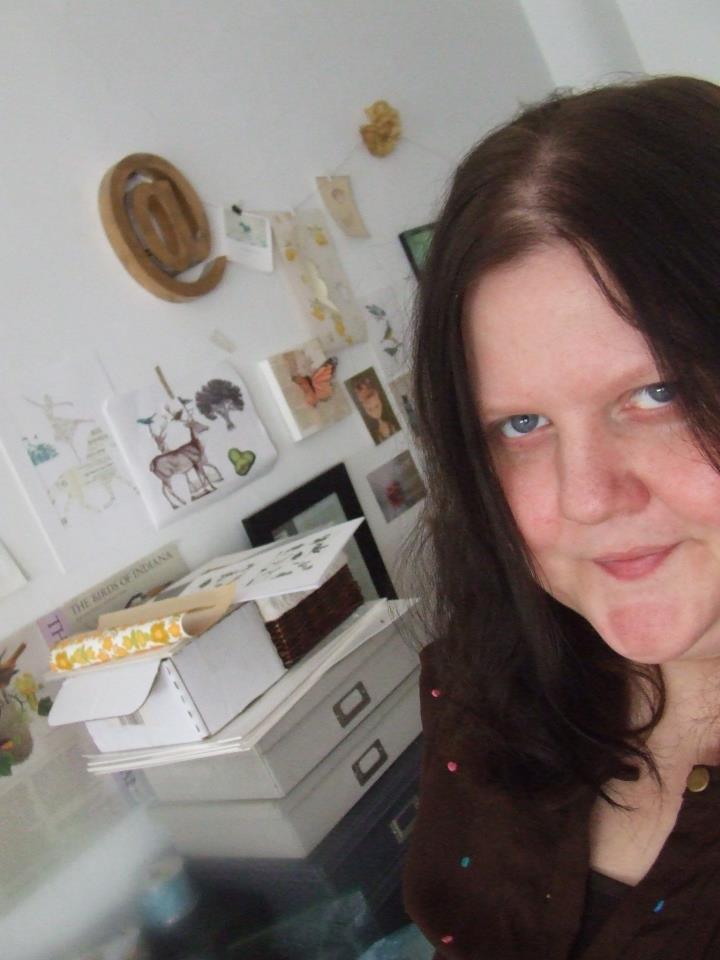
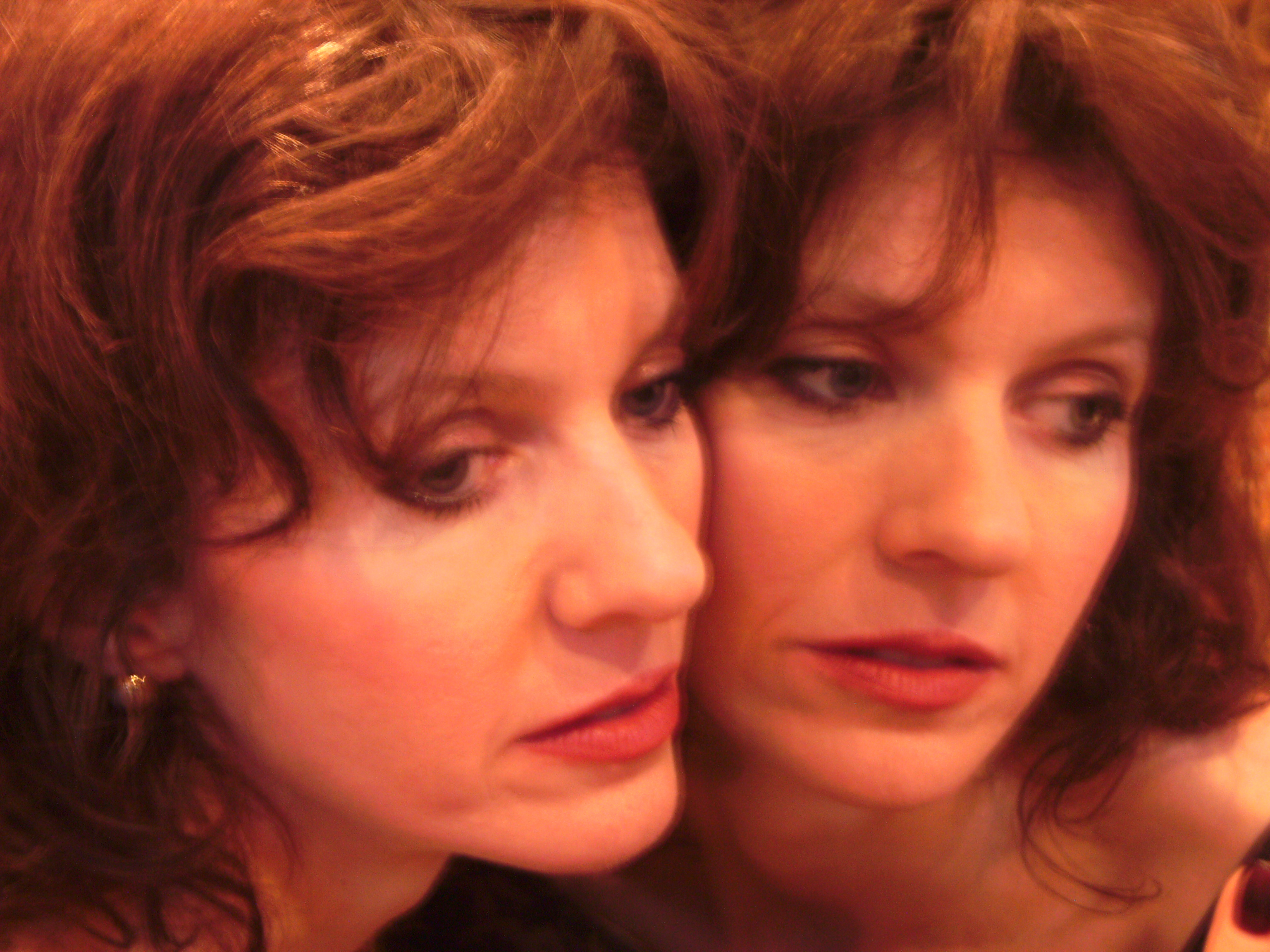
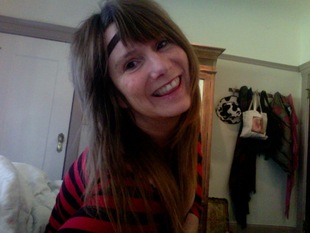
DSCF6224Molly Brodak

Website: aesthetixpoems

How is life divided into inner realms, outer, and sacred corporality? How does this affect the psyche of the individual and how with the manifestation of Twitter, Facebook, and Instagram acknowledge and incorporate these principles of self? How is image affecting the linearity of language? Poet, Molly Brodak in this interview exchanges how she, in the transcendent sense, intercepts these complimentary overtones. Consider social media. Brodak replies, “Words appearing on screens and not paper has changed language enormously … Twitter (for example) changes how people write. It is literally changing the wiring of our brains.” And how is this alteration taking place? She shares, “I think space between writers and their ‘audience’ (which for most poets, is other writers) has shrunk … the relationship between writers is more circuitous, reflexive, less top-down.” How we as individuals and especially writers explore these developments portends the future of language and communication.

In Brodak’s chapbook, Essay on Parts of Day, she differentiates, “Events in time are fractals of differences, you could say. The day exists but only insofar as it is made up of smaller ‘days’: i.e. hours, and then this extends to minutes and seconds, etc.” Linearity of time is dissuaded as much as the linearity of language. Continuing, “In ‘Parts of Day’ I was especially thinking about this house.” And “In ‘Pink Trees’ I was thinking about a lot of different spaces I had passed through … simply stirring (“something bad’–cake batter!).” The progression originates and diverts, anatomically impossibly interludes that increase the inspiration of exchange and experience of self and other. Eluding, “The fish comes through, all the fish come through, all the images, feelings, trauma, joy, etc., of experience, but the water is still the water. Good and bad, it all passes.”

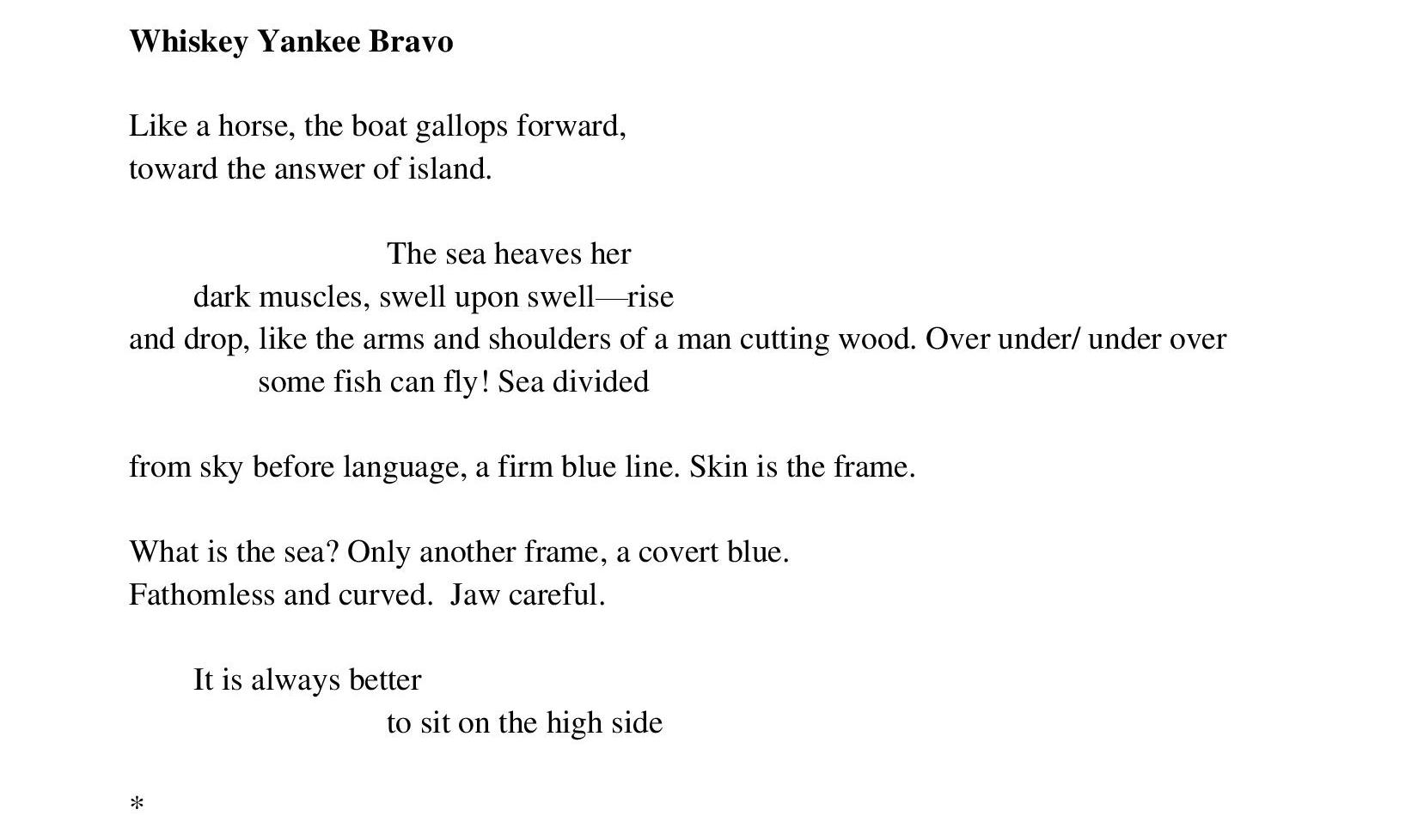
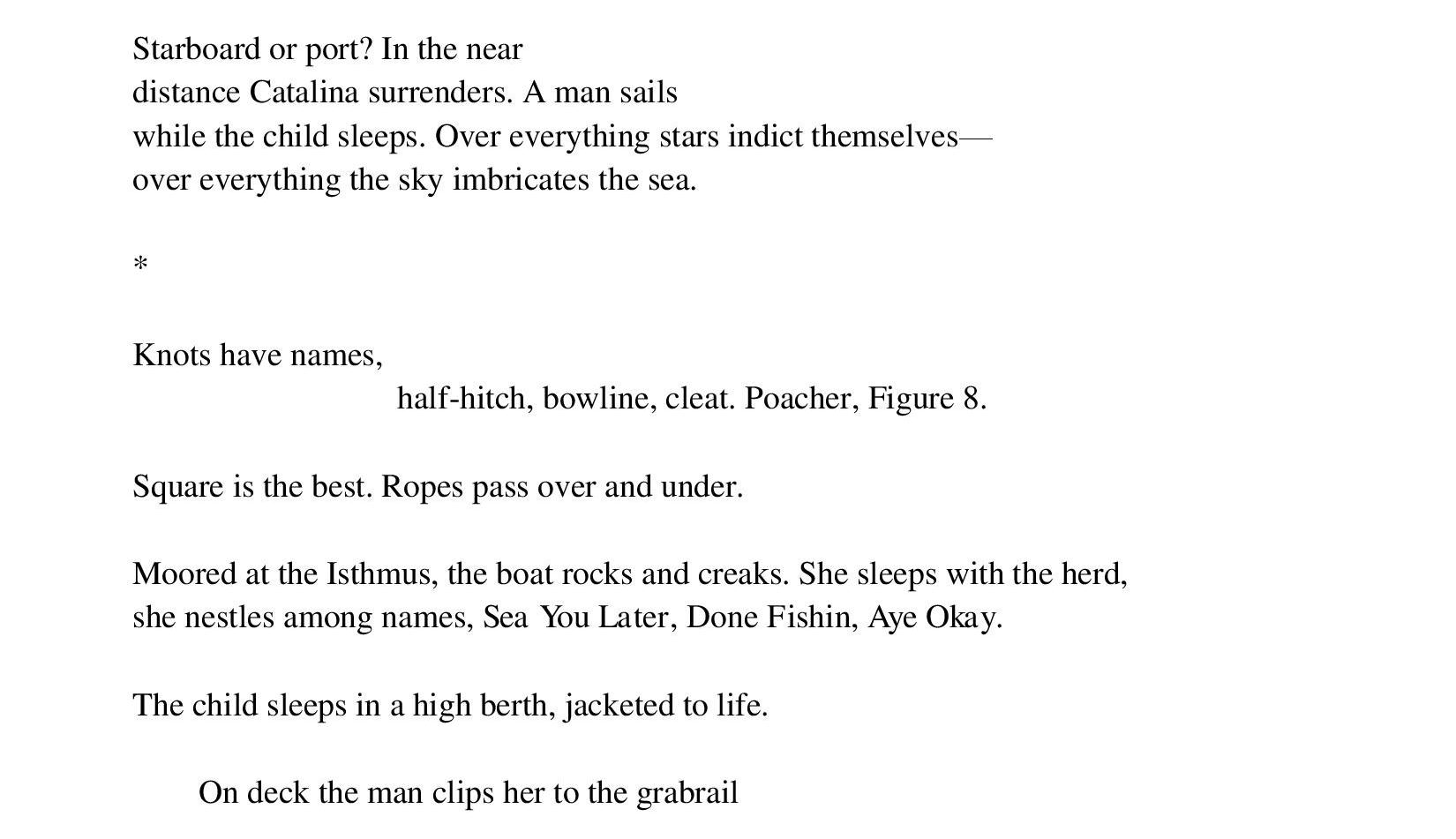
. Agate-page-001

.

1.)      What were the first inspirations that made you desire to become a writer? Who are your favorite writers and how did they change over time?

I have a strong memory of being 11 or 12 and picking Leaves of Grass off of a library shelf, opening it to a random page, reading a few lines (something about the sea) and suddenly crying a little. I was always attracted to poetry since then. I read a lot of poetry by myself as a teenager and didn’t really talk about it with anyone.

2.)      Who have been the creative inspiration / mentor writers in your career?

My first real poetry teacher in college, Edward Haworth Hoeppner, was the most help. He was the first person I’d met who was a real poet and just that alone helped me feel like it was something I could do. Because I mostly read poets from past eras, I just didn’t think poets really existed anymore, like they were unicorns or cobblers or something you couldn’t really be in this world.

3.)      How has your own work changed over time and why?

I think it has changed when I have needed it to change. As soon as I start to feel comfortable or confident about what I’m writing, or when I recognize repetitive patterns or ‘moves’ that I’m simply reformulating in each poem, I have to change. I think it’s good to feel uncertain and somewhat uncomfortable even while writing, because it means you are in uncharted land and that is the best place to be.

4.)      Have you been influenced by different genres, and if so how?

Yes very much. Really I mostly read nonfiction and I know it does influence my work. I’ve always read a lot from the natural sciences and history, because I think there is always something to learn, and I love learning. Facts or ideas from science and history show up in the form of fascination in my writing. Often I write out of a place of just pure fascination.

5.)      What are your plans for the future?

Writing-wise I plan to finish a book of nonfiction I’ve been working on which is a kind of memoir and also finish this other book of poetry I recently started.

6.)      What are your views on writing by women as it has occurred in the past twenty years?

My view on contemporary women’s writing is that it is evolving, probably like all kinds of writing has. I think there’s been a small shift in the consideration of gender, or gendered-subjects (“female” books/topics/motifs) towards gender-neutrality. I think this is a positive move. I think women still feel limited by these proscribed patterns in writing—whether it is the content of the book or its packaging that publishers expect/enforce. Slight movement away from stereotyping starts with people talking about it, pointing out offenders or problems, like VIDA is doing with their counts. I think the talk portends positive growth.

7.)      If you were asked to create a flexible label of yourself as a writer, what would it be?

I think the only flexible enough label that works is simply “writer.” It implies nothing but the action of writing.

8.)      The voice of a project collects around an assembled landscape. The music is hand painted in saturated strokes. In your chapbook Essay on Parts of Day, we read, “A clear bead. / A word I / say / you don’t hear. / A globe of fat / in a pattern: / starch bonds / soften and curl. / A treat. / A dress of salt. / I said aloud / close me.” The image slows to fold each subsequent motion. The movement simultaneously draws the cartilage of the relationship or sinew between bones of communication; the day in love itself. This is juxtaposed to your poem “Good,” where we read, “Have you been punched? Very expertly? / It is true you are sometimes not yourself. / That is how selves work, they hover / over their border.” Here the voice ponders rhetoric in a different emotional stasis. Voice transitions the way form, image, and thought is assembled. We model worlds around the poet. Values shift and transition our readiness to split energetic fields. How as writer would you say this has affected your sense of self?

Voice/emotions/values shifting? I think that is the self. Emotional states and ideas just pass through. It’s very much like a fish swimming through water. The fish comes through, all the fish come through, all the images, feelings, trauma, joy, etc., of experience, but the water is still the water. Good and bad, it all passes. It’s hard to avoid wanting to grab onto one of the ‘fish’, cling to some emotion or event or even person and demand that it affirm you or define your concept of self once and for all. But that doesn’t ever work, and then you get hurt because the fish eventually squirms off or dies. All of it is instructive, and I am extraordinarily grateful for poetry because it is a place where I can go to think about these things, or just make sounds I feel need making.

9.)      In the poem, “Eight,” “Creatures / come to be more sensitive / over eons. Weak / signals accumulate, / pressed into / a code I envy. / The code pressed into clay. / Devotion is primitive./ Depth’s ombre, / hills dulling, / a small thousand years.” “Devotion is primitive” and black in codes of thinking; in forms of a hug. In ways this sensitivity allows us to break into creaturing forms of message. But what does this do, this excavation also highlights innumerous presentations of voice and identity. Applying this to the present influx of social media sites, how do you believe each platform elaborates differences in our understanding? Do you think this evolves the linearity of language? How do you perceive this affects logos? How does this affect how we are received by our audience, and furthermore, how do you think this affects how we are received by our peers?

Does Twitter/Facebook/Instagram evolve the linearity of language? Yes, absolutely! Words appearing on screens and not paper has changed language enormously. This is a topic for entire volumes of research and writing, but it suffices to say here that yes, Twitter (for example) changes how people write. It is literally changing the wiring of our brains. Nicholas Carr has written extensively about how Google (for example) has changed our brains and shortened our attention spans. A lot of people have fearful reactions to this. But it is natural. Every animal is evolving towards easier and faster communication, but especially social ones like humans. I think space between writers and their ‘audience’ (which for most poets, is other writers) has shrunk. It’s shrunk because people wanted it to shrink. Because of social media sites the relationship between writers is more circuitous, reflexive, less top-down. This is a trend of our era because of the connectedness of the internet: you also see this movement in the classroom—more younger teachers want the chairs set up in circles or tables to break down the authoritative force of the teacher’s position.

10.)   When we tell stories we pack each mechanizing detail into the day. The section “Pink Trees,” in Essay on Parts of Day is as follows: “If there is no one else here / I am not here either. // A thin sour scent / settled on the pillows.// This is my / whole house. // A gold thread. / A new noise. // I haven’t written back / to him. He has forgotten. / His hand in my hair, / absent or violent. // I recall, I was the creature. / Clothes folded and hid. / Yellow-lit filth in the rug.” We saturate the lines into each livid experience so that the break becomes alive. The line has a pulse, the inhalation paves the day. When we search for enumerable variant, what happens to detail? Does the day exist, or do the differences and semblances of each experience also mean that every minutia is in fact a similarity of difference?

Thanks for saying that, and this is a good question. Events in time are fractals of differences, you could say. The day exists but only insofar as it is made up of smaller ‘days’: i.e. hours, and then this extends to minutes and seconds, etc. You can pay attention to the unit you want. I try to force myself out of ‘humanscale’ when it comes to time, and think about not days or months but centuries, eons, geologic time. It’s hard to think of a unit of 1,000,000 years because it is so beyond the human scale. And yet it is also totally ordinary and probably a more useful time unit when considering the history of the Earth (of which we are just an animated feature). Detail is weirdly paradoxical because it reminds me, of course, of the physical world, beauty, or someone in particular, but it also is tethered to nothingness, and it’s good to remember that and try to use it somehow.

11.)   How does your life affect your work and vice versa?

I just don’t see a great separation there to compare. For example, writing the poems in the chapbook manuscript sample I sent, I was processing events and information that I wouldn’t have been able to otherwise: an old house I was becoming obsessed with, books about geology or old art I was reading. Poems are places of processing and I think of them as ‘thinking’–crucial and inseparable from my life. In “Parts of Day” I was especially thinking about this house. There was an enormous old abandoned house in Augusta where I was living that I would break into, sometimes a few days a week, and just walk around and look at it. Actually it wasn’t abandoned, it was for sale and people were working on it and it would change sometimes. I don’t know how or why I started doing that. And it seems kind of insane to me now that I kept doing that. I think I needed a poem to figure it out. I think I was looking to change everything in my life and I was going to this house as a way to imagine myself in a new, unfamiliar space.

In “Pink Trees” I was thinking about a lot of different spaces I had passed through, having moved very often in my life. The poem starts with an incident, a trigger I guess–simply stirring (“something bad’–cake batter!) and then the poem sort of plunges inward and all of these images start to build out of that. I suppose one wants to always build some meaning out of things/events in one’s life. I don’t think that is my goal in a poem, but instead to maybe just examine them, see them “right” before they are gone. Or maybe, better, after they are gone. I don’t mean lamenting loss. Not praising it either, just seeing things, just beholding them, as they are. I want to learn from things/people I encounter, not manipulate them or force them into an artificial meaning-story.

profiles in poetics: Kristi Maxwell

Photo on 2013-01-14 at 12.04Kristi Maxwell

Website: www.writing.upenn.edu

Kristi Maxwell is a writer “very interested in the textual body as an analogue to other bodies in the world.” Our communication assembles the forward bend of our bones. She proliferates, “writing is saturated with one’s positionality, the forms our textual bodies take seem consciously or unconsciously meaningful and even performative.” This refraction “challenges the fiction of wholeness and the individual,” meaning why of course hell yes I am not a universal. We are integrated alternative bodies presented in whole “available” form.

The mind and body is expressive and accumulated in the tango of self; “we exist, we struggle, we manifest and play with this presentation.” If anything, she argues, “perhaps the scandal is that the body is the site of origination.” The binary of mind and body structure is bedeviled. Instead, “Intimacy has flexibility because it is porous rather than set … [and this] accounts for its relationship to vulnerability.” We receive, “spaces as testing grounds for each other,” we ask for reciprocation; the reciprocation of other.

Kristi Maxwell is the author of Re- (Ahsahta Press, 2011), Hush Sessions (Saturnalia Books, 2009), Realm Sixty-four (Ahsahta, 2008), and the chapbook Elswhere & Wise (Dancing Girl Press, 2008). Her fourth book, That Our Eyes Be Rigged, is forthcoming from Saturnalia in 2014. She lives and writes in Knoxville, Tennessee.

.
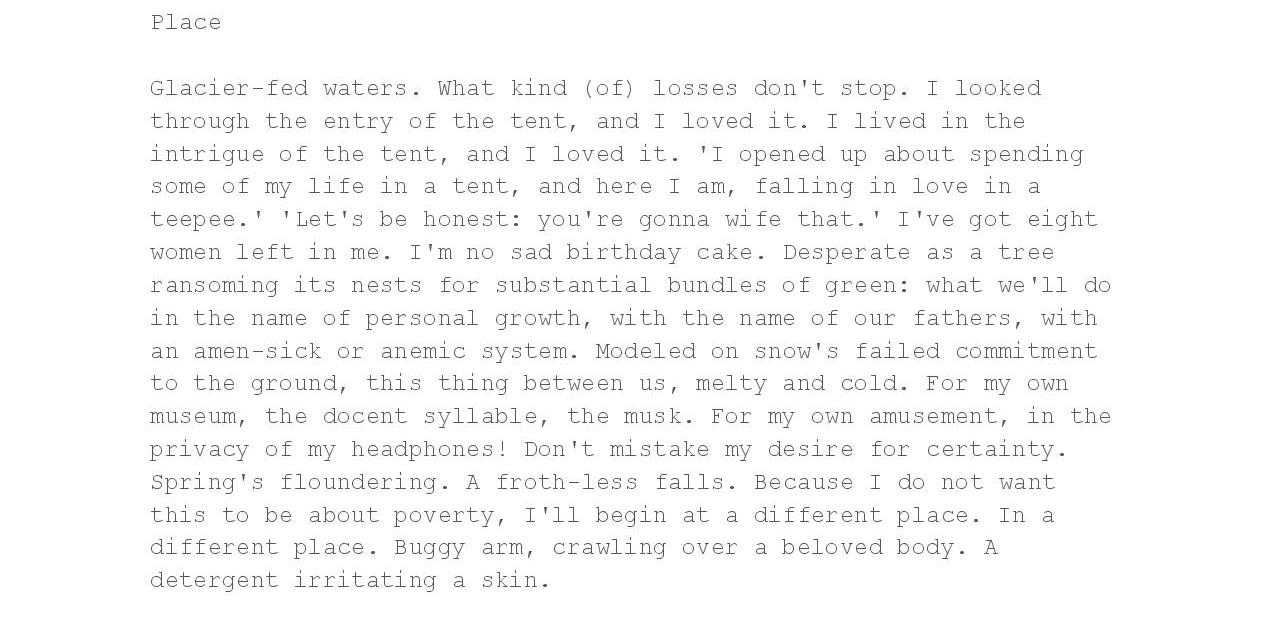
Place-page-001
.

1.)      What were the first inspirations that made you desire to become a writer? Who are your favorite writers and how did they change over time?

I have an amazing mom: she took me to the library; she read books to my sisters and me; she transcribed my first books, which I dictated to her before I could spell. I guess I didn’t become a writer: I’ve just always been one, and my mom recognized that in me and helped me cultivate it. I am a writer who has desired to become (also) other things: oceanographer, painter, archeologist, cartoonist, teacher, journalist.

In terms of poetry, in high school, e.e. cummings was my favorite—this was somewhat by default: his poems were among the few 20th century collections sold at my local bookstore, but I adored him (even his prose: my AOL screen name in the ‘90s was DelectableMTN, taken from The Enormous Room)—his playfulness, the energy behind his language, the sheer textual quality reinforcing the physical aspects of words, his ability to balance tenderness and irreverence. A lot of these same things describe the work of the poets I discovered later and who have meant so much to me: Harryette Mullen, Susan Howe, Gertrude Stein, Morgan Lucas Schuldt, Anne Carson, Tan Lin, C.D. Wright, Thalia Field, Tyrone Williams, Jack Spicer.

Even earlier was Gerard Manley Hopkins, whose section 8 from The Wreck of the Deutschland I have tattooed on my back. My speech therapist from when I was a little girl had me repeat his lines back to her to help me learn to form sounds. You really have to get your mouth around those dense word-clots of his so they make for good practice. Let’s see: Antoine Saint-Exupery, Jane Austen, Louisa May Alcott, and Anaïs Nin also mattered a lot to me.

2.)      Who have been the creative inspiration / mentor writers in your career?

The poet Wendy Cannella introduced me to the poems of Yehuda Amichai when we were in Slovenia together in the summer of 2001—that had a profound impact on me. Ashley VanDoorn, who was a year ahead of me in undergrad at the University of Tennessee and who invited me to the poetry circles she hosted in her apartment, has always been immensely important to my writing and my high valuation of community. My teachers—Art Smith, Marilyn Kallet, Richard Jackson, Jane Miller, Boyer Rickel, Tenney Nathanson, Beth Ash, Lisa Hogeland, Don Bogen—have all played significant parts in my creative life.

3.)      How has your own work changed over time and why? I think I’ve finally learned how to just relax into it. A lot of the early anxiety is gone.

4.)      Have you been influenced by different genres, and if so how?

Yes: I’ve been expanded by all of them.

5.)      What are your plans for the future? I’ve got big plans! I just made a summer projects list that includes working on articles about the poems of Evie Shockley and Morgan Lucas Schuldt, drafting a sci-fi novel, brainstorming a television series with poet Drew Krewer, writing away on a weird thing I started in April, returning to some lyric essays I’ve been approaching (and reconfiguring my approach to) since last year, translating, returning to PLAN/K, my manuscript that had been picked up for publication by the now defunct Mud Luscious Press and that I can return to with some new ideas since it won’t be coming out with them after all. And those are only my writing plans! I also have plans that involve quarries and swimming and plants and loving and impromptu dance parties and patio-sitting.

6.)      Who are promising women writers to look at in the future? Many of the promising women writers I expect I’ll be looking to in the future, luckily, we have access to now, too. My Tucson cohort: Frankie Rollins, Kristen Nelson, Stephanie Balzer, Hannah Ensor, Meagan Lehr, Annie Guthrie, Renee Angle, Deborah Brandon, Julia Gordon Saterstrom, Dot Devota, Johanna Skibsrud, Lisa O’Neill. I’m consistently excited by the writing of Emily Kendel Frey, Lynn Xu, Laura Sims, and Megan Martin. I’m excited to see what my former student Lisa Summe does. I was floored by some pieces Liz Latty read to me last summer. Oh my! There are so many promising women writers whose words we should latch our eyes onto—I could go on and on.

7.)      If you were asked to create a flexible label of yourself as a writer, what would it be? Hmm. I don’t really know—I feel like “writer” is pretty flexible.

8.)      The following passages are from a section of work titled: “TO INSIST ON THE ‘SOMENESS’ OF EVERY ASSEMBLAGE”. We enter into a dialogue as language enters cognition. We have an assumption of language as it is interpreted by the receiver. “The day invented your voice / someone heard … what is the lace verb / or the last verb instead? … your body is where?” The provocation is an invitation of one speaker to another. We read, “is the universal ever not not / flawed? is the flaw ever not / universal?” In this context do you believe we are ever able write the body on to the page, thus inflecting the hierarchy of the mind over the body? Or does this merely place us into universals that are the way in which we identify to others lacking specificity?  _____________ I am very interested in the textual body as an analogue to other bodies in the world. Because writing is saturated with one’s positionality, the forms our textual bodies take seem consciously or unconsciously meaningful and even performative. I remember the first time I read Jennifer Martenson’s xq28—a text whose words exist only in the space of footnotes—and thinking about how compellingly the textual body she puts forth comments on erased lesbian bodies and subjects. I’ve been thinking about this in the context of other writers, too—for instance, how the neologisms and portmanteaux in Morgan Lucas Schuldt’s work (poems most certainly bound to his very real experience of moving through the world with cystic fibrosis) seem to challenge the fiction of wholeness and the individual: I like the model of interdependency and proliferation his poems put forth. I’m wary of the notion of universalism because difference has a tendency to get quashed under its weight.

9.)      Continuing the discussion of mind over body, the following passage delineates: “I mistake stillness for death / I shake a little body / I nudge a bigger body / until I am satisfied / The spirit real and sexual realm collide / mentally bump and rub / A thought is always scandalous / as it steals from the body.” Body and mind here are in opposition. The mind conquers in every turn and steals from expression. How does language allow us to communicate if we cannot speak with our bodies? The “sexual realm,” is that what you see as body? How can we unite these terms in language, or do you see them as disparate entities?  ­­­­_____________ I do not see the mind and body as “in opposition;” here, the thought steals away (in the sense of slinks) from its originary site (the body)—perhaps the scandal is that the body is the site of origination. The body can of course include the sexual realm, but it is not limited to it. For me, thinking (and “the mind”) is an extension of the body; I remember first encountering the so-called French feminist theorists and feeling liberated by their rejection of the mind-body binary. It helps me to think about my relationship with language as an interspecies one: I am a body, language is bodies—we are in collaboration; my challenge to myself is to make myself available, to enact (to borrow from Donna Haraway) a response-ability. I am piercing through language—also absorbing it; it is piercing me, also absorbing the structures of my body and mind. This is perhaps why play exists, but also struggle: one of the things we manage as writers, I think, is the tension between our desire to master language and our inability to ultimately do so. We always say more than we mean to say.

10.)   Intimacy and vulnerability assume a position as the poem develops: “we may be always threatened / I regret making myself vulnerable / yet I do it again / I gape, I gap, gab and gab / I fail to gap gab instead / You are asked to figure out / a definition of intimacy.” And later,  “clothes make us out as what we are / one possibility / an intersection of forms / Each turtle holds a partial truth.” Wherein we knot in relationship, “What a scene! / Later we wee     ded / the poem / by which logic it holds / to memorize is to wed.” Memorization internalizes the processing of logic into the body; the brain. Do you believe intimacy to be clothed or unclothed?  “Wed,” as you say, is the body in language our ability to remember? And if this is so, can we ever define intimacy? Does our attempt to define intimacy tether us further from the close we wish to accept?  ­­­­_____________ I do not know if we can define intimacy, but I trust that we can experience it.

11.)   In the section titled: “EVERY TIME I WANT TO WRITE YOU, / I’M GOING TO WRITE A LINE INSTEAD:” the poem reads, “Name three empty things / A person can’t really be empty / so a person doesn’t count / Of course I do not believe that / people don’t count.” This is juxtaposed to, “What’s worth a fight / The struggle to feel one’s worth.” And the ending, “There is a point at which a person allows another person / to see her in a way she doesn’t like to be seen / This is how I explain trust / How a person gauges something he might otherwise misread / I have brushed my hair and my teeth.” In intimacy we form our own language. We understand each other in ways that if addressed in public discourse, would slip under the radar of the norms of communication. In trust we are able to open to intimacy. How do you see social media as supporting this unequivocal happening or transforming it? Intimacy is displayed over a larger scope as acquaintances are able to chime in, regard, or comment. Do you perceive this to be different than a normal house gathering or do you think the system is flawed? Does the action of listening to someone’s body and voice change the way our bodies are a part of the conversation?  ­­­­_____________ Making ourselves available to connect (and to connection) regardless the outlet seems to foster intimacy—putting oneself in a position to note (which always implies engagement): to pay attention, to listen, and to respond. I do think we are expanded by listening—by paying attention—we hold something of another person inside us and by responding, we give something of ourselves: intimacy perhaps depends on reciprocal alterity, which Joan Retallack so wonderfully discusses in Poethical Wager: the recognition of self in other and other in self. Thinking on this question, I recall phrases that are specific to my exchanges with particular friends—I recall gestures that are specific, semi-private movements that signify: we develop textual and physical languages to honor our intimacies. It is marvelous: the mutual recognition that sustains connection. I’m thinking of phrases and gestures that attach me to certain communities despite distance and time: I’m thinking of creating shared meanings—this seems different from knowing, which can become rather inflexible. Intimacy has flexibility because it is porous rather than set. One can of course know in intimacy (and know intimately), but intimacy makes room for uncertainty, too, and for change: this accounts for its relationship to vulnerability. In intimacy, we offer our spaces as testing grounds for each other. There’s a lot to pilfer there! But we will not pilfer, we will ask for…

profiles in poetics: Kristy Bowen

authorphotoKristy Bowen

Website: www.dancinggirlpress.com

www.kristybowen.net

From onset, poet Kristy Bowen has had, “an attraction to language combined with a mind prone to fantasy and imagination.” The fervor of one to, “[string] together … things, words, images, ideas, found text to create something entirely new.” In doing so, “The edges and structure are a little looser and more fractured, but I like it that way.” As editor of Dancing Girl Press, Kristy “[seeks] to get more women and their work into the conversation of American literature, it’s both frustrating and motivating…unfair and ridiculous in this day and age … [and] inspiring.”

Bowen’s work in this conversation alludes to the domestic settled in the everyday contemporaneous corporality of landscape and conversation. Domestic dust, she illuminates is, “a very closed, confined space, and one that belongs wholely to women .” This, “ordered system, or a system of systems … is subject to chaos and misfirings … desire, in the physicality of the poem, in the body that exists that is almost always in peril.” But herein, we are able to transform voice: “The layering of multiple voices and consciousnesses over each other.” Unification of subject and object intersect: “what seems to be true … is actually true.”

A writer and visual artist, Kristy Bowen is the author of a number of book, chapbook, and zine projects.   She lives in Chicago where she runs dancing girl press & studio, devoted to paper-oriented arts and publishing work by women writers/artists.
.
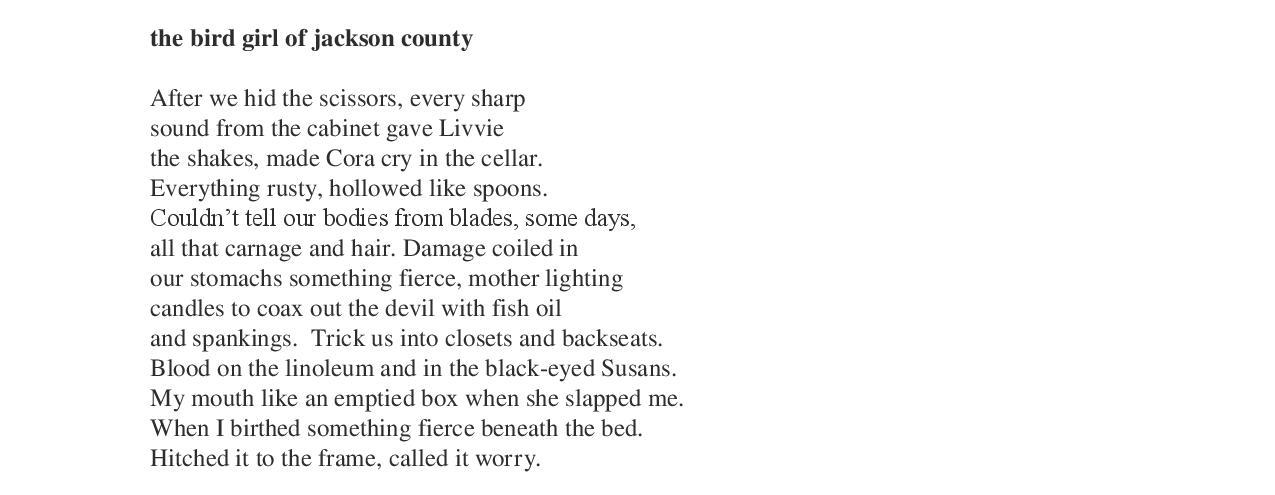
the bird girl of-page-001
.

1.) What were the first inspirations that made you desire to become a writer? Who are your favorite writers and how did they change over time?

I think it was always a certain temperament I had even as a kid, an attraction to language combined with a mind prone to fantasy and imagination.  This is what had me buried in books and stories from the time I could read and what made me eventually want to write them. I remember being 13 and enamored of Stephen King and Christopher Pike and deciding I needed to write a horror novel.  I had about a hundred handwritten pages before I gave up, but the need didn’t go away.  Consequently, as far as poetry goes, it was Poe that captured my attention and for years I could have recited “Annabelle Lee” from memory.   Though there were a number of things I considered and/or planned doing with my life, it eventually always came back to that.  By the time I was in college and had decided to major in English, I had discovered Sylvia Plath ( though then it was more her journals that I was interested, her life (and death) as a writer than the actual poems I would devour later).  At the time, it was mostly fiction writers that held my focus– William Faulkner, the Brontes, Margaret Atwood, Marilynne Robinson.  While I’d read and loved classics like Millay and Dickinson, for someone who would become a poet, I was pretty out of the loop on more contemporary poets until I got to grad school and started reading Plath again, and then Sexton.  Later, Louise Gluck and Jorie Graham and Anne Carson.  This was when I was really starting to write more and deciding to spend my life doing this. I had always focused most of my study and interests in the direction of female writers, but it was actually TS Eliot that sort of broke things wide open for me, the possibilities that The Wasteland offered in terms of what poetry could be.  By the time I landed back in grad school for my MFA, it was mostly current and emerging writers that excited me, people like Olena Kalytiak Davis, Larissa Szporluk, Daphne Gottlieb, Mary Anne Samyn, Sabrinah Orah Mark, and CD Wright.

2.) Who have been the creative inspiration / mentor writers in your career?

I’ve  never really had anyone I would consider a mentor, but there are people I’ve encountered, both in terms of their work and friendship, who have influenced shaped my work (either consciously or subconsciously), people like Simone Muench, Lauren Levato, and Daniela Olszewska ) And, of course, there is a lot of inspiration to be found by immersing myself in writing as an editor/curator, so many dgp authors and their work adding to the virtual soup from which my own work generates.

3.) How has your own work changed over time and why?

I think my approach to crafting a piece of writing (I say writing and not poem since most of what I write lately is actually more prose-like) has changed very much from when I was starting out.  I used to sit down with a subject in mind and hammer out a poem.  In the last 10 years or so, and this may have to do with my forays into the visual arts (collage and book arts), it’s become much more of a fragmentary process.  A stringing together of things, words, images, ideas, found text to create something entirely new. It is much more fun and interesting and much less dogged this way, and it often leads me in directions I’d never even imagined.   The edges and structure are a little looser and more fractured, but I like it that way.

4.) Have you been influenced by different genres, and if so how?

I mentioned collage and book arts, and many of my writing projects these days are entwined with and/or have a visual component. I think, with pretty much anything I write, story and narrative are the important part, the goal, what I’m reaching for.  It might be fragmented and messy and associative and tangential, but it’s there if you look for it.  I’m also interested in non-creative forms of language and text (instruction manuals, word problems, letters, ephemera, indexes, glossaries.)

5.) What are your plans for the future?

I pretty much plan to just keep doing what I’m doing, writing things, making things. I have a list of projects I want to get to at some point, titles for unwritten manuscripts, sketches and description of art projects, books projects, things I want to do with the press.  I just plan to keep moving forward.

6.) What are your views on writing by women as it has occurred in the past twenty years?

I think there has been a lot of progress, but also that there is still so much left to do (as things like VIDA statistics reveal.)  As someone who is seeking to get more women and their work into the conversation of American literature, it’s both frustrating and motivating.  On one hand, as a female writer and reader of women’s work, it feels limiting and unfair and ridiculous in this day and age.. But as a publisher, it feels inspiring to know that we’re fighting the good fight.

7.) Who are promising women writers to look at in the future?

I just read and fell in love with Poisonhorse by Brandi Wells.  dancing girl press has also recently issued  a handful of first chaps by writers that are just staring to make their way into journals and the literary world (Caylin Capra Thomas, Laura Mei Roghaar, Meghan Brinson, Sarah Cook, Sacha Siskonen.) This is, of course, in addition to a number of more established poets we publish, all of whom you should keep an eye out for..

8.) If you were asked to create a flexible label of yourself as a writer, what would it be?

I guess I initially used to consider myself a “poet”.  Especially since my attempts at writing fiction were lacked a certain amount of endurance.  I guess now, if I were to describe it, it would be more geared toward just “writer/artist” be that related to words or images or whathaveyou.

9.) “intertia,” is a poem of domesticity that revolves around cultural staples. “rabbits,” “milk,” “ribbon,” “lanternlight.” These are words that have origin. The poem reads, “The trick is distance. / The trick is diminishment.” If we change the materialism of the language, does the pathos attached to the object change the definition of domesticity?

The entirety of the first section does deal with the domestic, everyday space (as opposed to the strange, tranformative space in the other two sections.) It’s also a very closed, confined space, and one that belongs wholely to women.  I think everything in that section is moving toward something, or exists in those moments BEFORE one is moving towards something and away from that everydayness

10.)  In the poem, “a little fever,” “the glass factory, the space behind the body is warm, chambered // like heart. All wires and threaded light. / My mind a railcar sideways on a track”. We are confronted by a heavy nostalgic beauty. Take the following, “Times like these, / if sliced open, you’d find a lake, a length // of copper inside us. A litany of weathered / saints sitting in the bathtub. Our legs listless, // petal heavy.” This is a linguistic tradition of intimacy. As we attempt to evolve and change in language we cannot forget these damp, “sliced openings,” of self from our parents, our minds, and our tradition. How then do you suppose we blend and acculturate these differences, while at the same time change the dissonance of a violent past? How does this happen in language?

I think the setting, or even the concept of, a glass factory makes the world of the poems prone to danger, to sharpness, to fragility and destruction.  The body, and you could even say like language, is this very ordered system, or a system of systems, but also one that subject to chaos and misfirings.  But there is also desire, and in desire, in the physicality of the poem, in the body that exists that is almost always in peril.

11.) The active character in your poem “double tongue,” becomes divided. We read, “She’s prettier, but I’m the quick one. / There’s no telling what we can do / with our throats, this frail pipe // that joins us.  Rough lungs, / cloven heart. Each night, / I practice scales. Her.” And at the end of the poem, we are left with archetype: “We prefer to be addressed as Alice.” The duplicity is at once active and passive. The split character is one of force. Can please allude to the departure from the passive towards Alice who is a transitory dynamic duplicitous female voice?

I think this poem best illustrates what I was reaching for with the entire book in terms of voice.  The layering of multiple voices and consciousnesses over each other. Like the siamese twins, every voice in the book speaks both separately and yet also in unison.  The twins become both subject and object, which is a thread in the book, the idea of women as spectacle, as something to be viewed, to be watched, to perform.  And yet, they are also subjects with their own volition and narrative voice. In general, there is also a lot of duplicity going on.  Twins, sisters, hybrids (mermaids, bird girls). The intersection of what seems to be true and what is actually true.

12.)   In contrast to “intertia,” “la grande ploungeuse,” is a poem with no “milk”. The opening lines begin, “It’s the drama turns me / inside out, all black // velvet and the flare / of doves. Small things // placed inside the larger / like nesting dolls.” We can still attach ourselves to the domestic through “dolls,” and “doves,” but here, the “arc of women / [fling] themselves into // the taught air.” We have action, we have dissonance; we have movement. We do not have redemption, but we have voice. How does the language change specifically in regards to logos based definition of culture? And how does this affect our ingestion as readers of the characters within this undertaking of language?

This is, again, largely about the object/subject division.  The woman at the top of a diving board is both performance and performer. This was one of the last poems that was written for the book, and I do feel like the language becomes cleaner and meaner at this point, so I’m not as much sure that it’s the subject matter that changes the language or just happenstance. But I suppose if we look more at language itself as performance, at this point in the book, the concept of voice, becomes more layered and even muddy, even while the poems become more spare at times.

profiles in poetics: Annie Guthrie

annie_guthrie_photo_savannah guthrie

Annie Guthrie

Website: annieguthrie.net

thevolta.org

Annie Guthrie poetically transfixtures emphatic and empathetic states of semiosis. Jewelry, she explains, is about “noise, rhythm, placement, shape and tools and I think about tension and action in terms of poetry.” A drawing produces intervals of “mark-making and how the gesture is made in language outside of chronology or narrative.” The elements of “poetry [happen] across investigation and encounter and it isn’t separate from life.” Rather, “It’s the score of a call and response of the interior.” This compelling play enunciates how we encounter life and self.

In this interview, we consider Guthrie’s book the good dark forthcoming from Tupelo Press in 2014. The tangled economical positions cue “gossip,” “ontological and existential suffering,” “visibility,” and the constitution of this space. The main character tumbles towards desire; intimations of saturated intimacy. “Threat” occurs when “visible” dissolves the speaker’s ability to merge with her beloved. Guthrie shares, “The identity of this beloved is often confused, for her, and for the reader. This is an enactment of spiritual grappling.” It is only when she is able to accept self-difference that conscious calculation is surrendered. This, as Guthrie inspires, “[makes] room for…a spirit-ditch.” Ultimately, “The speaker is seeking self/meaning/god in everything, which includes ‘a boy,’ ‘the visible,’ ‘the body,’ etc. In short, everything is considered. All approaches, conceptual, physical, perceptual, biological, intuitive, spiritual, are considered.”

Annie Guthrie is a writer and jeweler from Tucson. She is the Marketing Director at the University of Arizona Poetry Center, where she recently curated a national symposium, Poetry off the Page, featuring poets who work in hybrid, multi-media forms and in other art forms such as film, theater, book arts and dance.

Annie has a metalsmithing shop at the Splinter Brothers warehhouse in Tucson where she designs custom pieces in platinum, gold and silver. Her how-to jewelry book, Instant Gratification, was published with Chronicle Books. Her jewels can be seen at http://www.annieguthrie.net and on Etsy.

Annie received an MFA from Warren Wilson and has been teaching Oracular Writing at the Poetry Center since 2009. Annie has poems published in Tarpaulin Sky, Ploughshares, Fairy Tale Review, Many Mountains Moving, HNGMAN, The Destroyer, RealPoetik, Everyday Genius, Omniverse, The Volta, Spiral Orb, The Dictionary Project, 1913, A Journal of Forms, Drunken Boat, and more. Her book “the good dark” will be published with Tupelo Press in 2014.

.

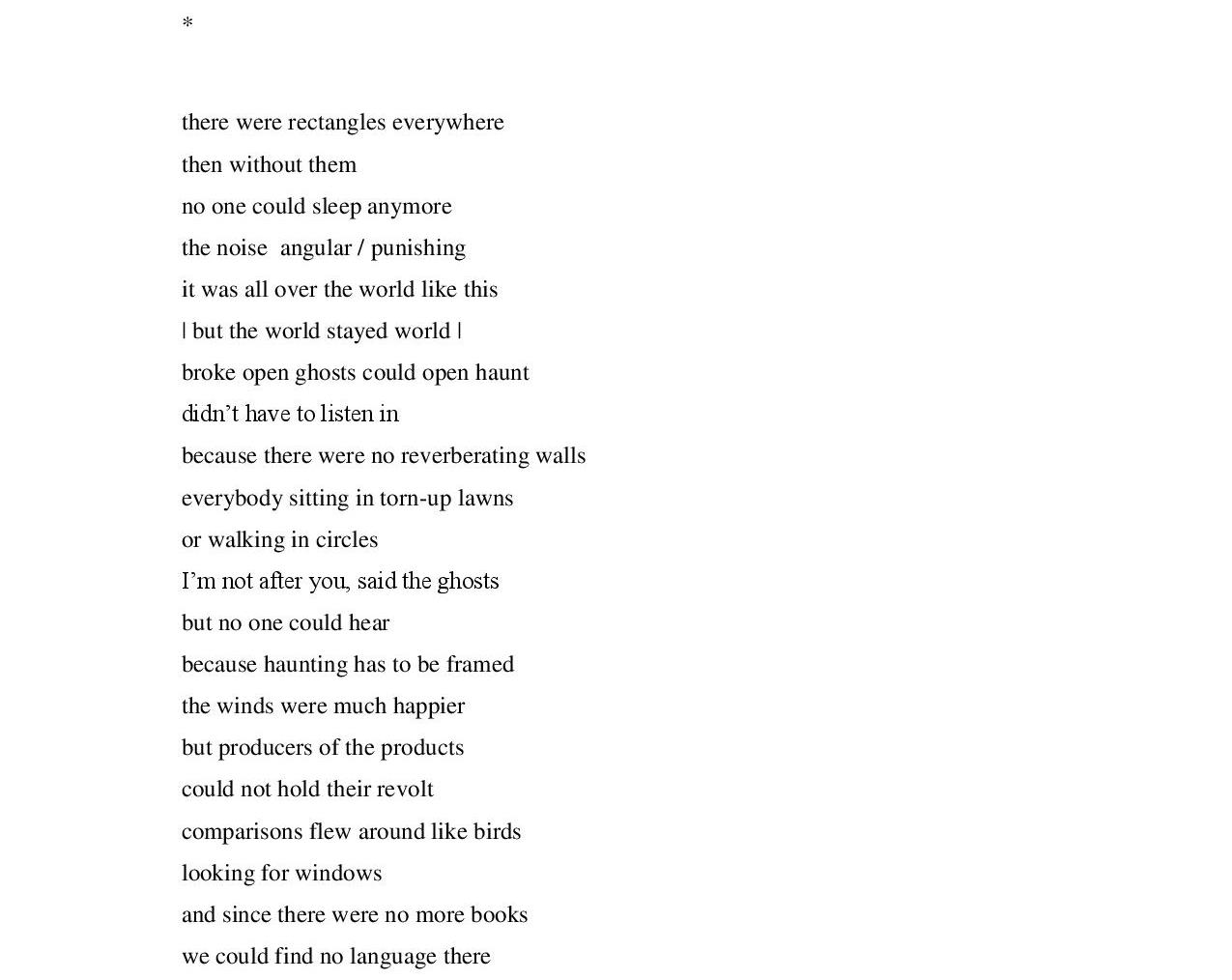
there were rectangles everywhere_jillian-page-001

.

1.) What were the first inspirations that made you desire to become a writer?

In fourth grade, I wrote a “collection” of my “creative writing stories.” The best one was called “fortunately, unfortunately.” It amuses me that my thought default mechanism was already in place. In sixth grade, I won a prize for reading the most books in the school. I think I wrote a hundred book reports. I was trained as a reader. My family was book-centered. In junior high I always hid in the library at lunch time to avoid the other kids. I think writing is just what young readers begin to do. There was never a decision. My Mom always made us keep diaries. I was really into journalism class in seventh grade. Writing was the way I worked out my being. It still is. I grew up identifying as a writer but I really wanted to be a painter.

2.) Who are your favorite writers and how did they change over time?

I like difficult writing. I think I always have. I like to be made to think harder or differently. When I was a kid I loved mystery novels. That has translated in adulthood to a love of mystic/shaman writer-thinkers like Helene Cixous, William Bronk, Bhanu Kapil, Gaston Bachelard, Sofie Calle, Michael Palmer, Virginia Woolf, Paul Celan, J.M. Coetzee, Jesse Ball, Fanny Howe, Fyoder Doestoyevsky, Hiromi Ito, W.G. Sebald, Fred Moten, Susan Howe. When I love a writer I read them for life. Additions are made, but my loves don’t change. I’m very loyal. I’m slinking around the thought-archives of Dalkey and Naropa and the Sorbonne.

3.) Who have been the creative inspiration / mentor writers in your career?

I worked with Claudia Rankine early on at Warren Wilson and she remains a powerful influence and friend. She’s got this ferociously lightning mind on top of this thick, established stratum of calm. An incredible human. Another great thinker that has shaped and re-shaped really my entire approach to writing, teaching, and to life is Kim Young, a painter, and a dream and IChing scholar. My husband Tommaso Cioni is my greatest teacher. He is a great manifester; he writes poetry with his lifestyle.

4.) How has your own work changed over time and why?

I don’t know. The subject of inquiry changes, so the writing changes. I like to think of the writing as what’s left behind of my inductions and transductions. It’s crafted evidence of thought. So whatever I am inspiriting gets its traces all over the pages.

5.) Have you been influenced by different genres, and if so how?

Absolutely everything has a chance to emphatically and empathically influence me. If I am making jewelry I think about noise, rhythm, placement, shape and tools and I think about tension and action in terms of poetry. If I am drawing I think about mark-making and how the gesture is made in language outside of chronology or narrative. I read a lot of fiction, because I am interested in building and accumulation. I often get a little lost in research when I explore other fields. I am teaching a class called “Oracular Mapping,” and so I am reading a lot of material related to urban planning. Right now I am reading “The Wayfinding Handbook,” “The Image of the City,” and “Visual Complexity: Mapping Patterns of Information,” for instance. The poetry happens across investigation and encounter and it isn’t separate from life.
It’s the score of a call and response of the interior.

6.) What are your plans for the future?

I’m going to continue teaching “Oracular Writing” at the Poetry Center in Tucson – it keeps me on my toes. Hopefully I can manage a tiny book tour when the book comes out. I have friends in big cities and I will probably just design it around where my loved ones live: Paris, New York, San Francisco, Los Angeles, Asheville…hmm I am forgetting somebody.

7.) If you were asked to create a flexible label of yourself as a writer, what would it be?

Artist.

8.) In the section: “chorus,” the voice of, “*the priest” orchestrates a scenario in which the “Lord performs a test”. The priest has set up “one mirror, in an empty room, the entrance to his home. / And the call to his guests: ‘Come, I’m in the back’.” The visitors are invited to walk through a “secret” opening admitting, “I don’t care for submission. As much as coincidence. / I’m not good at being very happy, / when not spoken to directly.” The request is one to look at themselves in a petri dish of sorts where the priest assumes an omniscient hierarchical presence. If this was a coincidental happening they may succumb in a discourse that places both respective intentions across from one another. However defining his position within his own home is alienating and their participation is black and white. They defensively acknowledge the test. The structure of the test dissolves the intimacy of the interaction. Does the test lack intimacy because of the structure of the environment, or does it lack intimacy because of the structure of the pathos? Which do you believe to be more hierarchical?

The priest is telling a story (an unlikely one for the priest to tell) about the Lord. It’s the Lord’s home, and the Lord’s test that the priest illustrates. However, the priest’s own sermon undoes his intentions, because his characters lose their identity in the syntax: the reader doesn’t know if it is the Lord whispering, or his guests. This is serving to abolish hierarchy. The syntactical arrangement itself is a gesture toward intimacy. Which is what the speaker is seeking throughout all her investigation.

How can the spiritual component of this piece be altered so that the priest is an open presence not lost in a looming controlling based spectrum that is based on fear? Well I wouldn’t want to do that, because it isn’t a tract, it isn’t redemptive. These poems are evidence left by a speaker, a seeker who leaves a trail of ontological and existential suffering.

Is this a critique of monotheism?
No, this is a poem- it contains our loneliness – god’s, and ours.

9.) The voice “*the gossip,” in the same section, is a tavern “damp, dark, filled with enough / to feel invisible.” We learn, “The Visible [is] a violent character here.” We read on, “She’s tethered to a game. The man will play the ground. / ‘What are you doing, protecting your rook?’ he’ll say, taking the queen. / ‘Trying to find a good place to hide,’ she’ll say, letting him down.” This societal reflection juxtoposes girl in her visibility as both victim and passivity. The “game” of social underpinnings is everywhere. “He” is the player. Here “She” lets him down. If she plays him does this admonish both visibility as violent and she as passive? Where in your mind do you see the flexible underpinnings of being both visible and non-violent, active, and cooperative? And why is this gossip?

The gossip tells of an encounter between a man and our main character (“she.”) The “visible” is a spiritual threat to her, she who is trying to mystically dissolve, or merge with her beloved. The identity of this beloved is often confused, for her, and for the reader. This is an enactment of spiritual grappling, but not a sociopolitical commentary. The gesture to want to hide inside of the inanimate and too-small rook reveals the crisis and confusion of the character, she missing entirely he man’s grounding gesture to keep her in the game (in the present.) Gossip is not real, it’s gossip. A poem is a kind of gossip, that is, it can only touch some part of the truth about this kind of crisis.

10.) The character/theme “*gossip” at one point in the “chorus,” shares, “In alongside intuition a certain new loneliness creeps / when she found out she might be the inventor of herself / the light the words her eyes spill.” This is juxtaposed to the transition in the last section is titled, “body,” in which an asterisk is unaccompanied, and “I” is used instead. We listen, “what if wish & love open at the same time? / I ask the glass with a kind of dare // (the difference between fantasy and prayer is innocence).” If the fantasy is towards self it is both love and open. This assumes a type of “innocence”. Does this ask us to reassess our patriarchal lens of competition?

It’s meant to reveal a move the character has made, into perhaps a place without reference. Her investigations are leading her into a reassessment of the lenses she has been using.

11.) The work ends as follows: “I counted truth for my life, recanted – / finding a sameness in things. // The body took the blame / for the deeds of the mind. // It was this kind of human.” “Human” becomes “body”. In sameness we depart from gossip, but how do you see this partaking in language? How does our difference assemble our visibility outside of fantasy and where does the body reunite with the mind?

When awareness achieves “lightspice,” fantasy and difference are momentarily dissolved (the robes fall; dark). This kind of character doesn’t end, and can’t, inside language, do anything but pick up difference again (to spell, to read, is to differentiate.) Perhaps the reunification will happen next: when difference itself is acknowledged, reunification as a goal, might be dropped. Which could make room for.. .

How do you see genders re-equating to each other outside of this pathos in visibility?

This book takes us through a spirit-ditch. I don’t see it as a gender-differentiated place.
The inequality suffered is not happening between genders here in this place. The speaker is seeking self/meaning/god in everything, which includes “a boy,” “the visible,” “the body,” etc. In short, everything is considered. All approaches, conceptual, physical, perceptual, biological, intuitive, spiritual, are considered.

profiles in poetics: Maureen Alsop

maureen 2013 032Maureen Alsop

Website:

www.maureenalsop.com

www.alchemicalflamingo.blogspot.com

Constellatory impressions of self, need “[agents] for energy [shifts]” in relationships. Maureen Alsop is a poet who sifts through the “imprints, subtle accumulations of a personal, yet collective landscape.” She expresses, “The YOU I refer to is always multilayered. You, the stranger. You, my father. You, deceased. You, who go on living. I know you; you know me/ not. You are whispered of. You am I and I am you.” And here, the “fractal patterns in nature suggest,” interpersonal relationships “theoretically [as] institution [are] easily a miscarriage. Relationships are powerful”. We manifest self-reflections of choice motivated in life. This energy is an “act which, in consequence, forces a form of ‘self as installation.’  I am a walking, breathing relic of my departed tribe.” We are subtle accumulations; relics of our past, present, and transformative future tribes.

Maureen Alsop, Ph.D. is the author of, Mantic (Augury Books)Apparition Wren (Main Street Rag), and several chapbooks, most recently a blade of grass made bare by its own anatomy (Blue Hour Press)Luminal Equation in the collection Narwhal (Cannibal Press), the dream and the dream you spoke (Spire Press), and 12 Greatest Hits (Pudding House, pending). Additional chapbooks include Nightingale Habit (Finishing Line Press) and Origin of Stone. Maureen is an associate poetry editor for the online journal Poemeleon and Inlandia: A Literary Journal. She presently leads a creative writing workshop for the Inlandia Institute, the Riverside Art Museum, and The Rooster Moans.

.

ALSOP WQ-page-001 (1)

.

.

1.)      What were the first inspirations that made you desire to become a writer? Who are your favorite writers and how did they change over time? 

I don’t think I desired to be a writer; I sort of couldn’t help it.  Favorite writers have not changed for me. I still love and return to D.H. Lawrence, Katherine Porter, Tennessee Williams, Ernest Hemmingway, T.S. Eliot, Larry Levis, and many other writers. I also like reading random sources for ideas, books on symbolism; the Bible (though I’m hardly religious) is a great source text. There are some beautiful poems and language in those testaments.

2.)    Who have been the creative inspiration / mentor writers in your career?  Too many to name…

3.)      How has your own work changed over time and why?  I used to obsess on narrative aspects of poetry. I think this was because I was keenly aware that I was a “closet anti-narrative anarchist.” I still believe that poetry is often sacrificed to fiction. Eventually I figured out how to wed my antithesis.  I worked at that to some satisfaction (narration).  It’s like learning a technique. Not that I’ve mastered narration, but I understand it’s mechanics well enough, respect the human tendency for story, and appreciate my own way of thinking. Now I can allow the structure of my poems to fall away just enough to see where my poem’s scaffolding supports it’s own rawness.

DIGITAL CAMERA

4.)      Have you been influenced by different genres, and if so how? I’m highly visual. So visual imagery whether it’s a physical landscape I am standing in, a film, a painting, these effect my psyche and shift my approach to language by inexplicable means.  I remember experiencing some “writer’s block” (which I don’t really believe in) a few summers ago so I decided to watch every Ingmar Bergman film I could lay my hands on as a source to write from.  Very little writing trickled out, but recently I shared a poem with a friend and she felt that the poem was a reflection of Bergman’s Persona.  The association shocked me.  I believe in the power of the subconscious.  Let your subconscious do the work and shut the thinking brain off.   Be ready to write, always.   I also have a steady awe for physicality. Getting into myself physically and also ‘getting out of the way of myself’ is a revelatory prowess.  Physical practices: breath-work, bodywork, meditation are increasingly as important to me as my writing.

5.)      What are your plans for the future?  I’ve heard the phrase, “if you want fear, create a future.”  In this transitional era, I’ve started to create a few projections—mostly finger-puppet shadows on a blank tableau.  My intimations rework themselves without reference.  Hawk’s flight-patterns frequently crowd my evenings.

6.)      What are your views on writing by women as it has occurred in the past twenty years?

The New Yorker article indicating that women writers are less likely to be published than their male counterparts was extremely discouraging.  Yet in our country, probably more than any other, we have more writers than we’ve ever had.    I’m not sure really what to make of technological changes and trends. Movements are vast and rapid. Opportunities create optimism—our culture seems to promote both of these qualities in equal balance.  Poetry circles have small drains in which to swirl/channel.  I guess my view would be “do what you want to do, work at it, expect nothing, try to enjoy the process.”  I don’t see any other choice or barrier beyond one’s own determination to grow.  Maybe I’ll adapt a masculine pseudonym and watch my readership multiple (joke).

7.)      Who are promising women writers to look at in the future?  Hillary Gravendyk, Sarah Maclay, Amy Schroder, Elena Karina Byrne, Farrah Field, Bethany Ides (performer/artist), Louise Mathias, Carolyn Guinzio, Nicelle Davis, Lily Brown, Bronwyn Tate, Julia Cohen… there are many

8.)      If you were asked to create a flexible label of yourself as a writer, what would it be? Anyone who writes poetry probably lives in an atypical reality; one’s imagination, self-possession, the requiescat ability to filter environmental influences, these are potent manifest allies. Call me crazy; call me Ishmael.

9.)      The poem “Thumomancy” is titled and speaks to the divination to be inspired, not by God, but of soul. In corporeal form we are asked how the body is an immortal essence of self, foreseeing future events.  We reevaluate the connection of body and passing, not from love, but humanity. A squirrel is majestic “constructing snow angels, turning your palms/ skyward, but the gesture/ of your hands were not holy. Tonight the oncoming/ boxcar whistles your unfolding.” Instead of an ideal future utopia the speaker gravitate to a past “you” in the form of a squirrel. Not the most flattering of flittering animals. Here “night has given me an addiction,” an “accident without origin.” An “unfolding” occurs within the soul as it collides with the collapse and ultimate death of the squirrel. Please extend these notions of the unfolding as they occur both in the death of the body of “you” and of the soul. Is the connection to the “other” through death? And if so, why is this poem in the middle of the book?

Well, as much as I have empathy for a squirrel, the little critter was an incidental sideline for the poem, not meant as the sole focal point.  Though I am intrigued that the poem may be interpreted that way, and honor that interpretation so let me consider the squirrel… where s/he came from and what s/he means.  I do remember one summer in Canada (we had a cottage on Lake Huron we visited annually) that a squirrel shimmed down the chimney, where he became trapped and died.  Not a joyous occasion for my parents for sure. I felt that critter’s desperation, imagined myself trapped in the cottage, starving.  There were tons of squirrels where I grew up. I could spend hours observing. I remember a painting I created of a squirrel that I was very proud of as a kid. When I moved to Australia, then California, there were no to very few such creatures. They are not my favorite animals necessarily, I’m not a big rodent fan, but I do love animals, so see them as a cousin.

Absence’s force unfolds, as you say, by multitudes. In relation to the poem, based on a divination by the means of one’s own soul, obviously there are some childhood references lurking.  The beginning of life on the planet, the understanding of the means for being alive, the illumination of joy and it’s undercarriage/partner, sorrow.  Creating snow angels.  The sound of a distant train.  A dead squirrel.  These are all imprints, subtle accumulations of a personal, yet collective landscape. Soul, transgression’s agent for energy’s shift, seems a central preoccupation, thus a centerpiece poem.

The YOU I refer to is always multilayered. You, the stranger. You, my father. You, deceased. You, who go on living. I know you; you know me/ not. You are whispered of. You am I and I am you.

10.)   “Epithalamium” is a poem where God is a coughing song embedded into the logos of a young girl. She awaits passively her confinement as she digests the language of His omission. The Epithalamium is a traditional Greek song in praise of a bride and groom on the way to their marital chamber.  But the poem has a conflicting sentiment. “The small girl never looks up” as she wants to “kiss someone familiar,” instead “[staring] at a diagonal / scar down the wall,” staring just long enough to see Him. God is a hierarchical king in this ideology overpowering the girl without redemption. Traditional marriage here has no redemption. Does this reflect in your opinion our current marital conversations and how do you believe this logos and song needs to change to empower the partnership?

I love being married, but theoretically marriage as institution is easily a miscarriage. Relationships are powerful.  However all these relationships and structures we develop are self-reflections.  I do think marriage can be redeeming. In this poem, the speaker comes to terms with her marriage to life, which is also her marriage to death.  It’s not exactly a poem one would hear at a traditional wedding, though I like to imagine that (a wedding in which everyone wears black, funerary right?…).   The postulate is the question of death rather than marriage. People have a natural fear of death, which in itself is quite natural. The poem is an understanding, a marriage to death; this partnership is not exclusive. Intimate, yes.  A profound, awakening? No. Probably equivalent to any other event (even as simple as flossing one’s teeth) signifying we are alive, small epiphanies; the light we cannot hide from is the same.

11.)   Death and memory essence in “The Arrival of Memory”. The “soul inside soul wants to talk,” “later this fall will know you were not alive,” and a “voice that won’t drift keeps naming the water a blue afternoon.” In “Necromancy,” (a divination of one speaking to the dead) we read, “what finds you again is you,” “who find love in secret will not know the tremble of the body,” and “your hair will be filled with kisses, larkspur, birdseed. A crown of bees fill the mirror.” Can you please discuss this interlocution with the past, how the soul connects to memory, and where presence and clarity enrich the conversation?

If the soul exists it is transcendent.  If we consider soul as life force, what transcends is our ancestral lineage through the mechanism of the body.  Our DNA is as delicately positioned for survival, as it is destruction/ completion. Fractal patterns in nature suggest an end to any continuum.  The imprint of this poem, as with many of the poems in the collection, Mantic, involved a repositioning of awareness into my father’s psyche. He passed away when I was seventeen, but his life (and unexpected death) resonates in my every fiber.  Many of the poems were also written as my mom began to decline.  She too has recently passed away.  What remains is my animalistic longing to embody their energy; an act which, in consequence, forces a form of “self as installation.”  I am a walking, breathing relic of my departed tribe.

profiles in poetics: Amy Newlove Schroeder

Photo_41 (2)

Amy Newlove Schroeder

Website:

www.oberlin.edu

lafovea.org

bostonreview.net

http://witness.blackmountaininstitute.org/http://www.chaparralpoetry.net/author/amy-newlove-schroeder/

Amy Schroeder is a poet whose sensuality molecularly blankets communication of the senses as they translate experience and cognition to the page. In this equinox we invite into the conversation “the woman’s subject position, sexuality and sensuality, grief in its many forms [and] juxtapositions between the high and the low, between the sublime and the quotidian.” As a writer she is motivated by the accent of sound and image telling us, “it is as though I am a blind woman feeling her way through unfamiliar terrain.  I try to find what feels accurate and move toward that, rather than making formal decisions about what seems appropriate or correct.” So chance balances the juxtaposition, the poem as planet, the piece as whole.

Schroeder expands and contracts the fricative movements of the “alienation that is a part of human life”. In our humanity we symbiotically repel intimacy as it envelopes us. She continues, “We are almost always alienated in some way, whether it be from our own selves, or our family, or a lover, or from the larger world that surrounds us. I feel that most of life takes place in the spaces in between—when we are moving away or towards the things that matter most.” It is in the dreamscape that we are able to personify this delicacy, this paradoxical stasis that brings us towards love; a translation. As to which she says, “Love is also about a similar kind of action, a chronic, and not always successful, effort to make ourselves understood to another person … You cannot engage with someone intimately without being scarred.”

Amy Newlove Schroeder’s first book, The Sleep Hotel, was published by Oberlin in 2010. Work has recently appeared or will be forthcoming in Field, Witness and Boston Review. She holds a PhD in Creative Writing and Literature from the University of Southern California, where she currently teaches writing. She lives in Los Angeles.

.

001 002 003 004 005 006 007 008

.

1.)    What were the first inspirations that made you desire to become a writer? Who are your favorite writers and how did they change over time?

I was that kid who walked around with a book all the time (and I do mean all the time—I have been known to cross the street without lifting my nose). Like many escape artists, I think that I transformed one mode of escape (reading) into another (writing.) I made my first attempt at age seven—a short story about a missing diamond necklace. (The thrilling conclusion: Stolen by a greedy blue jay and had hidden in her nest.)

Like many writers, I found poetry as an adolescent. It was a balm to my whipsawing emotions. I read the usual cast of characters: Whitman, Ginsberg, Plath.  While these writers remain important to me, as I got older I learned that there were actual living poets whose work I could read. I have been chiefly influenced by contemporary female poets: Jean Valentine, Louise Gluck, Brenda Hillman, Sharon Olds, Jorie Graham. While I still read these poets, they were very important to me when I was in my twenties, when I was trying to find voices I could connect to both pyschically and poetically.

2.)    Who have been the creative inspiration / mentor writers in your career?

I have been very fortunate in finding mentors, and I have had many.  My earliest mentors were my high school English teachers. I attended Berkeley as an undergrad, and I was lucky enough to be accepted into an upper division poetry workshop taught by Yusef Komunyakaa. When I was pursuing my MFA, I worked closely with Carl Phillips. Most recently, when I was completing my PhD, I was mentored by Carol Muske-Dukes and Susan McCabe. The various ways that these teachers have helped me are too many to recount here, but one element of the teacher-student relationship has remained consistent—it was not so much that these poets taught me how to write, but that they provided support and connection. It is possible to learn a lot from a mentor, but I think what is more important and more sustaining is the confidence gained from having someone you respect believe in you.  Writing is a lonely practice, so having mentors is both crucial and nurturing. Now that I am beyond my studies, I find myself being inspired by friends who are poets—Gretchen Mattox, L.B. Thompson, Elena Karina Byrne, Joy Katz, to name a few.

3.)    How has your own work changed over time and why?

The writer’s journey is necessarily one of discovery—discovering one’s subjects, discovering a voice, finding a comfortable form. I think the key element that has changed in my poems is that they have grown less accessible—not intentionally so. My earliest work was fairly uncomplicated, even simple. Paradoxically, I now feel much clearer about what I want to talk about—the woman’s subject position, sexuality and sensuality, grief in its many forms. I am also very interested in juxtapositions between the high and the low, between the sublime and the quotidian—the experience of listening to Bach in the car while giving panhandler money, for example.

4.)    Have you been influenced by different genres, and if so how?

My taste is catholic—I will read pretty much anything, from bestsellers to obscure texts on ancient mystery religion. I’m not sure how my reading has affected me formally, but I think the content of my poetry reflects that variety. The Sleep Hotel contains a wide range of references, from a Led Zeppelin song to the medieval text A Cloud of Unknowing.  I like to mix different things together and see if they spark—perhaps that is a result of my varied reading practice. Mostly I read like an addict—when I am reading, I am already thinking about the next book that I will want to read. One of the defining qualities of the addict is a sense of insatiability—I suspect that this feeling or yearning can be identified in my work.

5.)    What are your plans for the future?

I am currently working on my second manuscript, which is tentatively titled Lamia. I am also working on prose in various forms—an essay about the year I lived in Istanbul, some short stories, some book reviews. I also have plans for a novel.

6.)    What are your views on writing by women as it has occurred in the past twenty years?

This is a difficult question to answer, I think. Perhaps the most significant change is the great expansion in the number of female writers, particularly female poets. Women have always written, but historically their work was often marginalized—one must always remember Woolf’s attempt to picture Shakespeare’s sister, and then being reminded by a certain text on the history of England that women at that time, were more likely to be “locked up, beaten and flung around the room,” than to be writing poetry. In today’s literary world, women are taken seriously—while sexism still certainly exists in the literary world, I think it is less of a factor than in say, the days of Bishop and Moore. Certainly we do not have to contend with the resistance that Dickinson faced. At the same time, some have suggested that within the broad landscape of American poetry, there is a tendency to celebrate beautiful boys—attractive young male poets. If this is true, I doubt it is a symptom of illness in the world of poetry—rather it is a reflection of a kind of sexism that is deeply ingrained in our culture.

7.)    Who are promising women writers to look at in the future?

Katie Ford, Hilary Gravendyk, Susan Stewart, Rachel Zucker, Noelle Kocot, Saskia Hamilton, Dana Levin, Carrie Fountain, Julie Doxsee

8.)    If you were asked to create a flexible label of yourself as a writer, what would it be?

Reluctantly compulsive post-confessional confessional

9.)    Your book Sleep Hotel, out from Oberlin College Press embodies an intimate lyric that is at once encompassing and foreign at the same time. Thematically this is shown in poems like the “The Sleep Hotel,” that displaces a familial relationship to a hospital room and ice chips. But also in your poem “Pacific,” where we read, “the water is so impersonal, / a stranger to everyone”. The music in these transitions is effortless. Can you describe how sleep interacts in this discussion? I am also interested in your choice of phanopoeia and melopoeia to facilitate these seamless tensions?

In writing about Dante, Pound suggests that we should first read him only for the images—the leopard should act only as a leopard, rather than as something for which the leopard stands. I tend to hew to this philosophy in my own work—I try very hard to get out of my own way. I try not to think when I’m writing—instead, I feel as though I am trying to find something that satisfies me, both sonically and verbally. As Stevens writes, “The poem of the mind in the act of finding / what will suffice.” I am trying to find what will suffice.  When I am writing, I am led by sound and image—it is as though I am a blind woman feeling her way through unfamiliar terrain.  I try to find what feels accurate and move toward that, rather than making formal decisions about what seems appropriate or correct.

Your reading of my work seems accurate—I do tend to write from a place that is extremely intimate. At the same time, I try to contend with the alienation that is a part of human life—we are almost always alienated in some way, whether it be from our own selves, or our family, or a lover, or from the larger world that surrounds us. I feel that most of life takes place in the spaces in between—when we are moving away or towards the things that matter most. My poems come from those interstices, those betweenpie mountains, as Hopkins described them.

The image of sleep was crucial to me as a vehicle for describing this sensation of being both connected and disconnected—when we sleep, we are apart from everyone, but at the same time we may be dreaming about the people in our lives. Sleep also echoes the creative process for me—a kind of lucid dreaming, that is transitory and not completely under our control.

10.)    In your poem, “After Reading Lao Tzu,” we are presented with a sentiment from Lao Tzu, who states, “The one who speaks does not know, The one who knows does not speak.” The lyric proceeds, “Meaning we were all sad // Meaning that when you were seized by desire, it was nothing more than flesh, bared above the collarbone.” In regards to mind body dualism, and the act of writing the body back on to the page, is all writing then a bare collarbone? In your opinion how do you believe that poetry addresses this sentiment, knowing and unknowing, and how does this interact with the body?

Well, if you read the line carefully, it is defining desire, rather than writing. Of course, all poems are in some way about poetry, so in that way it could be construed that all writing is desire, and thus metonymically, it can be asserted that the poem is saying that writing is only about the fleshly, only about the momentary act of brushing someone’s bare shoulder with your fingers.  Your question is complicated, because for me the body is central to my work—at the same time, I am invested in the creation of a personal metaphysics, that is to say a way of understanding the world through a kind of emotional, sensory and spiritual philosophy. We understand the world first through the body, through the five senses. Then we attempt to process that understanding in the mind. Sometimes the two cannot be reconciled. And sometimes the bodily supplies us with insufficient information, or information that we do not want to accept. It is difficult to accept that desire may be only desire, that there is nothing beyond the body.  At the same time, this is something that must be accepted, because even if we have a spiritual faith, our bodies are finite in this world.

11.)    Communication, from the speaker to the received, even how it is presented internally and externally is a translation. This is further complicated with speech versus writing, a predominately right brained activity and writing which is more linear and left brained. In your poem, “The World is Transformed by Rain,” the poem reads, “in translation, brown rewritten in green. Possibly all love is translation”. The poem continues, “I never understand what you say when you’re speaking. You change me, / and I let you.” Love is translation never completely understood yet transformative. Could you please elaborate your interest in juxtaposing rain as opposed to sun in this idea of transformation and how you believe love interacts in translation and communication?

For me, poetry is about translating what is only in the mind, only understood privately, into something that can be comprehended in the  known world. To some degree, love is also about a similar kind of action, a chronic, and not always successful, effort to make ourselves understood to another person. Sometimes that effort is fruitless, but it always leaves its trace upon us. You cannot engage with someone intimately without being scarred. And I don’t use the word scarred in a pejorative sense, rather to suggest that we are constantly trying to make ourselves understood to other people. And quite often what they say back to us reveals that understanding is not possible, at least not in the way that we might have wanted.  The constancy of this translation—one might even say transaction—leaves a mark that cannot be erased. The final line of that poem attempts to render the truth of this: “I don’t love you, but I bloom under your hands / green as limes.” Not all relationships last, and few succeed in a kind of full-fledged knowing and understanding between two people. But anyone we brush up against in that intimate way affects us. Bodies leave traces in the mind.

profiles in poetics and linguistics: Tantra Bensko

6447143

Tantra Bensko

Websites:

www.lucidmembrane.weebly.com

www.experimentalwriting.weebly.com

In our ever increasingly technological trance how do we conflate or extrapolate public and private spheres of intimacy? Tantra Bensko is a writer and artist who strains the persona, our perspective, the presentation of our lives to each other, and the miscommunication of our communication. Questioning, “Multiple perspectives might involve openness to miracles yet also being aware of trickery, to see how proceeding in life through intuition can be freeing, and also create vulnerability to being used for someone’s agenda.” Where does information and disinformation allude and persuade our cognition? How do “we form interpretations based on varying patterns, anomalous experiences, scientific theory about the nature of reality, hidden potentials of our military, proof of psychotronics successes?” And how does this inform our own perceptions of self and identity? There is “fruition,” to as Bensko references Rimbaud, “systematically disorder our senses.” At times we must step into the role of the fool as she admits “the zero-play, improvisation, miracles, laughter pouring out of the simple beingness, like dreams arising from deep sleep. The Fool is BEINGNESS playing. He’s dreaming himself into the other characters, and he uses humor to dream himself back out into the ZERO. He doesn’t get glued into the personae of the roles he plays in this production of life.” How much of the fool participates in our being?

In this interview we “unglue,” these bound definitions and “[shuffle] the Cubist tectonic plates and living in the eternity in the gaps in between”. The fragments presented in Bensko’s work are most predominately identified in the conversation we have with her father as he experiences dementia. We question love, temporal time, and how identity fluctuates in this “abyss”. More so, how this affects the receiver, the communication shift depending on the environment of the intimacy, and the ways in which experimentation is perhaps always at hand. She shares, “He isn’t stuck on one meaning, but can pick up any of them, learn from them, not take them too seriously as the only reality.” How does technology function similarly or dissimilarly? We are forced as readers to ask what is the difference as body fits into the dialogue, how does the body of traditional domesticity function.

Tantra Bensko teaches Fiction Writing and Experimental Fiction Writing through UCLA Extension, and other venues. She provided many websites to bring understanding to Innovative Literature: Exclusive Magazine, Experimental Writing, FlameFlower Contest, and LucidPlay Publishing. She has had 180 stories and poems in magazines and has written at length about a genre she created, Lucid Fiction, as well as other literary criticism, reviewing many Alt Lit fiction books. The poem “Embed,” quoted in this interview was nominated for a Pushcart Prize by A Minor Magazine in 2012. Her chapbooks were published by ISMs, Naissance, 10 Pages Press, and Night Publishing has put out her full length fiction collection, Lucid Membrane, her companion book due out very soon. Make-Do Press plans to release her collection Yard Man in 2013. As well as her writing, her photography and art have also won many awards. She  lives in Berkeley.

1.)  What were the first inspirations that made you desire to become a writer? Who are your favorite writers and how did they change over time?

I wanted to add to the dialogue of innovative literature since I was young. I was tuned into authors and movements suggesting concepts indirectly through the ways their narratives held together; I wanted to provide a voice in the conversation of concepts that had social and philosophical implications.

Growing up, I resonated with William Faulkner’s unusual use of structure, and experimentation with form, as well as his depiction of a world similar to my rural Alabama heritage. I had a “shrine” to him in my room, next to Tchaichowsky’s. His profundity spoke to me. If anything in my heritage though speaks through my writing, it’s the the Melungeon, the mixed race from escaped slaves and Native Americans in Tennessee, feeling the need to live free from restraints by the system. I can feel a little caged by straightforward linear narrative that doesn’t change focus or stand back and take a look at itself. I feel we exist in a reality combined of more than one perspective and I like exploring that juncture. There are so many mysteries. I wanted to write not for the masses, but for a more obscure readership looking for what I offer.

Multiple perspectives might involve openeness to miracles yet also being aware of trickery, to see how proceding in life through intuition can be freeing, and also create vulnerability to being used for someone’s agenda. I look at social engineering and disinformation programs, how we form interpretations based on varying patterns, anomalous experiences, scientific theory about the nature of reality, hidden potentials of our military, proof of psychotronics successes. I don’t dismiss perspectives from times of dominance of different hormones and neurotransmitters and try to make them meld into one. Authors who play in those spaces excite me.

Fiction that moves the way mine does allows for the changing points of view to exchange with each other. I have never wanted to perpetuate the official illusions leaders create to maintain power. Most fiction for the masses generally does so, even by how it’s structured, with the obligatory rise and fall of dualistic problems creating tension, the flooding of adrenalin to create addiction, everything answered neatly in the end. I don’t care for the mainstream stereotypes of women or politics or priorities. I also explore the counterculture’s false stories which were created by Intelligence assest to throw people off who have seen through the mainstream illusions and False Flags. I live out, question, or play with some theories out there, and I also present fiction that goes in its own way to form an alternative to the “Matrix.”

In high school, seeing the film of Merce Cunningham’s dance troupe moving out of sync around Duchamp’s The Big Glass, to the music of John Cage was a defining moment. I liked how going out of sync challenged the mind to get off the default linearity of this worldview based on never looking away from the propaganda and the steps laid out for us.

Maya Deren and Isadora Duncan were also heroes for the way my mind wanted to escape from out of the conventional walls and play in the mysterious forest. I got to do that literally for much of my life, spending time unsupervised in the wilderness where it’s dark when it’s dark, and light when it’s light. Feeling the natural rhythms, as an animal should, takes me easily into the life force that moves through the sap of plants, that enlivens the cells.

But bringing that vision to fruition requires bringing that out into a more technological world, creating the kind of sophistication of nuances and subtleties that I enjoy. My writing probably changes depending on my level of interaction with extreme nature, or if I’m landlocked in urbania where I tend to find more kindred spirits of the avant-garde literature.

I pulsate like a strobe light between the blank space of beingness, and the collaged dramas manifesting into that field, and try to capture that in my writing. I feel it’s impossible to balance out the effect of being a human on the earth, but I still try to come up with something beautiful enough to make up for my interuption of the earth’s native way of life. A group of internalized perspectives about a piece of land in Alabama with different interpretations, levels of the self, assumptions, dreamlike subconscious interweavings tells me more truthfully about it than one long pan of the landcape, one mainstream narrative with a predictable plot arc holding together the complete story. I like parts of the story to have cracks to escape from, to float out and remain in question, waiting to be nabbed to intersect with a different version of reality.

I read Rimbaud saying we should systematically disorder our senses. I did as he suggested by using a literary meditative will power, when I was a lone teenager living in the country in Indiana, in order to access the what happened when my sensing of the world became unglued from the usual order, for writing fiction and poetry. I remember reading Rimbaud’s work and feeling temporary, living on a cot in the storage room, while my Grandmother was finishing out the end of her life, in my bed-room. I reached into the tangential planes along with her with my active meditations, and my writing.

I was drawn to the sense of the white space between stories, and poems, which allowed them to be shuffled but which remain related to varying degrees: the nothingness electric with the silent interactions – the levels of interaction, as the self becomes less and less coherently focused on the 9 – 5 job persona. I like stories to escape from masters saying they must march along in single file. Collage and avant garde film liberated the material from being stuck. Tristram Shandy, Dada, Cubism, Phenomenology, my own painting and photographic art – moved me towards New Age Fabulusim, and Lucid Fiction.

That phrase means a lot of things to me, but part of it is that the fantastical can be used to great effect, particularly if there is some real meaning it serves, though not a paraphrasable “message,” necessarily: reaching to capture something true about the nature of reality through fiction. I don’t just write silly things for silly sake; when they come together with the whole, the interactions between the silly stories, and the ambitiously conceptual ones, might suggest notions of physics or metaphysics. The urge to understand and work with the nature of reality drives me.

I flash my consciousness into the spaces between drama. If you imagine a brainwave charted horizontally: I follow the downward curve of the sine wave of consciousness below the center line as well as the curve that exists above the ine. I learned to be conscious when asleep all the way through each night. I cultivated creating Delta brain wave patterns using bio-feedback equipment starting at the age of 12. It’s rare to do this, and I bring back news of where the stories arise out of the anti-story.

Critical works about French New Novelists, Robbe Grillet and Claude Simon, really got me going. Salvador Jimenez-Fajardo’s critical book on Simon is lovely.

A simple linear narrative about characters who end at the edges of their skin doesn’t reflect my life. Books that look at a subject from many sides compel me, being relatively a relativist. I guess you’d say I like anti-collage fiction, because instead of gluing pieces down, I like to unglue. I like shuffling the Cubist tectonic plates and living in the eternity in the gaps in between.

When young, I had fewer women literary fiction writers I bonded with, but I adored Virginia Woolf, the style of The Waves coinciding with mine. Now, it’s impossible to keep up with them all that I’d like to. I find Patricia Catto’s Aunt Pig of Puglia adorable, for example, and Daughter, by Janice Lee is cerebrally shining. Allissa Nutting’s Unclean Jobs for Women and Girls, Joanna Ruocco’s Man’s Companions, Kate Bernheimer’s Horse, Flower, Bird delight me.

Calvino became a favorite when I read If on a winter’s night a traveler. I love House of Sleep by Jonathan Coe, In Watermelon Suger, John Crowley, Matt Bell, Dreams of Molley by Jonathan Baumbach, Tim Horvath, Reader’s Block by David Markson, Paul Auster. Ultimately, Kyle Muntz, Edward Caldwell, and Stephen-Paul Martin became my most inspiring writers that keep me going. What they do at the sentence level thrills me continually.

2.)  Who have been the creative inspiration / mentor writers in your career?

My teachers all throughout school were inspiring, including the universities I went to, such as University of Alabama and Old Dominion, where I studied with Bruce Weigl, before finishing out at FSU, getting a BA, and an MA. There, Hunt Hawkins was very helpful, who took me through a manuscript of poetry, Scissors of Arrested Motion, which was imbued with artists such as George Braque, and referenced the boys cutting up the film strip in the Claude Simon’s Tripych. I was honored to obtain my MFA at Iowa, with James Galvin. It allowed my heart to write big when big hearted people believed in me, like Van Brock, and Shiela Ortitz Taylor.

My ex-husband was influential on my life. We used to revise each other’s work all the time, read poetry to each other, by people like Norman Dubie, James Tate, and Richard Hugo. I wrote my M.A. Thesis about his use of sound. We’d get to know the visiting writers. I’m grateful for that experience. While I’ve published a lot of poetry, my main focus in on fiction, but some have called what I write poetry instead.

I taught in 3 Universities, and teach fiction through UCLA Extension Writing Program now, as well as independent students, but most of my adult life since obtaining my MFA from Iowa hasn’t been within the walls of academia, but adventurous living. I write from a feral, mystical, activist life that includes handicaps such as varying degrees of physical paralysis.

3.)  How has your own work changed over time and why?

Yes, it changes every time I write a piece, as the process takes me to a different perspective than I was when I started it. I’ve always felt that was important in order to help the reader transform in some way too. I approached every poem and visual artist bio that way. Sentences would move me along to the next. Being completely alive within that sentence, giving so much tension to the sound, the movement, the buzz between the words, each line break would open up ambiguities, multiple meanings, suggestions. It would carry me as if on an ocean, to the ending. If I could have embodied the ending from the moment when I started it, I didn’t make the journey correctly. Life has to create each moment of the piece from within, the language holding the charge, a conduit for some sort of progression. I like to also include levels floating above it from a higher perspective outside chronology.

For me, that life force blasts out strongly in the comedic, and absurd, tribally intense surprising work that involves improvisation. That comes out in movies and music with Paul C Wilm, for example. I danced and drummed and lived a vigorous life outside, and that created the circulation of blood running through my poetry. You could say I’ve lived a life full of miracles, as a force of nature, living in canyons and mountain wilderness.

I like my fiction best when the poetry of the sentences moves it along moment to moment, shattering possibilities off. The context of “fiction” gives it something to contend against, some limitations to trick their way out of, to help the reader peak out of and look around. I enjoy breaking the readers out, springing them. I have always gotten a kind of thrill out of “going meta.”

4.)  Have you been influenced by different genres, and if so how?

I’m influenced by artistic films by Paradjanov, Jodorowsky, The Brothers Quay, Jan Svankmeyer, Guy Madden, Maya Deren. I’m visually oriented. I’m not very interested in –what comes next. I like to be kept in ecstasy instead by continually being on the edge of being able to bear the beauty. People see their influences often in my visual art, and point to writers such as Borges and Cortezar as well in my fiction.

As far as genres of fiction, no, I only like literary. I read more non-fiction than anything else as I try to understand the world and say suggest those conclusions responsibly in my fiction. I’m read about the history of social engineering through counterespionage, creating movements, illusions, disinformation, hoaxes, false flags, deceptive heroes.

4.) What are your plans for the future?

Harvey Thomlinson has my book Yard Man listed on his publishing schedule at Make-Do Publishing. He’s branching from his focus on Asian literature in translation. I have two novel manuscripts. One is called Unside, and speculates on a certain method of time travel, and a way of using a person as a portal for ghosts to move through. It’s a book of closed time-like curves, appropriately looping perspective on reality around and disrupting its own integrity in shocking ways again and again as it coils up. The other is called Equinox Mirror,  which is also based on physics, and like Unside, the conclusions the readers come to about what is going on are continually thrown into question. Figuring out the nature of the characters drives the plot; it considers what happens to potential events when their potentiality falls through.

5.)  What are your views on writing by women as it has occurred in the past twenty years?

I think literary fiction now is in a promising place for women because of the style being published in some great small presses, which lends itself well to sensibilities apparently found often in the female gender. And literary fiction has lately become less heavy with realism, less abstractly cerebral, more whimsical, spontaneous, visceral, playful and I find a lot of women writers do fabulously with this.

However, though it’s moving toward equalization, far, far fewer women than men are published in magazines, and anthologies, and publishing houses. Fewer get listed, or awarded. Part of that inequality is a matter of taste. The majority of readers like certain qualities in writing that men write more often, it seems, and this applies in other areas rather than just fiction. People respond to a kind of confident authoritarianism. I’m not saying it’s a good thing or a bad thing. I’m not going to get offended by people enjoying whatever kind of literature that calls to them.

However, it’s also very telling that when people deluded by a false name on a piece of writing, they make a lot of assumptions about it based on that. For example, doctors shown applications picked those they thought to be by men. People see what they expect to see.

Many of my favorite presses nothing, or almost nothing, by women. You sure don’t see women Bizarro writers. Publishers just put out what they honestly want to, and I’m glad they don’t feel the need to pretend by putting out token women. It feels relaxed between the sexes, in the milieu of literary writers, and that can only build up the realization of how much we do have in common, and like to interact and read each others books. I watch women getting involved in the literary world more all the time, creating strong voices.

6.)  Who are promising women writers to look at in the future?

Kate Zambrino, Alissa Nutting, Meg Pokrass, Laura Benedict, V. Ulea, Debra DiBlasi, Deb Hoag, Kate Bernheimer, Joanna Ruocco. Frances Madeson is hilarious. Fantastic Women is an anthology I enjoy put out by Tin House, which is a reputation-maker. Dog Horn puts out Women Writing the Weird anthologies, another place to discover some talent. Frank Hinton’s Metazen has been noted as a magazine to watch, and I like that they include meta-fiction. Lily Hoang, and Kelly Link of course, are going places.

I also love writing by my students, though I don’t want to single out any names. When when they become known, I’ll be the Cheshire grin you see floating behind them in the iron colored sky.

7.)  If you were asked to create a flexible label of yourself as a writer, what would it be?

I’m a writer of Lucid Fiction. I go where angelhair fears to thread.

Lucid Fiction, the genre I created, meant to remain obscure, has been embraced as a term to label many people’s style and preferences, and that always makes me happy. They they feel liberated by it. There are many aspects to it that I have covered elsewhere often such as in articles.

One of these aspects includes what I mentioned about debunking the official stories in our society, and also the disinformation within the more alternative stories as well. I like to look into who is telling these stories, and why. When appropriate, that informs my fiction, such as the novel Unside.

Most fiction perpetuates those illusions instead without calling them into question. Most fiction also relies on problems creating a tense plot arc and Lucid Fiction is open to other ways of entertaining.

8.)    In your poem “4 chapters,” a part of a book Collapsible Horizon, first published by Camroc Press Review we enter a scene with the speaker and the last moments with their father. The poem reads, “My love went away long ago, left me sitting here. I don’t see the chapters. But I can make them up.” Proceeding, “we drift  2 like snow  1 and die  4 and you forget    1 you ever loved us  3 you thought we were beautiful   4 we want to die   2 we dressed like snowflakes for christmas in the white coveralls we for months because of.” Do you believe that we can forget how to love? Or make up love similar to how we create stories? I am particularly interested in the intentional disruption of linear time and how this conversation works with death and memory, particularly loss of memory.

I’ve seen forgetting how to love, at least temporarily. By the time I wrote that story, Papa had gone into dementia, and was violently angry at us for not believing what his subconscious was making up. He also didn’t want us to pretend to believe in his visions just to humor him. He was making up our relationship to fit the blank spaces that were disrupting his flow of linearity, for the last year of his life. He said it was his best year, though, because he did feel so loved.

He was putting invisible notes in the drawers he saw above him, cursing at his caregiver/girlfriend, and me, as we couldn’t read them. I followed him down into his sensation of an abyss, into his blindness, and back out. I couldn’t sleep for several months going through all I did at the time. I accessed the closest I could come to sleep through writing these stories. I approached the situation from many little demented stories that aren’t expected to hold together or reference my life at all. But collaged, they form a made-up version of living with Papa’s very creative dementia – he saw flaming goat hooves dropping ashes on his head as he lay in bed. I echoed the conceptual dissolution of linearity and the ability to make stories hold together we all were experiencing by going in and out of Papa’s world.

The book arises out of losing the love of a fiance, and that’s the reference in the story when it says “My love went away long ago:” he literally did forget and did go away. I’ve seen people make up what they thought had happened, when it hadn’t. Making up up lack of love, as well as making up love. Going through my own abyss of nothingness on the impossible other side of our being together, while losing everything the family had after major theft, preparing to leave all my relatives, facing the falling apart of the world — it was all like going through a black hole. The family belongings were high quality, but like the land, worth no money in that part of the rural south in a recession. The old way of life is dissolving for so many people now, losing their houses, their land. For us, it was because of a con-artist who had made up love for us. She’d also left Papa and his house with a case of scabies, which my partner and I devoted 4 months to ferociously destroying, wearing white coveralls, as in the story, while being good sports.

My father was sure about how he had met his caregiver that he called his girlfriend, and would berate anyone who suggested it had happened otherwise. He was blind at the time that he said he’d seen her striking beauty across a counter. In making up how he fell in love, and what she looked like, he brought something like what he imagined to pass. The complexity of his blind love as our her bedridden patient coming into and out of lucidity informed the book. The stories are fantastical, as was his world that I was sharing with him, by his side, helping him try to understand in some impossible way.

The structure of this story is — cabinets, which Papa is arranging by holding his arms in the air as he lies in bed, and the story begins in order, organized. The core bits of our lives repeat in many permutations in our minds, like a collage.  Everything was drifting away from us, becoming silent chapters that we arranged and rearranged as they dissolved. We were losing the homestead out from under us.  I read aloud from Papa’s brilliant book of short stories and my own, as he lay there, our tenuous truth.

I talked about physics with him, parallel worlds, as he struggled to understand what was happening to his continuity. The discontinuity he was experiencing took him into the realm of my literary sensibility: the freedom that allows the cabinets to be shuffled around. The breaks in Experimental, and between stories, or chapters, are as meaningful to me as the words. Papa was floating in and out of the silent expansiveness until he became unglued to his body altogether and went into that field of being, the space between the stories.

9.)  “Quantum Fool” is a story from Lucid Membrane that touches on our perceptive movements of meaning. In the final paragraph the message leaves us with the jester:

Your character is one of the cards. Or many of them, in your case at the moment. He is the jester, laughing at it all: don’t take any of it too seriously. Enjoy the colors and the drama. Especially the deep red velvet. Enjoy the way the characters pretend to be who they are, pretend life is just a normal, simple thing. Pretend it can be all separated out nicely. All the aspects of one thing. All sleeping in one deck together. Lying in wait for meaning. Meaning that comes and goes.

The folds and multi-dimension of our light and the ways in which we experience the world fluctuate. Meaning requires a balance between the carnal and the spiritual. Where do you believe humor is situated within this scheme? And can you please elaborate on the last sentence.

This continues the previous idea, humor coming often from the shuffling of the different collage pieces against the background field of being. I visually see the manifest world pulsing out of the non manifest field behind it. Playing with the juxtapositions provides great fun. When I meditate less, the world looks more solid. When it’s solid you can feel a little more trapped into the linearity of it, stuck in the glue, and it’s not so easily shuffled, like cabinets, or a deck of cards, or a bunch of stories. Things seem more serious.

I prefer picking up our characters’ props and costumes as if improvising for a surreal comedy movie and playing them without identifying with them fully. Being able to go back to the beingness without the costumes, rather than holding onto a label. The meaning we give our lives is so subjective and changing and based on illusions and limited perspectives, delusions, brainwashing.

When you see the pulses off, as well as on, in the vibration of our world, you have the freedom that comes from the infinite expansion within each of those off-pulses. That part is the Fool, the zero – play, improvisation, miracles, laughter pouring out of the simple beingness, like dreams arising from deep sleep. The Fool is BEINGNESS playing. He’s dreaming himself into the other characters, and he uses humor to dream himself back out into the ZERO. He doesn’t get glued into the personae of the roles he plays in this production of life. He isn’t stuck on one meaning, but can pick up any of them, learn from them, not take them too seriously as the only reality.

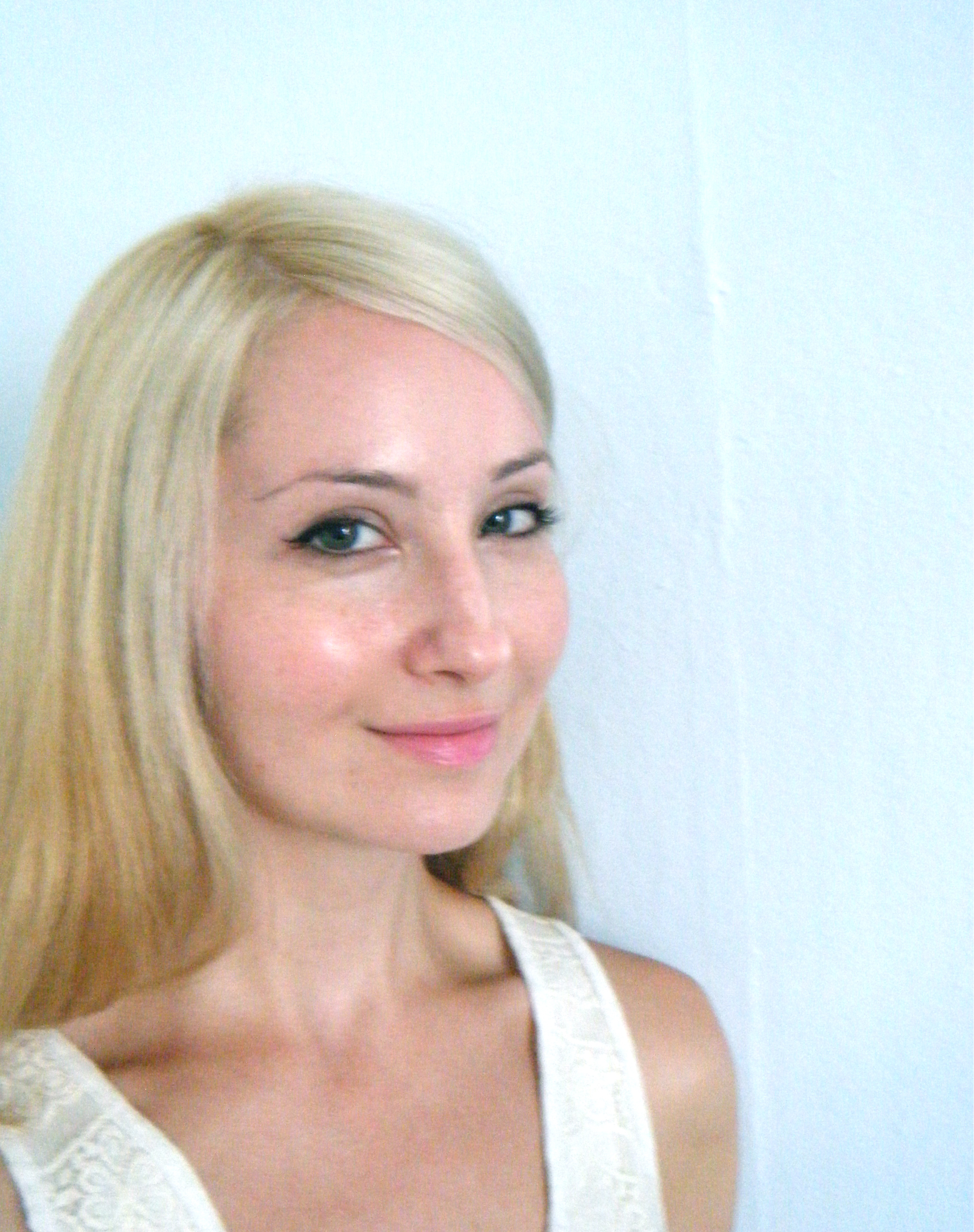
profiles in poetics and linguistics: Kristen E. Nelson

websites:

http://www.kristenenelson.com

www.casalibre.org

http://unthinkablecreatures.tumblr.com/

Kristen Nelson is a writer who bends, grinds, lavish in the poignancy of blown glass, language in camber and body. We saturate the ways in which form in the syntax of space is able to emote, to breathe, to entangle us, and create physical properties of the body she writes back onto the page. Investigating, “conversations about and awareness of how women are encouraged to modify their bodies in order to achieve ideals of beauty.” Sound, she names, “feral,” has properties written into bones, body, in times of closeness to another, and in times of solitude.

But it is not the body that is alone in the liminal space of self, of excavation, rather, it is how the self interacts in conversations with “other”. Intimacy in times of love, grief, and joy, invite collaboration that extends beyond creation, out of sharing the unknown. The conversation she says, is intimate, a “moment between one. The intent … to represent the ability of the speaker to love herself and maintain her independence.” Leading us to question the interiors of our attachments.

Nelson is a cross-genre writer who believes that “writing by women in the past twenty years has taught us all to be brave.” And, she says, “when I drink whiskey I think I’m a unicorn.”

Kristen was born and grew up in Mount Vernon, New York 20 minutes north of Manhattan. She earned a BA in English with minors in Marine Science and Biology from the University of Tampa in 2000. She worked for The Village Voice in New York City, The Weekly Planet in Tampa, and for two years as a full-time staff reporter for the Rivertowns Enterprise in Hastings, New York. She was a freelance reporter for various newspapers and magazines for four years until relocating to Tucson in April 2003. Kristen worked as an editor of the The Institute of the Environment at The University of Arizona from 2003–2009. In May 2009, she left her job at the university to run Casa Libre full-time and pursue her MFA.

1.)    What were the first inspirations that made you desire to become a writer? Who are your favorite writers and how did they change over time?

I do not remember my earliest inspiration to write. It was always there with me. I know my first journal dates back to when I was 10. Before that, when I was 7, I wrote my first short story. It was called “Linda and Her Unicorn” and my great-aunt Vera kept it framed in her house. The year before Aunt Vera died, she gave it back to me along with my great-grandmother’s dowry linens, and her wedding silver. It felt precious in its black frame with shifting glass next to these items. I remember typing the story on my mother’s typewriter and the frustration of my fingers pecking along at a jumbled up alphabet.

In college at the University of Tampa, after 2.5 years of a biology degree—vertebrate zoology, invertebrate zoology, genetics, organic chemistry, parasitology, etc.—I finally had the nerve to switch majors and pursue what I really loved. I had this mantra floating around in my head at the time: Every blade of grass tells a story. I still don’t know what it means. Not really. But that mantra and a college mentor encouraged me to follow my passion.

My favorite writers when I first began studying literature were JD Salinger, Hemingway, and Shakespeare. In the last 15 years, I’ve switched to reading more and more female writers. Carole Maso, Janette Winterston, Anne Carson, Rebecca Brown. Most recently I’ve been obsessed with Lydia Yuknavitch’s The Chronology of Water. I also read everything that Kate Greenstreet, Selah Saterstrom, and Kristi Maxwell publish. I love Roland Barthes and Jenny Boully. Mine is a muddled mixed-up group of inspiration.

2.)    Who have been the creative inspiration / mentor writers in your career?

My college mentor was Doctor Andy Solomon. I was also extremely frustrated and inspired to think by Don Morrill. For ten years, I found inspiration and mentorship from my peers including Julia Gordon, Julianna Spallholz, Kristi Maxwell, Elizabeth Frankie Rollins, and Selah Saterstrom. I took 10 years off of school to found a non-profit literary center, and finally found my way to grad school a few years ago. I was blessed to study with Bhanu Kapil and Rebecca Brown. Rebecca threw me in the dirt and taught me to ground. Bhanu taught me to float in the sky. Between the two, my work has found the tension it needed, tethered between dirt and sky. I also think that writers have the divine gift of being mentored by other people’s writing without having worked alongside or below a person. One of the most influential books I’ve ever read is Carol Maso’s collection of essays Break Every Rule. It was her conversations on the feminine and queer aesthetic that rocked my world—gave me permission to write outside the lines. I also fell deeply in love with Rumi about 5 years ago. He has been the only person to describe a concept of God to me that makes sense—a spirituality that I can get behind.

3.)    How has your own work changed over time and why?

I always thought I would be a prose writer when I grew up, but my sentences kept getting shorter and shorter. Then they became much more concerned with the lyric, sound quality, rhythm, and meter. I have become more interested in the liminal space between poetry and prose—combining tools from both genres. My work has also been more influenced by loss, grief, and the body as my life has become more concerned with these topics.

4.)    What are your plans for the future?

I am working on a multi-genre art project called Experiments on my Body. Experiments will promote conversations about and awareness of how women are encouraged to modify their bodies in order to achieve ideals of beauty as dictated by society and the media. The project begins with “care packages” sent to female artists. Each package contains a photograph of my body, a letter discussing my memories and engaging the individual artist with details of their own art projects, and objects relating to one or more of four categories: pain, hair, weight, and make-up. The intention of the categories is to define pervasive, accessible, and socially acceptable body modification—tattoos and weight loss versus scarification and breast augmentation. For example, a package may contain a close-up photograph of an un-waxed bikini line, a letter describing a first experience of getting a bikini wax, and objects such as fashion magazine clippings, wax strips, and a tarot card which relates to the theme discussed in the package. The packages are designed to prompt conversations between artists on how women are expected to modify their bodies in order to achieve “beautiful.” Each package also includes an artistic statement introducing the project and inviting a response. This project will culminate in performances in the home cities of participating artists and in a web archive of work generated during the correspondence—writing, fine art, photography, video, music, movement, etc. The website will be open to submissions to add to this original archive.

I am also working on a new poetic manuscript, but for the first time, I’m not sharing any of the work in it, until it is complete. Another experiment.

5.)    What are your views on writing by women as it has occurred in the past twenty years?

I think writing by women in the past twenty years has taught us all to be brave. These women have come up against the towering white male wall of the cannon and rather than try to scale it, they’ve gone off in a different direction. They’ve stretched and manipulated genre, given credibility to writing about pain, language, and the body, and have continued to be brilliant, thoughtful theorists.

6.)    Who are promising women writers to look at in the future?

I would recommend that everyone keep an eye out for Kristen Stone and Liz Latty. these two women are tearing it up and they have only just begun. Also, Tucson is a bursting with female literary talent—including Elizabeth Frankie Rollins, Julia Gordon, Kristi Maxwell, Lisa O’Neill, Annie Guthrie, Dot Devota, and so many others.

7.)    If you were asked to create a flexible label of yourself as a writer, what would it be?

I mostly identify as a cross-genre writer, but when I drink whiskey I think I’m a unicorn.

8.)    In your chapbook, Ghosty, published by Drunken Boat, I would like to focus on your use of form and image. The beginning sequences are similar in form. The speaker is italicized, followed by a prose style that informs the dialogue. But as we move further into the piece, the form assumes the style of a picture book. Fitting for the content, we meet “Ghosty,” [Dad] and learn about his death. The writing mimics memoir / short story form and we read about the further displacement of the original speaker. Can you describe your decision to introduce image into the piece further fictionalizing the memoir nature of the work and how you believe this affects the experience of the reader?

[“Ghosty” is not a chapbook. It is a series of text-image pieces that were originally published in Drunken Boat, and were then published in my chapbook Write, Dad (Unthinkable Creatures, 2012). ]

The writing and collaboration that happened between Noah Saterstrom (Ghosty’s illustrator) and I was organic not planned. “Ghosty” is autobiographical. I was sitting in a cheap motel room in Scranton, Pennsylvania drinking vodka out of a ceramic mug. My sister and I had just made the decision to turn off the machines that were keeping my father’s brain-dead body alive. I called Noah, my friend and at-the-time roommate. Noah sketched those drawings while I was manically telling him stories of my experience there. When I returned home to Tucson, he shared the drawings with me and they gave me immediate access to the writing of “Ghosty.” He sketched from my grief-laced stories. I wrote from those sketches. That was the process. “Ghosty” was birthed in the month after my father’s death from grief, friendship, and a need to understand what just happened. Then Deborah Poe accepted it for Drunken Boat and sent it off into the world. Christian Peet wrote a really beautiful review of “Ghosty” on the Tarpaulin Sky Blog. I think he understood the piece better than I did at the time. http://tsky-reviews.blogspot.com/2010/10/on-kristen-nelsons-and-noah-saterstroms.html

9.) “ix. Two Cups,” a poem of a larger sequence, The Length of this Gap, manifests a dialogue between the mind, the body, intimacy, and autonomy. The poem reads, “I have a body intellect much smarter than my brain, // My breasts know what temporary feels like,” proceeding, “If I had known that he was going, / I would have sacrificed too much to make him stay. // The men that go away that carried me in their wallets.” The speaker here acknowledges that the body encompasses an intelligence that seems to be in conflict with the mind. The rationality of the mind objectifies and alienates the self, surrendering an autonomy that is then consumed by the men in the relationship. “Othering” the body is a Western cultural staple. Can you discuss your intention using this specific lens to illuminate these frictions?

the length of this      gap in the entirety of the series, is attempting to measure grief—the distance between moments of joy. The gaping vastness that is mourning can feel unending. “Two Cups” is looking for some answers through body intellect. Our bodies have answers and truths stored. We can access these truths if we listen. If you read that line literally: “My breasts knows what temporary feels like” What I meant is that when my lover touches my breasts, I know if they intend to stick around or if this sexual experience will be fleeting. My body is better than my head or heart at interpreting the sincerity of other people. My head can be too clouded by hope, desire, and fear but my body knows.

10.) In the same sequence, the last poem, “xv. About this Big,” acts to describe love as a way to bring light and make visible the “existence” of something only seen by a lover. In this intimate, quiet, close encounter between two, “My love/ I dream                          you are writing me into / existence // Do not bring water / I wake to lilies                       their wild scent in big pink pushes spreading / shouting all of the heart wide open goofy dew // In this moment I am entirely alone.” We are alone. In the visibility of writing the self and lover in language we isolate ourselves in the process. Could you please address the logopoeia of this piece; writing, intimacy, autonomy, and the ways in which the body participates in this discussions?

This is an intimate moment between one. The intent of this piece is to represent the ability of the speaker to love herself and maintain her independence, confidence, and sense of joy, when the beloved is absent. I don’t think that love needs to be about losing yourself. When it works, love is a complement to an already full independent life. When I wrote this poem, I was in a relationship that taught me this truth.

Words are so much bigger than their letters and meanings. The aesthetic content of “lilies,” “pushes,” and “spreading,” for example, is filled with music—sounds that are stored in our bones and feral instinct. This poem is attempting to access the meanings of these words but also the interior attachment of the reader.