 Bhanu Kapil
Websites: jackkerouacispunjabi.blogspot.com
Bhanu Kapil is set upon the windowsill. Her mother whispers “Sing a poem to the stars, Bhanu.” A way of half clouds moving across the breath of an ocean, to her grandmother. As a British-Indian poet her work is complex. “Crystallized and condensed – the two kinds of water” surround questions of the female, immigrant body. We experience what she calls the “non-identical: brown body”. This occurs through similar intonations of music and improvisation; a “connection with someone very far away, the familial listener, the one you had to leave.” Her post-colonial eye has led to questions of migration and mental illness, racism and the way a “visible body” postures the light in mostly white cultures. This is specifically in regards to built environments, social care and domestic violence.
Kapil aspires to write in a way that literature is not made from literature. Her work Ban en Banlieue, recently published by Nightboat Books (2015) is the focus of this interview and performs in an “axial space”. Here theory, performance art, and the novel interact in strange converging dialogues. This fusion allows her to bridge cultural differences of the body in a way we see that nudity is perhaps unreadable. It is here she says in some ways we are able to “look away from the ‘glimpse.’ A glimpse that is also an abyss.”
Bhanu Kapil is an Indian or British writer who was born and brought up in the UK. She now lives in Colorado, where she has, for many years, taught through the monster at Naropa University. At Goddard College, she teaches at the intersection of narrative, social care and urban housing. To clarify, these are her interests. Her books track: colonial and post-colonial: flows: of various kinds. But also: what does not flow. And is yet to be discharged. Her most recent publication — notes toward a novel never written — is Ban en Banlieue [Nightboat Books: 2015]. On an almost daily basis, Bhanu blogs about institutions, bodies, racism, motherhood, animals and true love at Shame May Be Fatal: A Daybook for Monsters and Immigrants Of All Kinds. The name of the blog sometimes changes; earlier this year, it was called: Reading Moten in the Cherry Orchard. But the site can always be found here: SHAME MAY BE FATAL
.
.
Auto-sacrifice (Notes)
— from: Ban en Banlieue (Nightboat Books: 2015)
1. Pink Lightning for Ban
“The day of the riot dawns bright and lazy with a giant silky cloud sloughing off above the rooves.”
“The mouth of the riot is a stretch of road.”
Pink lightning fills the borough like a graph. All day, I graph the bandages, race passion and chunks of dirt to Ban – plant-like, she’s stretching then contracting on the ground.
Three streets over, a mixed group nears a house. Their faces are pressed to the blood-flecked window, banging their forehead on the glass. Inside the house, a woman arranges the meat on a tarp. She tucks and pins the shroud behind its ears with quick-moving hands, looking up from time to time at the crowd that’s gathered to spit on the window and call.
That night, I dreamed of exiting the subway at the interface a car would make with the M25. The commuters are processing around a semi-rural roundabout, their hands on imaginary steering wheels, their wing-backed loafers shuffling on the tarmac, the black road, like wheels. Evening Standards tucked sharply beneath their arms.
The dream requires something of me.
It requires me to acknowledge that my creature (Ban) is over-written by a psychic history that is lucid, astringent, witty. No longer purely mine.
.
2. Meat forest: 1979
Ban fulfills the first criterium of monstrosity simply by degrading: by emitting bars of light from her teeth and nails, when the rain sweeps over her then back again.
I like how the rain is indigo, like a tint that reveals the disease process in its inception.
Above her, the pink lightning is branched — forked — in five places.
A brown ankle sparkles on the ground.
Genital life gives way to bubbles, the notebook of a body’s two eyes.
Like a person in an ancient pose, I lean in a L-shaped posture over the counter: flat back, rump displayed to any passer-by, blood dripping down the backs of my thighs. They don’t see me. I clean the street until all that’s left is a ring of oily foam, the formal barrier of a bad snow. Are you sick and tired of running away?
Then lie down.
Invert yourself above a ditch or stream beneath a bright blue sky.
Then pull myself up from your knees to clean.
Clean the street until all that’s left is a ring of oily foam, the formal barrier of a bad snow.
It snows that April for a few minutes, early in the day. Children walking on the Southall Broadway open their mouths to receive the aluminium snowflakes. In their bright pink and chocolate brown dresses, tucked beneath the heavy blue coats, these immigrant children are dazzled by the snow, even though they were born here, a train-ride from a city tilted to receive the light, its sprig bending over in the window of the pretty bank.
Many years later, I return. To place a daffodil on the Uxbridge Road.
Is zinc an element? It’s a sheen. Spread it on the ankle of Ban.
Is there a copper wire? Is there a groin? Make a mask for Ban.
.
3. What is Ban?
Ban is a mixture of dog shit and bitumen (ash) scraped off the soles of running shoes: Puma, Reebok, Adidas.
Looping the city, Ban is a warp of smoke.
To summarize, she is the parts of something re-mixed as air: integral, rigid air, circa 1972-1979. She’s a girl. A black girl in an era when, in solidarity, Caribbean and Asian Brits self-defined as black. A black (brown) girl encountered in the earliest hour of a race riot, or what will become one by nightfall.
April 23rd, 1979: by morning, anti-Nazi campaigner, Blair Peach, will be dead.
It is, in this sense, a real day: though Ban is unreal. She’s both dead and never living: the part, that is, of life that is never given: an existence. What, for example, is born in England, but is never, not even on a cloudy day, English?
Under what conditions is a birth not recognized as a birth?
Answer: Ban.
And from Ban: “banlieues.”
(The former hunting grounds of King Henry VIII. Earth-mounds. Oaks split into several parts by a late-century lightning storm.) These suburbs are, in places, leafy and industrial; the Nestle factory spools a milky, lilac effluent into the Grand Union canal that runs between Hayes and Southall. Ban is nine. Ban is seven. Ban is ten. Ban is a girl walking home from school just as a protest starts to escalate. Pausing at the corner of the Uxbridge Road, she hears something: the far-off sound of breaking glass. Is it coming from her home or is it coming from the street’s distant clamor? Faced with these two sources of a sound she instinctively links to violence, the potential of violent acts, Ban lies down. She folds to the ground. This is syntax.
Psychotic, fecal, neural, wild: the auto-sacrifice begins, endures the night: never stops: goes on.
As even more time passes, as the image or instinct to form this image desiccates, I prop a mirror, then another, on the ground for Ban.
A cyclical and artificial light falls upon her in turn: pink, gold, amber then pink again. Do the mirrors deflect evil? Perhaps they protect her from a horde of boys with shaved heads or perhaps they illuminate — in strings of weak light — the part of the scene when these boys, finally, arrive.
The left hand covered in a light blue ash. The ash is analgesic, data, soot, though when it rains, Ban becomes leucine, a bulk, a network of dirty lines that channel starlight, presence, boots. Someone walks towards her, for example, then around her, then away.
I want to lie down in the place I am from: on the street I am from.
In the rain. Next to the ivy. As I did, on the border of Pakistan and India: the two Punjabs. Nobody sees someone do this. I want to feel it in my body — the root cause.
.
4. Cobra Notes for Ban
I want a literature that is not made from literature. A girl walks home in the first minutes of a race riot, before it might even be called that — the sound of breaking glass as equidistant, as happening/coming from the street and from her home.
What loops the ivy-asphalt/glass-girl combinations? Abraded as it goes? I think, too, of the curved, passing sound that has no fixed source. In a literature, what would happen to the girl? I write, instead, the increment of her failure to orient, to take another step. And understand. She is collapsing to her knees then to her side in a sovereign position.
Notes for Ban, 2012: a year of sacrifice and rupture, murderous roses blossoming in the gardens of immigrant families with money problems, citizens with a stash: and so on. Eat a petal and die. Die if you have to. See: end-date, serpent-gate. Hole. I myself swivel around and crouch at the slightest unexpected sound.
When she turned her face to the ivy, I saw a bunch or cube of foil propped between the vines. Posture made a circuit from the ivy to her face. The London street a tiny jungle: dark blue, slick and shimmering a bit, from the gold/brown tights she was wearing beneath her skirt. A girl stops walking and lies down on a street in the opening scene of a riot. Why? The fact of the riot pricks her prone form and at points it rains. In a novel that no one writes or thinks of writing, the rain falls in lines and dots upon her. In the loose genetics of what makes this street real, the freezing cold, vibrating weather sweeping through South-east England at 4 p.m. on an April afternoon is very painful. Sometimes there is a day and sometimes there is a day reduced to its symbolic elements: a cup of broken glass; the Queen’s portrait on a thin bronze coin; dosage; rain.
This is why a raindrop indents the concrete with atomic intensity. This is why the dark green, glossy leaves of the ivy are so green: multiple kinds of green: as night falls on the “skirt.” The outskirts of London: les banlieues.
.
5. Some notes: I wanted to re-imagine the boundary
Perhaps I should say that I grew up partly in Ruislip. The Park Woods that bounded it were rimmed, themselves, with land forms that kept in the boar. I used to go directly to those masses and lie down on them, subtly above a city but beneath the plate of leaves, in another world.
One morning I went there though it was raining.
To soften this scene would require time travel, which I am not prepared to do. I am not prepared to take off my clothes. I am not prepared to charter or re-organize the cosmic symbols of Sikhism, Anglican Christianity and the Hindu faith. One night, I went home, and my hands were caked in dirt and dew. My skirt was up around my ears. My legs were cold. The insides of my eyes were cold. The bath I took, I couldn’t get it hot enough. That night, my eyes turned blue.
.
More recently, I’ve been obsessed with the image of a dark-skinned girl walking home from school.
Imagine your fingertips are animals that still carry the imprint of a plant memory.
And the veins of the nearby plants flood with sugar. The sugar and the sky suck the body of a black woman. They surge towards her through the mud and air in tubes. Pinned there, scrawled, like a name. A woman so black she radiates a limited consciousness. In this scene without depth, she is supine, lifting her arms very carefully then setting them down; an image that is never exhausted, though I write it again and again. With a careful hand.
How the street tilts and the rain and blood slide into the gutter below the pavement’s lip. A dress slides off and is received by the white space beneath the ivy. Is the street a letterbox? Is the night a letterbox? A long black hair is carried to Yeading High Street on the sole of a shoe. And it’s there behind The White Stag, a skinhead pub on the border with Hayes, that the hair sheds off. At this moment, like a delicate clock, like the difficult music of another century, the riot begins – a distant roar, the sound of broken glass; a van with orange stripes – a strobe.
I made the ivy go faster like a carpet or rug I could pull.
Ban turns her head, at some points in that last night, to the wall.
Imagine a cloud of milk as it dissipates, spilled on a London street in an act of protest.
Imagine mica glinting in the oily curd of the pavement.
Imagine that the rough, pink tip of a girl’s tongue slips out, extending to the ivy’s salt – for nourishment.
What did Ban do that outweighed art? What kind of art did she produce?
Returning to the U.S., I dug a rectangle of mud and lay down in that, removing my clothes and exposing my body with its waist and hips and suitcase of limbs. Above me, in a bush of late summer flowers – white pom-poms with deep green leaves – migrating finches made a choral sound.
From one angle, Ban is slick, like the emerald or indigo tint of ring feathers. From another she is a kerosene seam set on fire with a careless match.
It’s time to go home. As we coast up the estuary, veering left and north towards Heathrow, I can see the Southall water tower and the golden, balloon-shaped minaret of the Sikh temple. I look down as we fly over and there, close enough to touch, is the set of Ban. I describe the creamy clouds in my notebook, how they emit dark silver beams of light. I analyze my glimpse of the asphalt.
.
What can I do? The boundaries of my work are structurally weak. I am weak. Too weak for a Monday night.
When it was time for such a thing, I could not bear to be touched – by another person.
The Chrysler building was burning like a star in the clouds below, when I – arrived.
The sun burns and heals.
Ban opens her mouth for the fluorescent pink flakes that pour from the early morning sun on April 23rd, a Monday morning in 1979 – just as the rioters are eating their breakfast, an egg on a piece of toast, with not a thought – of riot – in their heart.
.
6. Notes Toward a Race Riot Scene
In April 1979, I was ten years old.
This is a short talk about vectors. It’s about Brueghel’s Icarus. It’s about a girl walking home from school at the exact moment her neighbor laces up his Doc Martens, tight. It’s about a partial and irrelevant nudity. It’s about the novel as a form that processes the part of a scene that doesn’t function as an image, but as the depleted, yet still livid mixture of materials that a race riot is made from. Think of the sky. Think of the clear April day with its cardigans and late afternoon rain shower. Think of the indigo sky lowering over London like a lid. Think of Blair Peach, the anti-racism campaigner and recent emigrant from New Zealand, who will die before this day is out.
Think about a cyborg to get to the immigrant.
Think of a colony. Think of the red and white daikon radishes in a tilted box on the pavement outside Dokal and Sons, on the corner of the Uxbridge Road and Lansbury Drive. Think of the road, which here we call asphalt: there, it is bitty. It is a dark silver with milky oil seams. A patch up job, Labour still in power, but not for long. It’s 1979, St. George’s Day, and the Far Right has decided to have its annual meeting in a council-run meeting hall in Southall, Middlesex, a London suburb in which it would be rare — nauseating — to see a white face.
To see anyone, actually. Everyone’s indoors. Everyone can tell what’s coming. It’s not a riot, at this point, but a simple protest in an outlying area of London, an immigrant suburb: a banlieue. Everyone knows to stay back, board the glass up, draw the curtains and lie down. Lie down between the hand-sewn quilts shipped from India in a crate then covered in an outer cotton case stitched to the padding with a fine pink thread. The quilts smell of an antiseptic powder, an anti-fungal, Mars. We lie down beneath the blankets in front of the fire. It’s 1979, so there’s a small gas fire and a waist-high fridge, where we keep our milk and our bread and our cheese, right there, in the living room. It’s 1979, and so I live in Hayes, though in two months, we’ll put our house on the market and move.
Move away. As would you.
.
7. Ban en Banlieues (suburban)
A puff of diesel fumes on an orbital road.
The country outside London, with its old parks and labyrinths of rhododendron or azalea
, futile and tropical pinks in a near-constant downpour of green, black and silver rain.
In the forest surrounding London, a light ice falls through the trees.
Like glitter.
A snake, aspen-colored, bright yellow with green stripes, slips through the bracken, its pink eyes open and black diamond-shaped irises blinking on then off. In frozen time, ancient beings emerge with the force of reptiles. In the forest, time and weather are so mixed up, a trope of bedtime stories, bottom-up processing, need. I need the snake to stop the news. This is the news: a girl’s body is dressed and set: still yet trembling, upon a rise in the forest. There are stars. Now it’s night. Time is coming on hard. The snake slips over her leg, her brown ankle. She’s wearing shoes, maroon patent leather shoes with a low heel and three slim buckles, but no socks.
Whoever dressed her was in a hurry.
Imagine the scene: a forest outside of London, 10 p.m.
An April snowfall, the ground still coppery, gold. A snake has escaped from time: a water box, a shelf. Volatile, starving, it senses a parallel self, the girl’s body emitting a solar heat, absorbed in the course of a lifetime but now discharging, pushing off. Without thought, below thought, it moves towards her through the rusted trees.
.
8. Inversions for Ban
“To ban someone is to say that no-one may harm him.” Agamben.
A “monstrous hybrid of human and animal, divided between the forest and the city.” (Ban.) To be: “banned from the city” and thus: en banlieues: a part of the perimeter. In this sense, to study the place where the city dissolves is to study the wolf. Is this why some of my best friends have come from the peninsula of Long Island?
To ban, to sentence.
To abandon is thus to write prose. “Already dead.” Nude. A “wolfe’s head” upon a form. The form is the body — in the most generic way I could possibly use that word. The nude body spills color. Blue nude, green nude. The nudes of pre-history in a pool of chalk in an Ajanta cave. Agamben’s thought familiar to me, already, from the exchange of Arjun and Krishan on the battlefield. I should stop writing now.
What do the wolf and the schizophrenic have in common?
Here, extreme snow. I mean fire. The extreme snow makes me neutral about the strangeness of this first intact fragment. Of Ban. A novel of the race riot, “Ban.” Nude studies/charcoal marks: wired to the mouth of a pig. A boar. Some of the work is set in the outlying, wooded regions of Greater London, where King Henry VIII had his hunting grounds. As a girl, I would lie down in my coat and trousers in the snow upon an embankment of earth: engineered, centuries before, to keep the meat in.
I wanted to write a book that was like lying down.
That took some time to write, that kept forgetting something, that took a diversion: from which it never returned.
I wanted to write a book on a butcher’s table in New Delhi: the shop-front open to the street, a bare light bulb swinging above the table and next to it a hook.
Swinging from that hook in the window, I wanted to write a book. Inverted, corrupted, exposed to view: a person writes a book in their free time, calling that time what they want to call it.
I wanted to write a book about England.
I wanted to write a book about lying on the floor of England. I wanted to return to England. I went to England. I was born in England. I lived in a house in England until I was thirty years old. My parents were English. I was English. After 1984, we all shared the same nationality, but by 2006 or 7, this was no longer true. Between September 2010 and late December 2012, I studied a piece of the earth, no longer or wider than a girl’s body prone upon it. The asphalt. As dusk fell: violet/amber — and filled — with the reflected lights coming from the discs, the tiny mirrors, positioned in the ivy as she “slept.”
On a balcony.
The asphalt’s green stars, the shed parts of a ragged elm come Spring.
Ban is a portal, a vortex, a curl: a mixture of clockwise and anti-clockwise movements in the sky above the street. I study the vapor as it rises, accumulates then starts to move. How a brisk wind organizes the soot or casings and bits of bark into whorls.
.
.
- What were the first inspirations that made you desire to become a writer? Who are your favorite writers and how did they change over time?
My mother used to wake me up, on the occasions that there was a sky full of stars or a visible moon, and set me on the windowsill. “Sing a poem to the stars, Bhanu.” Her own mother was in India, and, in the era before this one, communicated through astral bodies! My grandmother had told my mother that if she sang to the moon then she, my grandmother, would receive it when the moon rose in Punjab. Thus, a first poetry. My mother would write down what I said and sang; a first writing – and a first feeling that poetry was music, improvisation, the being woken up from sleep, a connection with someone very far away, the familial listener, the one you had to leave. I remember that my mother also had a shrine to Krishna in the linen cupboard that was also in my bedroom, and sometimes I would wake up to a tiny oil lamp flickering. And the bhajans of Mira Bai – a lyric, you could say, of abandonment and reunion in its own way. “I am standing under this tree, Krishna, in the rain, in the darkness./ Just a crumpled note on my dresser./ I am going to stand here until you return.” Okay, I made that up. But the bhajans are basically that, for all time. And in this way, you could say that Mira Bai’s poetry, which I did not understand was poetry, was the first poetry that I listened to, attenuated – a child — stirring in my bed before dawn. Also: my mother’s bedtime stories – which, after a while, I realized – combined – the trauma story of Partition with the Ramayana – the fabular epics that she told and re-told in her own way, and never from a book. The form that narrative took: a hybrid account, you could say. Though I didn’t have language for any of this until I came to the U.S. and perhaps not until my forties, strangely enough – which is the time in a woman’s life, my friend Diane Kempson says, when a “deep pelvic grief” may rise. And the thing to do is to: “adequately grieve.” It is perhaps natural, then, to answer your question by returning to the deep sources of grief and poetry – the two things are not separate – in my own life. Am I writing too much in response to your question? Suddenly, I was on a windowsill beneath a tinny English sky.
My favorite writer as a child was Turgenev. My grandfather used to take me to the Russian bookstore in Sector 17, on our long summers in India, and leave me to read while he played chess and drank cup after cup of milky chai with the owner, a Russian, from little glasses. I remember the onion skin pages of the mass-made books; opening Fathers and Sons for the first time. As a teenager, I wore black “like a little funeral,” to emulate the girl in the poems by Sylvia Plath. I read and shoplifted books of poems obsessively. At university in Loughborough, I read the plays of William Congreve: writing as revenge. That stayed with me for a long time: literature as butcher’s shop. In the U.S., I broke free of the Larkin-Tennyson vortex, and was amazed, one day, to see my hands surrounded by violet light as I lay on the grass holding the News of the Universe above me – against a bright blue sky. In this collection, I read Bly’s translations of Mira Bai for the first time, confused but also dazzled by their unrecognizable structure, sound and content. At the same time, I recognized them as identical, or near-identical, in their capacity for ululation: to that long-ago time in feral Middlesex; Middlesex, that is, of the long nights. When I moved to Colorado, Laura Mullen – whose seminar I was in – gave us Theresa Hak Kyung Cha’s Dictee to read. I don’t remember reading it, but rather carrying it with me from place to place, opening here and there: to a line. A fragment. Voltage. Life that comes from life. A taken: life.
- Who have been the creative inspiration / mentor writers in your career?
John Lucas, Anthony Piccione, Laura Mullen. Those were the professors who put books in my hands – that changed my life.
- How has your own work changed over time and why?
My work has crystallized and condensed – the two kinds of water – around the question of the female, immigrant body. In The Vertical Interrogation of Strangers, I began with broad travel, polyphony, encounter, the non-identical: brown body. This project had two longer section; a vision of photocopying the notebooks in which I wrote down the answers as they were, or a list of some kind. Another section, too, built on my sticker graffiti – the way I wrote before I came to U.S. But Kelsey Street was only able to publish the first section, for which I am grateful – though perhaps I should do something about the fact that the complete work resides in a cardboard box somewhere in the Bear Skull Pantry off the kitchen! Is it still there? In Incubation: a space for monsters, what varies? Travel happens through hitch-hiking. And the writing happens through a girl both singular and multiple: a presence. She mutates. My first monster. In humanimal: a project for future children, I take up the story of two sisters – contested feral life – and if I think about how movement is happening here, I recall my research into Ida Rolf’s narratives of movement pathologies and rehabilitation, transposed with a study of correction and colonial life. How does the human-animal body reach for the tail of the cat in the tree? I went to India and climbed that tree; I investigated the claims that the girls were not real; that they were somehow faking it, or being asked: to fake it. Girlhood, I suppose. In Schizophrene, I turned my post-colonial eye, you could say, to questions of migration and mental illness: with a particular focus on the high-incidence of schizophrenia in women of Indian and Pakistani origin, in immigrant neighborhoods of north-west London. In studying psychosis rates, including the question of misdiagnosis and treatment paths, I came to the astonishing finding that, in fact, it’s not migration that is the stressor, but rather – chronic experiences of racism; the way a very visible body moves through a mostly white neighborhood; the posture this body might take. How do you tell this story from the bottom-up? Through the nervous system as much as narrative: modes: themselves? I began to think about how syntax – the part of narrative that held: non-verbal flows – was happening in my work. What a sentence could be. What postures the “bodies” in my books were taking. From this work, a worlding, some of which I had to work out through performances of my own, came Ban en Banlieue, which was, very simply, an attempt to track the effects of oppression upon the brown, female, immigrant body. Yet Ban mutates, and is a monster of her own kind. What does she lick? Who does she become? I ended that book with the figure of mermaid – a fusion of the body, mid-sacrifice, with the pink dolphins of the Ganges, that carry her – out to sea.
- Have you been influenced by different genres, and if so how?
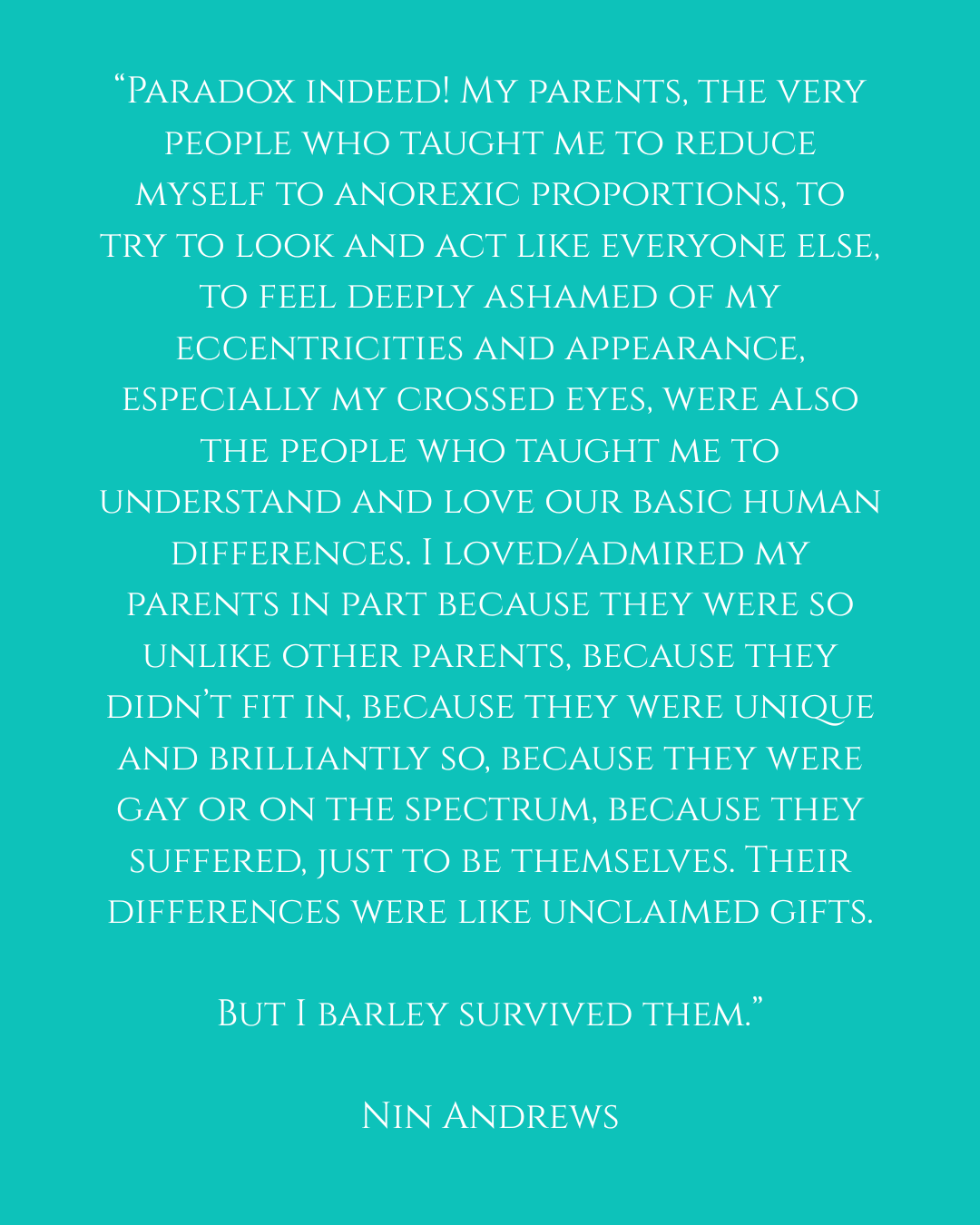
Reading and teaching (at Naropa University) — through architecture and GIS mapping – what the grid is, what happens when it fails – was very useful to me in mapping humanimal and Schizophrene. I began to have conversations about built environments, social care and domestic violence – with students at Goddard, I recall. Kristen Stone and Sayra Pinto come to mind. Researching cross-cultural psychiatry – narratives of refugee and immigrant physiologies – and attending a conference (as a delegate) in which these accounts were grounded in discussions that included relief workers, epidemiologists and social workers, was extraordinarily useful for me. It came after Schizophrene, but it gave me the confidence to understand that experimental writing practices have an extreme value in the way they match up, more than more linear forms, to “clinical experience.” How will the fragments attract? What is the pathology of the fragment? Where does it “lodge” in the body (Andrea Spain)? But also, what happens when it reverses itself? Holding it up in the air, how can we attend to the fire and water that begins to stream from it? All of this – on a spectrum of hallucination to integration – the extreme power of the fragment to charge the atmosphere in which it finds itself – became the ground of Ban. And the ground of the sentence around which Ban is built: “I want a literature that is not made from literature.”
- What are your plans for the future?
Before I came to this country, I said, to Dennis and Inge Goodwin, who had invited me to their home in St.John’s Wood for tea: “I want to write a novel on yellow paper.” They were asking me what I wanted to write, how I wanted to live. Dennis had been a commander of the Ethiopian army. Am I remembering this correctly? A story of colonial time. Inge was a translator of German poetry into English; in an orchard outside London, she pointed out the apple tree Michael Hamburger had planted when he first visited them. I don’t know how they recognized me as a writer-to-be; it now seems like a miracle. Of love. Once in the U.S. I hitch-hiked through Oregon – with an A4 pad of light yellow paper; I remember sitting in the Eugene Public Library, unable to begin. I discarded that paper on a table after the third day, and continued on with my physical adventure. A week ago, over twenty years past the moment I am describing, I parked my car outside the bank in Loveland and ran across the street to the Quick Print Shop, which often has remaindered paper on a shelf. I immediately saw a batch of gold-yellow or cadmium-yellow or gold or goldenrod paper, and bought it. I can see it from where I am writing to you. So that is my plan. To write a novel on yellow paper. To write myself out of one life and into another. To find a way to begin
- What are your views on writing by women as it has occurred in the past twenty years?
We are putting the failures of our lives into our books – its bloody leaks – at the expense – of a lyric mode. At the expense, you could say, of how beautiful a book could be.
- Who are promising women writers to look at in the future?
To answer this question is to exclude, or to engender a feeling of exclusion, perhaps, in all the promising women writers I do not name or forget to name. I suppose I cannot answer this question at the cost of publicizing the writing of a woman writer who your readers would not encounter otherwise. And yet: I refer you to VIDA or to the Mongrel Coalition Against Gringpo twitter feed or my own Friday Interview Series on my blog or the Action Books catalogue – as venues for where to: look. Look at the future, I suppose.
- If you were asked to create a flexible label of yourself as a writer, what would it be?
“Experimental writer” is not exactly working out. I used to say: “experimental prose writer.” But what it really is is that the middle of me is poetry, or poet. And that anything I write, whether it resembles fiction or a hybrid work or non-fiction or poetry itself, comes from that. I want “poet” to mean all of this, I suppose, but in reality, I never win the grants I have applied for. Is it that I am a bad writer? Or that my writing doesn’t resemble poetry enough for it to receive funding in that category, or even the category of prose? Actually, because I have given up even trying to apply for grants, perhaps this is no longer true! What else? “Failed British novelist” is another favorite.
- The landscape of Ban is as you summarize, “parts of something re-mixed as air: circa 1972-1979. She’s a girl. A black girl in an era when, in solidarity, Caribbean and Asian Brits self-defined as black. A black (brown) girl encountered in the earliest hour of a race riot, or what will become one by nightfall.” The setting is painted with strokes of compassion that hurt hard; “violence like snowflakes under the bed.” I would like to ask you how one psychically and emotionally deals with entering into the horrific bones of a historical event such as this? How does this affect the evolution of the character? How does the author complete the bend of compassion aware of the outcome?
It’s something I talk a lot about with my students. How can we attend to the earth memory, the body of the witness – the body of the reader, perhaps – as much as our own bodies or the bodies that appear in our writing? What are the ethics of asking a reader to discharge the “event” – the materials and matter of a violent event, in particular – through what the reading will be itself? I think this is where syntax – in its capacity to re-pattern the eye movements of the reader – to replicate a kind of light, consistent touch that repeats but not in a completely organized – thus human – way – helps. Not as trauma therapy, per se. But as a nervous system pathway within the writing, that releases – what is in the writing – into what might receive it. The ground? To the beings – seen and unseen – who arrive at the edges of the work as it is being written? So that a part of writing the character is to look away, to glance into the environment that surrounds her – or deflects her, I suppose, then return. This makes for a wet book, a book that opens and closes – fluttering – all the time. I am responding in the most simple way I can to your question; part of answering it is to re-enter: the other world. Of the work. And perhaps I can’t, this morning. But I have written about these questions on my blog, and what it has been to work on these questions through memorial, ritual, and performance/re-performance, in particular:
http://jackkerouacispunjabi.blogspot.com/2015/02/detritus-and-decompressions-ban.html?q=discharge+nervous+system
- We first meet the character Ban in wet smoke. She is above a mirror in the hands of your pen, your heart, and your mind. You intimate to the reader, “I wanted to write a novel but instead I wrote this.” Furthermore, “I wrote the middle part of the body to the end”. Character development is enumerated when we learn “Ban is not an immigrant, she is a shape or bodily outline that’s familiar: yet inaccurate.” And perhaps more important to this work is not Ban herself, but your relationship to her. You lie next to her, “extending my own tongue to the ivy that curls down to the sidewalk with its medicine and salt: so close to my own mouth. Lick it and you could die. I do all these things.” How close does the writer need to delve into the characters that they extricate in their work? What do you believe this does to the author and how much of the self is reconfigured and formed in the body of the character as well as the writer? How did this enumeration expound and transform your own life?
Perhaps I can answer this differently to the answer I gave above, accompanied by the writing on the blog, by speaking through the lens of diasporic writing. I think to write books about a particular place in a place that does not resemble that place is to engage, also, the blankness of the earth and sky: these huge blocks of energy that take the place of memory. So that the alchemy of changing the red of Colorado to the gold of a north-west London sunrise – is something I am always trying to do. To substitute one intensity for another. But also, I can’t, sometimes, activate my own “worlding” – my own time or imagination – except by taking the posture the body takes in the writing; thus, to feel it in my body, or to track the sensations there. And in some cases, on my loops through the U.K. or India, I am able to lie down: there. To see the glossy green leaves of the ivy; the seams of the asphalt – and so on. It is about, in the U.S., compounding, always, a symbolic scene – in order not to be making something up: about the middle of the body. About what it could be to write a narrative to its end-point and beyond; into the minutes, I suppose, when it stops trembling. Is this reenactment? I am not sure. In terms of transforming my life, it has brought me into a new area: the axial space and theory between performance art and the novel. And different conversations, with radical others, about how to progress this: strange art.
- The following line is written in the section of the book titled: “Notes for a novel never yet written”. We read, “Are those two words? Someday. Tucked into a suitcase. Or sent in a crate. This pure banality, the sending of household supplies by freight, is an emigrant act. A form of nudity.” Is nudity the exposure of one of “other” as immigrant in a suitcase? Are all “others” naked in some sense and is this why there is a lack of sexual nudity in the project?
Sexual nudity, in my host culture, would result – in decimation. I think a part of me writes experimentally – in order to conceal the potential for this other kind of nudity. To make it unreadable. Also, the stories in my family are all about people being beheaded, gutted – the evisceration of the female body, glimpsed — and so on. What people did, what they saw. Post-Partition. Those stories have been inherited, culturally, as a kind of domestic and gender violence – in the communities I lived in or belonged to or am from. Is this true? I read an extraordinary book this year, Rana Dasgupta’s Capital that matched to my sense of this: glimpse. How a glimpse mutates, inherited, as the desire for abject nudity: to be made visible – as part of a series, you could say, that the glimpse: precipitates.
This is why, perhaps, there is always: a partial scene. On my blog, however, I think I am more explicit. But also I sometimes delete those entries, the ones where I write in more direct ways about my sexual experiences, or my body itself. Delete, delete, click.
- Can you please describe your intention behind the project as a character named after your personal childhood name, your memoir pieces throughout the book, and the ending passages from your “rogue notebooks”?
My friend at Haberdasher’s Aske’s School for Girls, Lindsey Norman, called me Ban. As to the other decisions, they match up – to the way in which, over many years, the novel – as it was intended to be or dreamed – was stored. I began to think of other things, other gestures, other kinds of writing that fill or might fill: a “novel-shaped space.” The rogue notebooks come from a kind of ennui – no, the sense of being daunted about – opening each notebook in turn and reading it thoroughly. And also, as I have written about elsewhere, an interest in sensation – as what allows a person to discharge trauma – an attention to sensation – rather than narrative or even image-based content – – which re-loop: the content or activate it too strongly. The notebooks also function as an expanded environment; what it would be to look away from the “glimpse.” A glimpse that is also an abyss.



























 Jamie O’Hara Laurens

 womens quarterly conversation