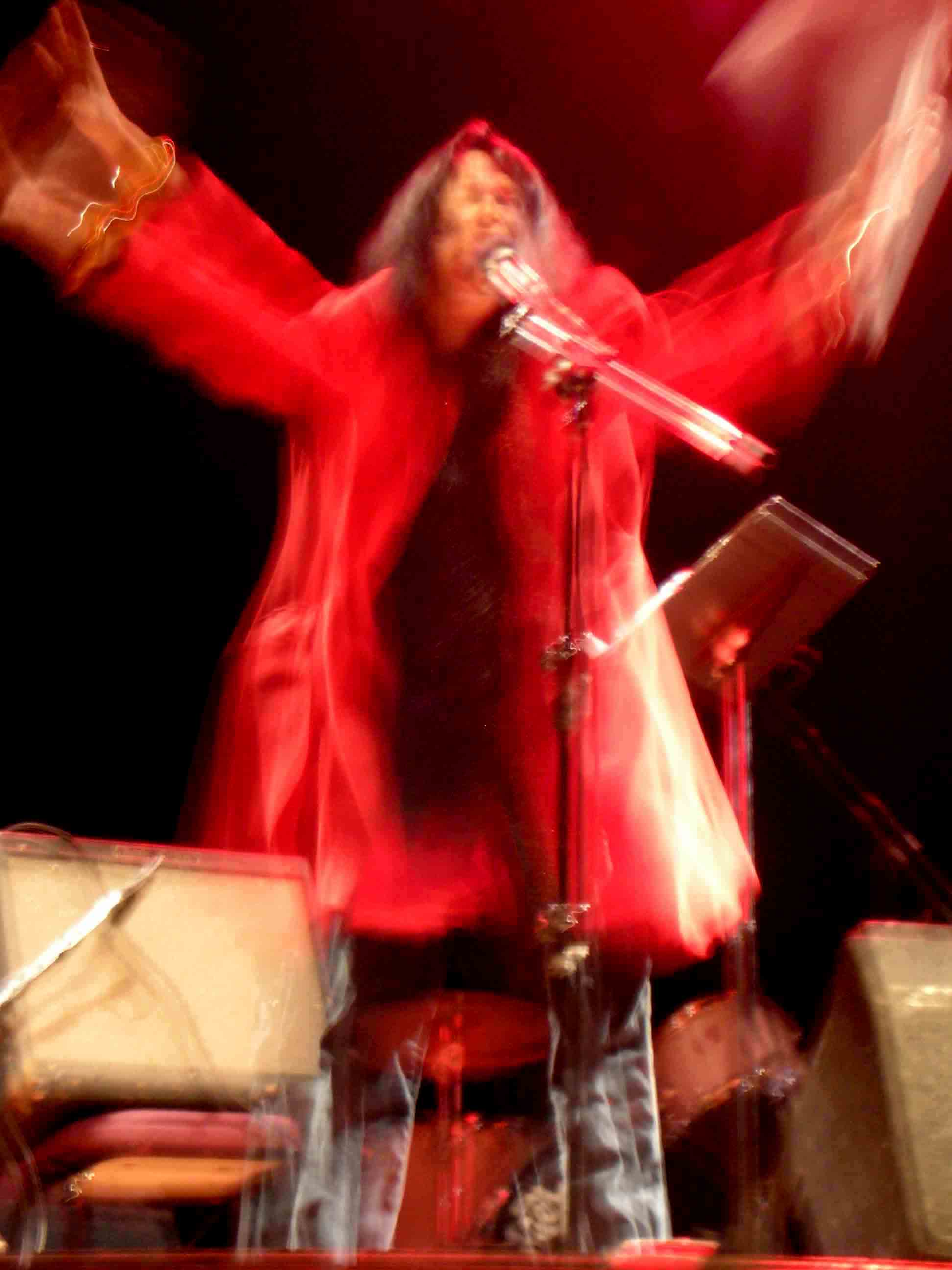
profiles in poetics: Maureen Alsop

maureen 2013 032Maureen Alsop

Website:

www.maureenalsop.com

www.alchemicalflamingo.blogspot.com

Constellatory impressions of self, need “[agents] for energy [shifts]” in relationships. Maureen Alsop is a poet who sifts through the “imprints, subtle accumulations of a personal, yet collective landscape.” She expresses, “The YOU I refer to is always multilayered. You, the stranger. You, my father. You, deceased. You, who go on living. I know you; you know me/ not. You are whispered of. You am I and I am you.” And here, the “fractal patterns in nature suggest,” interpersonal relationships “theoretically [as] institution [are] easily a miscarriage. Relationships are powerful”. We manifest self-reflections of choice motivated in life. This energy is an “act which, in consequence, forces a form of ‘self as installation.’  I am a walking, breathing relic of my departed tribe.” We are subtle accumulations; relics of our past, present, and transformative future tribes.

Maureen Alsop, Ph.D. is the author of, Mantic (Augury Books)Apparition Wren (Main Street Rag), and several chapbooks, most recently a blade of grass made bare by its own anatomy (Blue Hour Press)Luminal Equation in the collection Narwhal (Cannibal Press), the dream and the dream you spoke (Spire Press), and 12 Greatest Hits (Pudding House, pending). Additional chapbooks include Nightingale Habit (Finishing Line Press) and Origin of Stone. Maureen is an associate poetry editor for the online journal Poemeleon and Inlandia: A Literary Journal. She presently leads a creative writing workshop for the Inlandia Institute, the Riverside Art Museum, and The Rooster Moans.

.

ALSOP WQ-page-001 (1)

.

.

1.)      What were the first inspirations that made you desire to become a writer? Who are your favorite writers and how did they change over time? 

I don’t think I desired to be a writer; I sort of couldn’t help it.  Favorite writers have not changed for me. I still love and return to D.H. Lawrence, Katherine Porter, Tennessee Williams, Ernest Hemmingway, T.S. Eliot, Larry Levis, and many other writers. I also like reading random sources for ideas, books on symbolism; the Bible (though I’m hardly religious) is a great source text. There are some beautiful poems and language in those testaments.

2.)    Who have been the creative inspiration / mentor writers in your career?  Too many to name…

3.)      How has your own work changed over time and why?  I used to obsess on narrative aspects of poetry. I think this was because I was keenly aware that I was a “closet anti-narrative anarchist.” I still believe that poetry is often sacrificed to fiction. Eventually I figured out how to wed my antithesis.  I worked at that to some satisfaction (narration).  It’s like learning a technique. Not that I’ve mastered narration, but I understand it’s mechanics well enough, respect the human tendency for story, and appreciate my own way of thinking. Now I can allow the structure of my poems to fall away just enough to see where my poem’s scaffolding supports it’s own rawness.
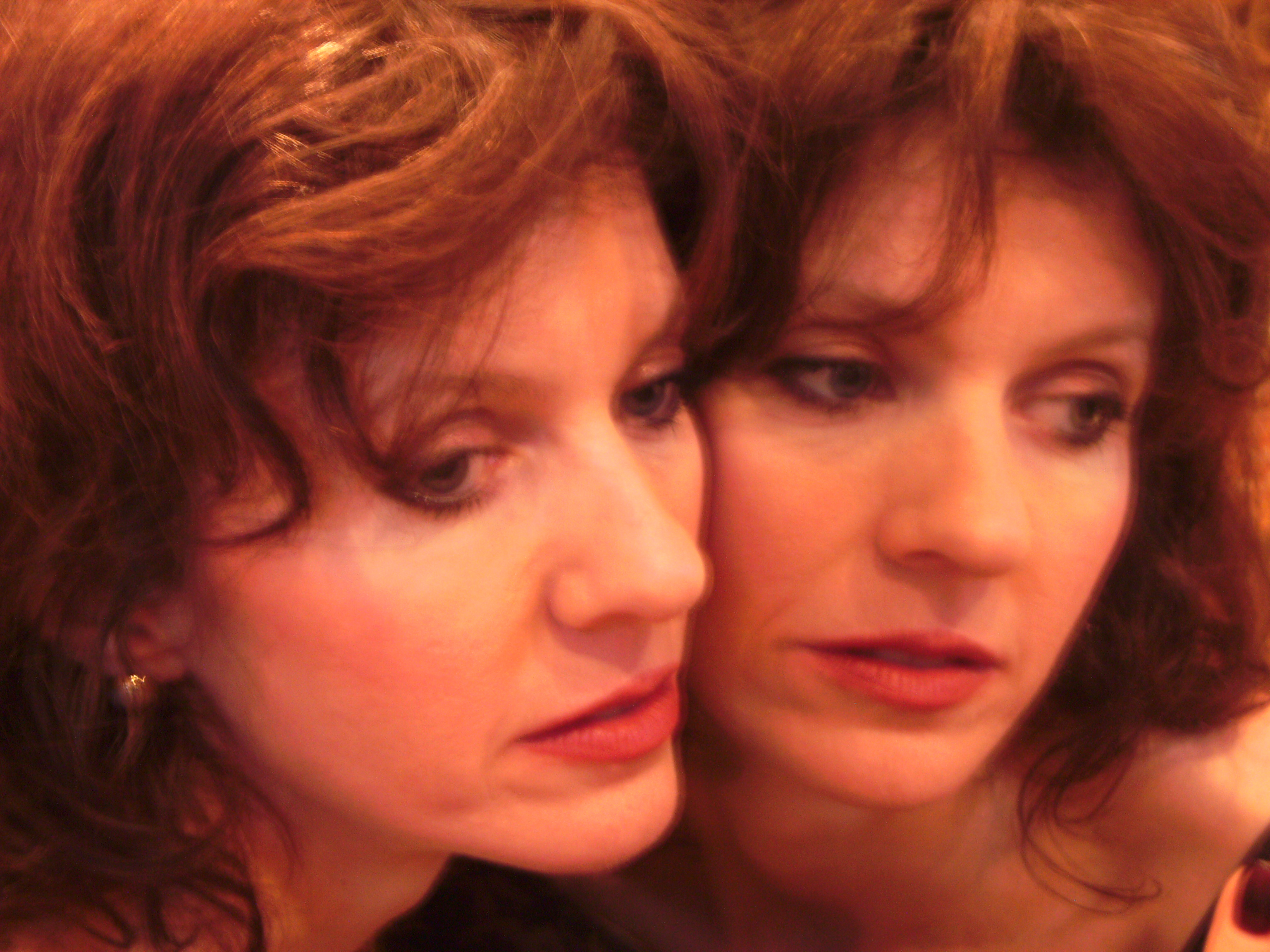
DIGITAL CAMERA

4.)      Have you been influenced by different genres, and if so how? I’m highly visual. So visual imagery whether it’s a physical landscape I am standing in, a film, a painting, these effect my psyche and shift my approach to language by inexplicable means.  I remember experiencing some “writer’s block” (which I don’t really believe in) a few summers ago so I decided to watch every Ingmar Bergman film I could lay my hands on as a source to write from.  Very little writing trickled out, but recently I shared a poem with a friend and she felt that the poem was a reflection of Bergman’s Persona.  The association shocked me.  I believe in the power of the subconscious.  Let your subconscious do the work and shut the thinking brain off.   Be ready to write, always.   I also have a steady awe for physicality. Getting into myself physically and also ‘getting out of the way of myself’ is a revelatory prowess.  Physical practices: breath-work, bodywork, meditation are increasingly as important to me as my writing.

5.)      What are your plans for the future?  I’ve heard the phrase, “if you want fear, create a future.”  In this transitional era, I’ve started to create a few projections—mostly finger-puppet shadows on a blank tableau.  My intimations rework themselves without reference.  Hawk’s flight-patterns frequently crowd my evenings.

6.)      What are your views on writing by women as it has occurred in the past twenty years?

The New Yorker article indicating that women writers are less likely to be published than their male counterparts was extremely discouraging.  Yet in our country, probably more than any other, we have more writers than we’ve ever had.    I’m not sure really what to make of technological changes and trends. Movements are vast and rapid. Opportunities create optimism—our culture seems to promote both of these qualities in equal balance.  Poetry circles have small drains in which to swirl/channel.  I guess my view would be “do what you want to do, work at it, expect nothing, try to enjoy the process.”  I don’t see any other choice or barrier beyond one’s own determination to grow.  Maybe I’ll adapt a masculine pseudonym and watch my readership multiple (joke).

7.)      Who are promising women writers to look at in the future?  Hillary Gravendyk, Sarah Maclay, Amy Schroder, Elena Karina Byrne, Farrah Field, Bethany Ides (performer/artist), Louise Mathias, Carolyn Guinzio, Nicelle Davis, Lily Brown, Bronwyn Tate, Julia Cohen… there are many

8.)      If you were asked to create a flexible label of yourself as a writer, what would it be? Anyone who writes poetry probably lives in an atypical reality; one’s imagination, self-possession, the requiescat ability to filter environmental influences, these are potent manifest allies. Call me crazy; call me Ishmael.

9.)      The poem “Thumomancy” is titled and speaks to the divination to be inspired, not by God, but of soul. In corporeal form we are asked how the body is an immortal essence of self, foreseeing future events.  We reevaluate the connection of body and passing, not from love, but humanity. A squirrel is majestic “constructing snow angels, turning your palms/ skyward, but the gesture/ of your hands were not holy. Tonight the oncoming/ boxcar whistles your unfolding.” Instead of an ideal future utopia the speaker gravitate to a past “you” in the form of a squirrel. Not the most flattering of flittering animals. Here “night has given me an addiction,” an “accident without origin.” An “unfolding” occurs within the soul as it collides with the collapse and ultimate death of the squirrel. Please extend these notions of the unfolding as they occur both in the death of the body of “you” and of the soul. Is the connection to the “other” through death? And if so, why is this poem in the middle of the book?

Well, as much as I have empathy for a squirrel, the little critter was an incidental sideline for the poem, not meant as the sole focal point.  Though I am intrigued that the poem may be interpreted that way, and honor that interpretation so let me consider the squirrel… where s/he came from and what s/he means.  I do remember one summer in Canada (we had a cottage on Lake Huron we visited annually) that a squirrel shimmed down the chimney, where he became trapped and died.  Not a joyous occasion for my parents for sure. I felt that critter’s desperation, imagined myself trapped in the cottage, starving.  There were tons of squirrels where I grew up. I could spend hours observing. I remember a painting I created of a squirrel that I was very proud of as a kid. When I moved to Australia, then California, there were no to very few such creatures. They are not my favorite animals necessarily, I’m not a big rodent fan, but I do love animals, so see them as a cousin.

Absence’s force unfolds, as you say, by multitudes. In relation to the poem, based on a divination by the means of one’s own soul, obviously there are some childhood references lurking.  The beginning of life on the planet, the understanding of the means for being alive, the illumination of joy and it’s undercarriage/partner, sorrow.  Creating snow angels.  The sound of a distant train.  A dead squirrel.  These are all imprints, subtle accumulations of a personal, yet collective landscape. Soul, transgression’s agent for energy’s shift, seems a central preoccupation, thus a centerpiece poem.

The YOU I refer to is always multilayered. You, the stranger. You, my father. You, deceased. You, who go on living. I know you; you know me/ not. You are whispered of. You am I and I am you.

10.)   “Epithalamium” is a poem where God is a coughing song embedded into the logos of a young girl. She awaits passively her confinement as she digests the language of His omission. The Epithalamium is a traditional Greek song in praise of a bride and groom on the way to their marital chamber.  But the poem has a conflicting sentiment. “The small girl never looks up” as she wants to “kiss someone familiar,” instead “[staring] at a diagonal / scar down the wall,” staring just long enough to see Him. God is a hierarchical king in this ideology overpowering the girl without redemption. Traditional marriage here has no redemption. Does this reflect in your opinion our current marital conversations and how do you believe this logos and song needs to change to empower the partnership?

I love being married, but theoretically marriage as institution is easily a miscarriage. Relationships are powerful.  However all these relationships and structures we develop are self-reflections.  I do think marriage can be redeeming. In this poem, the speaker comes to terms with her marriage to life, which is also her marriage to death.  It’s not exactly a poem one would hear at a traditional wedding, though I like to imagine that (a wedding in which everyone wears black, funerary right?…).   The postulate is the question of death rather than marriage. People have a natural fear of death, which in itself is quite natural. The poem is an understanding, a marriage to death; this partnership is not exclusive. Intimate, yes.  A profound, awakening? No. Probably equivalent to any other event (even as simple as flossing one’s teeth) signifying we are alive, small epiphanies; the light we cannot hide from is the same.

11.)   Death and memory essence in “The Arrival of Memory”. The “soul inside soul wants to talk,” “later this fall will know you were not alive,” and a “voice that won’t drift keeps naming the water a blue afternoon.” In “Necromancy,” (a divination of one speaking to the dead) we read, “what finds you again is you,” “who find love in secret will not know the tremble of the body,” and “your hair will be filled with kisses, larkspur, birdseed. A crown of bees fill the mirror.” Can you please discuss this interlocution with the past, how the soul connects to memory, and where presence and clarity enrich the conversation?

If the soul exists it is transcendent.  If we consider soul as life force, what transcends is our ancestral lineage through the mechanism of the body.  Our DNA is as delicately positioned for survival, as it is destruction/ completion. Fractal patterns in nature suggest an end to any continuum.  The imprint of this poem, as with many of the poems in the collection, Mantic, involved a repositioning of awareness into my father’s psyche. He passed away when I was seventeen, but his life (and unexpected death) resonates in my every fiber.  Many of the poems were also written as my mom began to decline.  She too has recently passed away.  What remains is my animalistic longing to embody their energy; an act which, in consequence, forces a form of “self as installation.”  I am a walking, breathing relic of my departed tribe.

profiles in poetics and linguistics: Kristen E. Nelson

websites:

http://www.kristenenelson.com

www.casalibre.org

http://unthinkablecreatures.tumblr.com/

Kristen Nelson is a writer who bends, grinds, lavish in the poignancy of blown glass, language in camber and body. We saturate the ways in which form in the syntax of space is able to emote, to breathe, to entangle us, and create physical properties of the body she writes back onto the page. Investigating, “conversations about and awareness of how women are encouraged to modify their bodies in order to achieve ideals of beauty.” Sound, she names, “feral,” has properties written into bones, body, in times of closeness to another, and in times of solitude.

But it is not the body that is alone in the liminal space of self, of excavation, rather, it is how the self interacts in conversations with “other”. Intimacy in times of love, grief, and joy, invite collaboration that extends beyond creation, out of sharing the unknown. The conversation she says, is intimate, a “moment between one. The intent … to represent the ability of the speaker to love herself and maintain her independence.” Leading us to question the interiors of our attachments.

Nelson is a cross-genre writer who believes that “writing by women in the past twenty years has taught us all to be brave.” And, she says, “when I drink whiskey I think I’m a unicorn.”

Kristen was born and grew up in Mount Vernon, New York 20 minutes north of Manhattan. She earned a BA in English with minors in Marine Science and Biology from the University of Tampa in 2000. She worked for The Village Voice in New York City, The Weekly Planet in Tampa, and for two years as a full-time staff reporter for the Rivertowns Enterprise in Hastings, New York. She was a freelance reporter for various newspapers and magazines for four years until relocating to Tucson in April 2003. Kristen worked as an editor of the The Institute of the Environment at The University of Arizona from 2003–2009. In May 2009, she left her job at the university to run Casa Libre full-time and pursue her MFA.

1.)    What were the first inspirations that made you desire to become a writer? Who are your favorite writers and how did they change over time?

I do not remember my earliest inspiration to write. It was always there with me. I know my first journal dates back to when I was 10. Before that, when I was 7, I wrote my first short story. It was called “Linda and Her Unicorn” and my great-aunt Vera kept it framed in her house. The year before Aunt Vera died, she gave it back to me along with my great-grandmother’s dowry linens, and her wedding silver. It felt precious in its black frame with shifting glass next to these items. I remember typing the story on my mother’s typewriter and the frustration of my fingers pecking along at a jumbled up alphabet.

In college at the University of Tampa, after 2.5 years of a biology degree—vertebrate zoology, invertebrate zoology, genetics, organic chemistry, parasitology, etc.—I finally had the nerve to switch majors and pursue what I really loved. I had this mantra floating around in my head at the time: Every blade of grass tells a story. I still don’t know what it means. Not really. But that mantra and a college mentor encouraged me to follow my passion.

My favorite writers when I first began studying literature were JD Salinger, Hemingway, and Shakespeare. In the last 15 years, I’ve switched to reading more and more female writers. Carole Maso, Janette Winterston, Anne Carson, Rebecca Brown. Most recently I’ve been obsessed with Lydia Yuknavitch’s The Chronology of Water. I also read everything that Kate Greenstreet, Selah Saterstrom, and Kristi Maxwell publish. I love Roland Barthes and Jenny Boully. Mine is a muddled mixed-up group of inspiration.

2.)    Who have been the creative inspiration / mentor writers in your career?

My college mentor was Doctor Andy Solomon. I was also extremely frustrated and inspired to think by Don Morrill. For ten years, I found inspiration and mentorship from my peers including Julia Gordon, Julianna Spallholz, Kristi Maxwell, Elizabeth Frankie Rollins, and Selah Saterstrom. I took 10 years off of school to found a non-profit literary center, and finally found my way to grad school a few years ago. I was blessed to study with Bhanu Kapil and Rebecca Brown. Rebecca threw me in the dirt and taught me to ground. Bhanu taught me to float in the sky. Between the two, my work has found the tension it needed, tethered between dirt and sky. I also think that writers have the divine gift of being mentored by other people’s writing without having worked alongside or below a person. One of the most influential books I’ve ever read is Carol Maso’s collection of essays Break Every Rule. It was her conversations on the feminine and queer aesthetic that rocked my world—gave me permission to write outside the lines. I also fell deeply in love with Rumi about 5 years ago. He has been the only person to describe a concept of God to me that makes sense—a spirituality that I can get behind.

3.)    How has your own work changed over time and why?

I always thought I would be a prose writer when I grew up, but my sentences kept getting shorter and shorter. Then they became much more concerned with the lyric, sound quality, rhythm, and meter. I have become more interested in the liminal space between poetry and prose—combining tools from both genres. My work has also been more influenced by loss, grief, and the body as my life has become more concerned with these topics.

4.)    What are your plans for the future?

I am working on a multi-genre art project called Experiments on my Body. Experiments will promote conversations about and awareness of how women are encouraged to modify their bodies in order to achieve ideals of beauty as dictated by society and the media. The project begins with “care packages” sent to female artists. Each package contains a photograph of my body, a letter discussing my memories and engaging the individual artist with details of their own art projects, and objects relating to one or more of four categories: pain, hair, weight, and make-up. The intention of the categories is to define pervasive, accessible, and socially acceptable body modification—tattoos and weight loss versus scarification and breast augmentation. For example, a package may contain a close-up photograph of an un-waxed bikini line, a letter describing a first experience of getting a bikini wax, and objects such as fashion magazine clippings, wax strips, and a tarot card which relates to the theme discussed in the package. The packages are designed to prompt conversations between artists on how women are expected to modify their bodies in order to achieve “beautiful.” Each package also includes an artistic statement introducing the project and inviting a response. This project will culminate in performances in the home cities of participating artists and in a web archive of work generated during the correspondence—writing, fine art, photography, video, music, movement, etc. The website will be open to submissions to add to this original archive.

I am also working on a new poetic manuscript, but for the first time, I’m not sharing any of the work in it, until it is complete. Another experiment.

5.)    What are your views on writing by women as it has occurred in the past twenty years?

I think writing by women in the past twenty years has taught us all to be brave. These women have come up against the towering white male wall of the cannon and rather than try to scale it, they’ve gone off in a different direction. They’ve stretched and manipulated genre, given credibility to writing about pain, language, and the body, and have continued to be brilliant, thoughtful theorists.

6.)    Who are promising women writers to look at in the future?

I would recommend that everyone keep an eye out for Kristen Stone and Liz Latty. these two women are tearing it up and they have only just begun. Also, Tucson is a bursting with female literary talent—including Elizabeth Frankie Rollins, Julia Gordon, Kristi Maxwell, Lisa O’Neill, Annie Guthrie, Dot Devota, and so many others.

7.)    If you were asked to create a flexible label of yourself as a writer, what would it be?

I mostly identify as a cross-genre writer, but when I drink whiskey I think I’m a unicorn.

8.)    In your chapbook, Ghosty, published by Drunken Boat, I would like to focus on your use of form and image. The beginning sequences are similar in form. The speaker is italicized, followed by a prose style that informs the dialogue. But as we move further into the piece, the form assumes the style of a picture book. Fitting for the content, we meet “Ghosty,” [Dad] and learn about his death. The writing mimics memoir / short story form and we read about the further displacement of the original speaker. Can you describe your decision to introduce image into the piece further fictionalizing the memoir nature of the work and how you believe this affects the experience of the reader?

[“Ghosty” is not a chapbook. It is a series of text-image pieces that were originally published in Drunken Boat, and were then published in my chapbook Write, Dad (Unthinkable Creatures, 2012). ]

The writing and collaboration that happened between Noah Saterstrom (Ghosty’s illustrator) and I was organic not planned. “Ghosty” is autobiographical. I was sitting in a cheap motel room in Scranton, Pennsylvania drinking vodka out of a ceramic mug. My sister and I had just made the decision to turn off the machines that were keeping my father’s brain-dead body alive. I called Noah, my friend and at-the-time roommate. Noah sketched those drawings while I was manically telling him stories of my experience there. When I returned home to Tucson, he shared the drawings with me and they gave me immediate access to the writing of “Ghosty.” He sketched from my grief-laced stories. I wrote from those sketches. That was the process. “Ghosty” was birthed in the month after my father’s death from grief, friendship, and a need to understand what just happened. Then Deborah Poe accepted it for Drunken Boat and sent it off into the world. Christian Peet wrote a really beautiful review of “Ghosty” on the Tarpaulin Sky Blog. I think he understood the piece better than I did at the time. http://tsky-reviews.blogspot.com/2010/10/on-kristen-nelsons-and-noah-saterstroms.html

9.) “ix. Two Cups,” a poem of a larger sequence, The Length of this Gap, manifests a dialogue between the mind, the body, intimacy, and autonomy. The poem reads, “I have a body intellect much smarter than my brain, // My breasts know what temporary feels like,” proceeding, “If I had known that he was going, / I would have sacrificed too much to make him stay. // The men that go away that carried me in their wallets.” The speaker here acknowledges that the body encompasses an intelligence that seems to be in conflict with the mind. The rationality of the mind objectifies and alienates the self, surrendering an autonomy that is then consumed by the men in the relationship. “Othering” the body is a Western cultural staple. Can you discuss your intention using this specific lens to illuminate these frictions?

the length of this      gap in the entirety of the series, is attempting to measure grief—the distance between moments of joy. The gaping vastness that is mourning can feel unending. “Two Cups” is looking for some answers through body intellect. Our bodies have answers and truths stored. We can access these truths if we listen. If you read that line literally: “My breasts knows what temporary feels like” What I meant is that when my lover touches my breasts, I know if they intend to stick around or if this sexual experience will be fleeting. My body is better than my head or heart at interpreting the sincerity of other people. My head can be too clouded by hope, desire, and fear but my body knows.

10.) In the same sequence, the last poem, “xv. About this Big,” acts to describe love as a way to bring light and make visible the “existence” of something only seen by a lover. In this intimate, quiet, close encounter between two, “My love/ I dream                          you are writing me into / existence // Do not bring water / I wake to lilies                       their wild scent in big pink pushes spreading / shouting all of the heart wide open goofy dew // In this moment I am entirely alone.” We are alone. In the visibility of writing the self and lover in language we isolate ourselves in the process. Could you please address the logopoeia of this piece; writing, intimacy, autonomy, and the ways in which the body participates in this discussions?

This is an intimate moment between one. The intent of this piece is to represent the ability of the speaker to love herself and maintain her independence, confidence, and sense of joy, when the beloved is absent. I don’t think that love needs to be about losing yourself. When it works, love is a complement to an already full independent life. When I wrote this poem, I was in a relationship that taught me this truth.

Words are so much bigger than their letters and meanings. The aesthetic content of “lilies,” “pushes,” and “spreading,” for example, is filled with music—sounds that are stored in our bones and feral instinct. This poem is attempting to access the meanings of these words but also the interior attachment of the reader.

profiles in linguistics: Anne Waldman


Anne Waldman

Official Fast Speaking Music Website: http://www.wix.com/fastspeakingmusic/fsm

Naropa Summer Reading Program Website: http://www.naropa.edu/swp/

Website: http://en.wikipedia.org/wiki/Anne_Waldman

Anne Waldman is a woman who addresses the world with capacity, clarity, and intent. She feels the pain of our strands of linear patriarchal dissonance and seeks to resonate with a voice that confronts and at the same time challenges us to find magic, dream, and non-linear space outside of this constrictive definition. The feminine is embraced with a strength that encourages collaboration and breath. Waldman’s nurturing address is simultaneously flexible, vulnerable, and fierce.

Performance, body, connection to other and spirit unite in the work of Waldman’s art and poetry. She is many, including teacher, activist, scholar, performer, collaborator, mother, wife, woman; an artist that takes up space with intention. Her performances nurtures the body, music, breath, spirit, and inconsistency of language. When asked about her journey to our present, she tells me, “I feel I found my own way, that as a woman I was charged to re-invent the world.”

1.) Where are you from? What were the first inspirations that made you desire to become a writer?

New York City, although I was actually born in Millville New Jersey where I lived a few weeks before returning to Macdougal Street in Greenwich Village. My father was in Germany during the war and my mother went to give birth near his family.

First inspirations: the playfulness and montage of dream, the fragments of conversations, tesserae of information, trying to understand the “body politic” and the female, body at the same time. The orality of Greek drama and Shakespeare (I worked at the Stratford Poetry Festival in Connecticut as a teenager)

I was interested in expressing myself in poetry, in a different kind of magical language – which was an art honored in my family, given priority and respect…

2.) If you were asked to create a flexible label of yourself as a writer, what would it be? How has your own work changed over time and why?

I “poet” covers most of the ground which includes the sense of orality and performance but I am also an editor, a cultural activist, professor at the very fluid Kerouac School involved with “infra-structure poetics”.

Over time, I began to work on longer projects. Investigative projects that go deeper and deeper into my own psychic patterns of consciousness.

3.) Who, what, where, influenced you as a writer? In other words how did you arrive here as a writer?

A sense of being part of a continuum of writing- a community of writing through time was important. The classics, a sense of lineage……the work of Yeats, Wallace Stevens, the Romantics, Ezra Pound, H.D., Gertrude Stein… & the old  poetry- Chinese, Japanese sages. And the singing of  the India artist such as Shubalaksmi, the Egyptian Om Kalsoum. Opera (I listened to the Met broadcasts as a child). I was developing naturally as a writer. It was not about “influence” It was shared concerns, empathy, curiosity. I was going in a lot of directions. It waa about adhesiveness, what is it you love or desire?

I think it’s more important to talk about the directions that were happening organically, not “influences.” We are not simply “tabula rasas” that come in to be influenced! And this model seems so academic. But some of my excellent teachers at Bennington: Howard Nemerov, Bernard Malamud, later back on St Mark’s places where I started working at the Poetry Project (in 1966) Ted Berrigan who was an active “first responder”, my mother Frances LeFevre Waldman, Edwin Denby. The heroes of the New American Poetry: Robert Duncan, Frank O’Hara…I had also met Dane diPrima when I was about 17 years old, seeing her “in situ” at the Albert Hotel with child, alchemical texts, Buddhist shrine was empowering…writers of my own generation- Bernadette Mayer, Alice Notley. But it wasn’t mentorship. I was very clearly finding my own way. Allen Ginsberg was an example of the generous rhizome- connecting up the world. I feel I found my own way, that as a woman I was charged to re-invent the world.

4.) You write that “the poem is a textured energy field or modal structure. The poems for performance seem to manifest as psychological states of mind. They come together in a mental, verbal, physical, and emotional form, making their particular demands on my voice and body. I am the ‘energumen’.” Do you believe that performance poetry needs to encompass different elements that accent the performance or is all poetry performance poetry?

This is a good question. Of course as we read poetry silently we are  also performing it in our heads. And many elements play in our minds, and you can actually also feel the language in your gut, your heart, your own intellect and imagination. It can traverse a lot of boundaries of experience. In a way how you read or present aloud can also do this, but you also want to be nuanced so that the participant- the audience person – can also be involved with their own relationship and individual response. You want to open that up rather than shut it down. I don’t think I would say all poetry is performance poetry. I also have trouble with that term” performance poetry” in any case as the ultimate defining term. It is not adequate to the task.  The root is “parfornir” to do something in front of an audience. But there are subtler issues of the way the language works in the public space, the gestalt of the whole “poet” person, the quality of the voice, the range. I never like these things “rehearsed”.

5.) You have been cited as saying that you believe performance poetry to be a “ritualized event in time”. Could you please expand on this idea of ritual and performance and how it has affected your work?

Work or writing  generally starts in private- the Ur-text as it were, or ur-ideas, and then it is re-actualized in performance in public space in  a particular time frame that has certain boundaries. But it actualizes the energy of the first spark. But the situation might also allow for improvisation. It’s not that there is a proscription for this- or an absolute theory that would indicate how to proceed. Ritual is “an act re-done” and it needs to be as potent as the first time to make the energy come alive.

6.) Lisa Jarnot says of your work that you are “possessed with a passion to witness, to understand, and to describe. For years she has inhabited a poetics of responsibility. Now the highlights of that journey are gathered together, revealing the luminous path that she has carved through the middle of the imperfect world. Vow to Poetry is a vow to life – enlightening, challenging, and crucial to the American tradition.”Can you describe what it means to you to have a poetics of responsibility? How has the development of your spirituality and cultural activism affected your poetry?

I think they are inseparable and inhabit my sense of the duty of the poet, especially in these dark times.

I think you are attentive to the pain of the world and that you hope through art and poetry you can relieve some of that suffering.

7.) I am interested in your perspective regarding the relationship between the melopoeia of language and music and how they overlap/support/emphasize each other in ways that would not be possible without collaboration.

The melopoeia is inherent in the poetry, so the possibilities for “sounding” already exist. And then one can take this forward. And of course collaboration, yes, opens the field, as with the “Cyborg on the Zattere” opera project with Steven Taylor. It has four singers, several musicians and readers. Everything is enhanced through the actual music.

8.) Can you further discuss the importance of collaboration and how this act impacts your own poetics?  What are your plans for the future?

It is hugely important, and I am interested in the mind and patternings of others in the work they do. I don’t formulate these kinds of acts. Every collaboration has its own vision and  shape. Whether it’s working with painter Pat Steir on piece entitled “Cry   Stall  Gaze” that the Brodsky Center at Rutgers is printing- beautifully I might add  – that will be presented as a scroll, or the work I do on my husband Ed Bowes’s movie scripts. Ambrose is very active in what he appreciates and wants in my work.

As for my plans, I am working on a “poundatorio” a mini-opera using the “knot” of Ezra Pound– his brilliant poetry & his difficult & offensive politics– with composer & musician Steven Taylor. A new CD with Ambrose Bye, my son, and we will be traveling to Montreal and Europe soon for performances.. A new writing project. Iovis- the 1,000 page hybrid is forthcoming this June, and that will lead to further travels. A new anthology from the Naropa archive.

9.) Who are promising women writers to look at in the future?

So many I encounter almost daily. Women around the Belladonna collective, women working through the Kerouac School at Naropa nexus, around the Poetry Project. Programs like New England College Low Residency MFA. I think community is important for younger women writers.