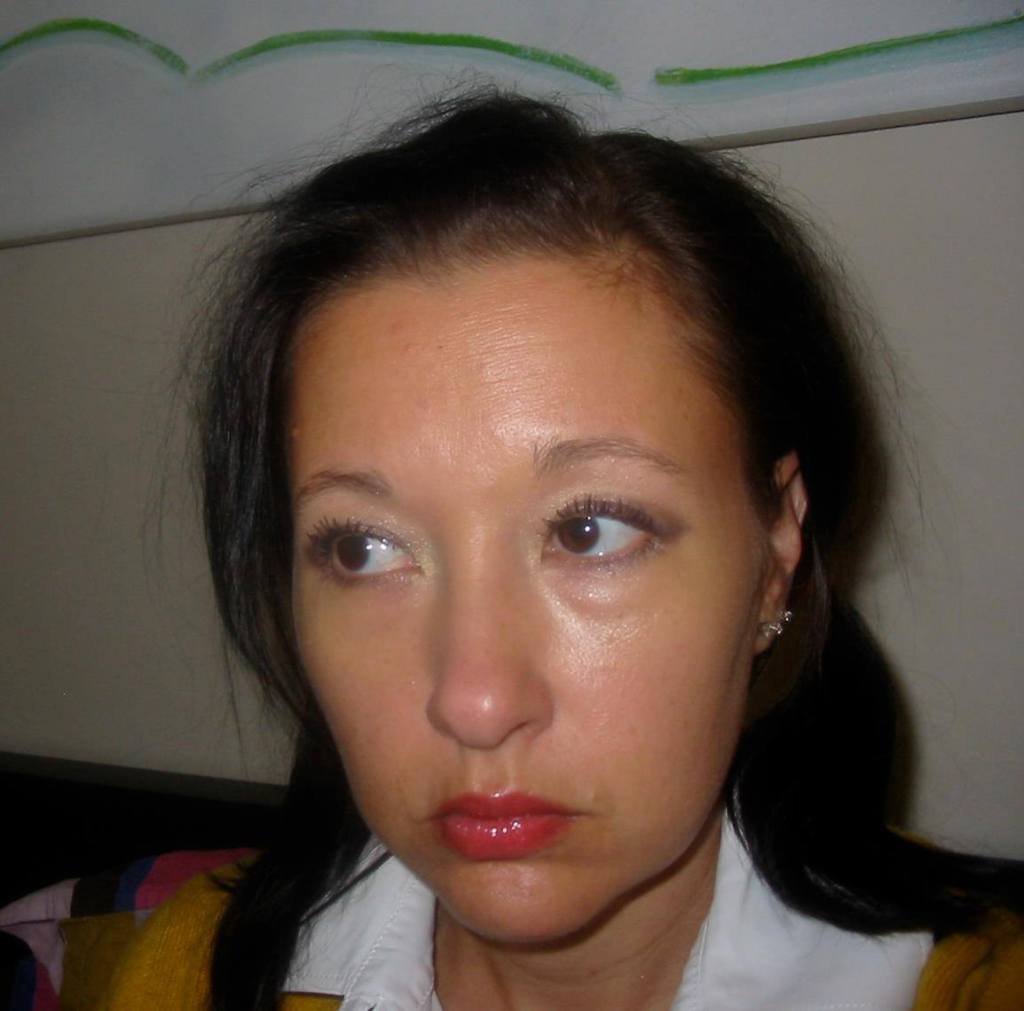
profiles in poetics: Erika Lutzner (II)

How does grief transpose from the personal to the private? How do we process the grief of a nation and at the same envelop the deepest private sorrow of our intimate life? How is the political interwoven in this narrative? Does the public and private share glasses or merely hold hands with their eyes turned downwards. Are we perhaps so much more intimately connected than we care to realize, picking out our fresh vegetables, looking for dimples. How is our grief connected and separate and how do we negotiate and process these necessary steps? 

In this second interview, Erika Lutzner shares her book, While Everything Slipped Away, published by Calypso Editions, 2016. The book straddles the public private spheres of bereavement in the experience of losing her husband in the 911 rescue attempts. In Erika’s words, these poems which began out of the surrealist necessity of grief, love, and elegies, “told her what to do”. And furthermore, in this transformation, she says, “I let go of so much to write the poems and when they formed a book, I felt a huge release. They became part of the world.” 

These poems are filled with political insight, beauty and horror, mind body juxtaposition, and a deep yearning that is cut with honest gratitude and reflection. There is a music in all of her lines that leaves the carved space of a loved one. And at the same time this is a space filled with memories of saturated wholeness. An attempt to share the intimate love that although all at once lost, also became shared.

Erika Lutzner has written one book, While Everything Slipped Away From Me (Calypso Editions) and five chapbooks; four with dancing girl press and one with Kattywompus Press. Her work can also be found in journals such as Jet Fuel Review and Harpy Hybrid.  She is the publisher of Scapegoat Review, an online journal. She grew up in Garrett Park MD, next to Porcupine Woods and behind the train tracks. She is a former violinist and chef and loves cats.

https://www.scapegoatreview.org/

  • What were the first inspirations that made you desire to become a writer?

When my husband died, I started keeping a journal. I thought I was journaling, but my mother said that I was writing poems. I stopped, took a look and realized I could write poems. And it helped me so much with my grief to write about what was happening to me. I feel tongue tied much of the time and writing helps me to ‘speak’. I was told I was inarticulate as a child and writing made me coherent.  I could say the things I needed to say. 

  • Who have been mentor writers in your career?

Ilya Kaminsky, Paul Celan, Yusef Komunyakaa, Nin Andrews, Shel Silverstein, Carson McCullers, Anne Sexton, Maurice Sendak and so so many others. For me, whether I meet a writer or if he/she is alive doesn’t matter. I take so much from their writing. The exception being Ilya Kaminsky. I learned an immense amount from working with him. He taught me a different way of thinking about writing, thinking, and poetry.

  • How has your own work changed over time and why?

I have started writing centos and that is a whole new genre for me. I started writing them because I had so many lines of poems I loved saved up and I was having trouble being creative. It gave me a new outlet for creativity. I am a musical writer but over time, I have learned not to rhyme, although I throw them in from time to time. I am writing more surreal poetry and also writing about new subjects but always with a dark edge.

  • Have you been influenced by different genres, and if so how?

I would say that tragedy and horror have influenced me quite a bit. I like to write things that are full of horror at the same time as being haunting and have beauty in them. Music is a huge influence on me. When I wrote this book, I listened to jazz, especially Miles Davis while I wrote so that has also impacted my writing. I love humor but I can only get it into my writing infrequently. I wish I could more.  I’ve been asked to write love poems but except for the book on Jon, which I consider a love story, I have a lot of trouble writing them.

  • What are your plans for the future?

I would love to write more political poetry. And definitely more centos. I don’t know if I have another book in me, but definitely a few chapbooks.

  • What are your views on writing by women as it has occurred in the past twenty years?

Everyday women writers are becoming more prolific. Their voices are growing. There are so many strong women writers. So many more than in the past. Their voices are finally being heard.

  • Who are promising women writers to look at in the future?

Dianne Seuss and Diannely Antigua are two brilliant women writers.

  • If you were asked to create a flexible label of yourself as a writer, what would it be?

I write juxtaposing beauty and horror. I write about what I know; death and evocative imaging; bitter truth. 

  • In While Everything Slipped Away, we are faced with the destitute field and aftermath of 911 both literally and psychologically. Your husband was a computer programmer killed in the rescue attempts. For you then, 911 was both public and private. In this question I would like for you to focus on the private and how this was negotiated, one of which is detachment. We read, “Regret is the color of blood – the color of blood splattered.” (16) And “my left eye is / somewhere on Main Street or maybe it’s / still in the mulberry stained cup.” (29) Spiraling into, “They amputated your thighs from my hips.” (36) Was there a difference between writing it all down on the page and later constructing, editing, and crafting each poem? What was your writing process and did you experience any enlightenment through these acts of radical examination and self-discovery?

I was so raw when I wrote these poems that I didn’t think about public vs private. A lot of the poems are surreal. That was a form of detachment. I had to do it in order to keep sane. I don’t know that I really had a process other than spewing out all that was in my cluttered mind. I definitely had some form of enlightenment. Writing the worst things you possibly can, it brings truth forward. I was faced with my worst fears, and I survived. I discovered I was a lot stronger than I knew. I didn’t know any other way than to write what was in my mind. It was therapeutic.

In my process, I just wrote without thinking about the outcome. I couldn’t think about it considering the topic. I wrote about grief as a way to get it out of my system as a way to grieve. It ended up being very public but that wasn’t my intention. If I had thought about the very public aspect, I probably could not have written it at all. After he died, I kept to myself and only talked to a couple of people about his death. I was extremely private in my grief until I wasn’t.

  • It is impossible not to address the political as well as the personal in your book. As well as the micro and at the same time macro all-encompassing entrapment of this occasion. At one point we read, “This country is run by a man who sends men and women to war over oil // America needs more sugar in her diet. / my husband dies in 2001 // The President says: “The Middle East is responsible” (23). How were you able to address the political messaging? What was the function by including it in your work? Did you learn anything from these actions of resistance in the visibility and sharing of your experience? Has the self-reflection of these issues changed over time and how do you feel about poetry being political?

I wasn’t thinking about private vs public at the time. I was vomiting out thoughts. I was writing love letters to Jon. Later, it became more difficult when everyone ‘celebrated’ 9/11. I had and still do have a difficult time with that. Because it is such a private thing for me. But at the time when I was writing, I just kept writing everything that was in my mind. Some people really related to my poems which made the visibility worth it to me.

I don’t believe in war. I used to believe in capital punishment until Jon died. Then I stopped believing because it would never bring him back and would just be more murder. I wanted horrible things to happen to Bin Laden though. Didn’t make sense in my mind. I put a lot of blame on him. I didn’t believe in God when Jon died. Now I have become spiritual because I feel there must be something more, something else. There definitely was a bigger picture in terms of what happens to us when we die. I thought all politicians were horrible people. That the WTC could be bombed before and we did nothing to catch the criminals and then 3000 people died. It was overwhelming to me. As for Trump, like I said he didn’t have anything to do with it but I would say today he reminds me of Hitler and we are letting this happen with him. It astounds me and saddens me and creates a lot of fear in me.

  • In While Everything Slipped Away, intimacy and death hold an interchangeable exchange in the 911 movements of sorrow. Grocery Shopping, is “More intimate than sex / I do it with everyone / Harder to choose the perfect peach / Then to give a good blow job.” (48) This gives insight into how you were forced to face the public and private sphere of the towers and your love sacrificed in its destruction. All the while in an attempt to protect the public. You remind us that the emotional and innovative value we feel in our lives must be centered in physical reality. And, that intimacy and grief is indeed a public as much as private act. You write, “tell me how to capture sadness.” (51) How were you able to revolutionize your own will, without allowing it to dissolve your healing and spirit in such a public and private way? Can you speak more to this idea of your private grief and the public grief around you? Did your personal and public grief collide in any way? Were there different stages of writing and relating?

I actually felt better the more I wrote. I did not think of the private/public aspects very much when I was writing. I found writing to be cathartic. It allowed me to heal because I got out the horror of what was in my mind at the same time as writing about my love for Jon. I am actually a super private person but I don’t think I could have survived without writing this book. I just didn’t think about the public too much as I wrote. And in general, when I write, I tend not to think about the public. If I did, I would be stuck. I could not write. I had a really rough childhood, and I do write about it some. But because my parents are still alive, I do think about the effect it will have on them. It doesn’t stop me from writing, but it gives me cause. With this book, because I thought of it as a love letter, I didn’t have problems writing about Jon. I was so angry and sad and full of grief when I wrote it that I just said what was in my mind. And I wrote honestly because that is all I know how to do. When people ask me about poems at readings, I tend to get very tight lipped. I want the work to speak for itself. I don’t want to share my private self with the audience except through my writing. There, I will bare it all.

The editing was very intentional. It was very different than the writing of the poems. Some poems I wrote in forms while others were free verse. The poem told me what to do. I wanted to have well rounded poems. I started out writing poems of grief and Ilya Kaminsky told me I was writing a book. Then he said that the poems were actually one long poem so I worked with that and cut up the poems. It was all intentional. There was a lot of musicality involved in the writing and splitting up of the poems.

When Ilya told me I was writing a book, the work went from private to public. I realized all the poems were interconnected and could become something more. I wrote a book of grief, love and elegies. Once they were part of the book, I felt they could enter the public and I could still maintain my privacy. I didn’t have to share more of myself than I wanted to. I let go of so much to write the poems and when they formed a book, I felt a huge release. They became part of the world.

BNI

profiles in poetics: Erika Lutzner

Erika Lutzner

Website: http://scapegoatreview.com/

http://upstairsaterikas.com/

How much does perception shift experience? The hue of ones colored glasses; in love, in depression, in triumph, in trauma. How much are we the semblance and extrication of simply how we are feeling? What part of our experience is visible and invisible? When we consider a girl removed from her home for abuse and neglect, how often do we stop and ask for her opinion? Do we step into the millionaire’s shoes on trial for shooting his wife? How much does our story incorporate the full spectrum of perspective? Erika Lutzner, whose book Invisible Girls, came out last month by Dancing Girl Press, is a poet copiously aware of the voice of “other”. The invisible and the visible, “show[ing] the tragedy of circumstance”. The arena of artist is a difficult place to be, she explains, “There’s an invisible line I can’t cross. How can I, as a writer, voice my opinion without objectifying these girls? Without doing the exact thing I am accusing the men in the poems of doing. I don’t know that I have an answer. It’s why I write.”

Consider the larger universal conversation and how invisibility perpetuates violence. The cyclical repetitious act of the inability to empathize, sympathize, or simply listen to “other” continues violence. Chaos feeds chaos. Lutzner explains, “we are repeating the same mistakes again and again; we are a huge machine never learning. Our mouth opens we take it in, repeat; spit and begin again.” Lutzner places us in both positions disassembling “other,” so that “By the end of the poem … the reader is no longer innocent. One can’t turn back.” She places awareness onto the responsibility of the reader questioning, “How often as a nation do we sit by and watch atrocities occur without saying anything? We know we should, we say we should, yet, we sit by and do nothing.  It happens everyday.” Lutzner asks us to quite simply wake up.

Erika Lutzner is the editor of Scapegoat Review. She curates Upstairs at Erika’s, a monthly writer’s salon in Williamsburg, Brooklyn.  She is currently working on an anthology on the topic of truth versus fiction in poetry and how the lines intersect which will be out this coming fall. She divides her time between NY and a tiny island in Maine.

1.)    What were the first inspirations that made you desire to become a writer? Who are your favorite writers and how did they change over time?

I was told I was inarticulate as a child, which led me to feel unable to speak. I felt invisible, and I turned to books as a means of escape. Anything seemed possible on the page. I would imagine myself as the characters in the books I was reading and they took me out of myself for a time.

I didn’t make a conscious decision to become a writer but I knew that I wanted a way out and that writing gave one opportunities (or so it seemed in my make believe world). Later, when a tragic event occurred in my life and I didn’t know how to deal with it, I had no way to cope.  Writing was the thing that kept me alive. I know that if I didn’t have writing, I wouldn’t be here now. Without writing, I couldn’t exist; it is as necessary as air.

As a child I loved Flannery O’Connor and Carson McCullers.  I also loved Aesop’s Fables and Grimm’s Fairytale’s. I used to read by flashlight under the covers in my bed. I read Anais Nin, Robert Pirsig, Anne Rice, Stephen King and Henry Miller (my mother’s bookshelf). It didn’t matter that I couldn’t understand what I read, I had to read. I stayed back in the second grade because of a problem learning to read, so when I finally could read, I read voraciously without regard to content.  I could tell you what I had read verbatim even though I didn’t understand it.

I still love O’Connor. I have always been drawn to the dark; it makes me feel safe. Some of my favorite writers now are Paul Celan, Aimee Bender, Rilke, Heather Lewis, Wislawa Szymborska, and César Vallejo. My go to writers are Roald Dahl and Raymond Carver; those who take me back to the everyday darkness I crave.

I look toward language as well as content these days.  As a child I was just looking for something to take me to another place. The work is always dark, always beautiful and always carries me away from myself; that hasn’t changed. I think what has changed is that now perhaps it’s a little more complicated although I am not sure about that. I tend toward visceral work now, but I did as a child as well.

2.)    Who have been the creative inspiration / mentor writers in your career?

Maurice Sendak was probably my first true inspiration. “Where The Wild Things Are” scared the daylights out of me but also fueled my desires. Shel Sileverstein too. “One Sister For Sale” and “Where The Sidewalk Ends” were such great poems. And “The Giving Tree” is still a favorite of mine. Sharon Olds was my first love. I didn’t really know about poetry before her. Her poems “True Love” and “Cambridge Elegy” got under my skin and never left. They speak of what love and death are really like. It took me years to find my voice, but in hers, I heard my own, and I would learn not to be afraid to use it.

Most of my mentors have been my books. They have taught me more than anyone. Yusef Komunyakaa, Paul Celan, Yehuda Amichai, to name a few. Thelonious Monk, Bill Evans, and of course, my number one inspiration, Jon my husband, most of my poems are about him. Without him, I would not be writing.

3.)    How has your own work changed over time and why?

When I started writing I was very musical and rhymed a lot. That was about it. I wasn’t contained at all. I was vomiting everything out. I had almost 35 years worth of poems in my head at that point. I needed to learn how to write in stanzas and how to control myself.

Now I still am musical, but I know how to use the music. I’ve always been a lean writer but I’ve become even more so. I use color and texture to say what I want to say; to build a landscape. I write poems about things other than my family and elegy now. There was a natural progression in my work because I finally got out what had been building up for so long. It had given birth, and I was free. I use prose a lot now that was something that was very freeing for me. I also speak through other voices which has helped my writing break open. I still write on the same subjects but in new ways.

4.)    Have you been influenced by different genres, and if so how?

I think I’ve been influenced by music without knowing it. I have to force myself not to rhyme. It comes so naturally to me. I played the violin as a child, and my instinct is to put music to words. I used to be a professional chef, and I had a cadence in my head. I dreamt of lamb chops and arpeggios. Many of my favorite writers are quite musical in their writing. I also have been deeply influenced by Shakespeare and elegiac writing as well as drama and satire.

5.)    What are your plans for the future?

I am editing a book about girls/women without voices who are trying to take back their power and I am working on a memoir. It’s a bit slow going as I’ve decided to do it in poetryesque form.  I also have a place on an island in Maine, and I would like to start having workshops there, but that is in the way off future!

6.)    What are your views on writing by women as it has occurred in the past twenty years?

Our voices are getting louder every day. We can and do write on everything. Nothing is forbidden. Sharon Olds was definitely one of the women at the forefront as well as women such as Ruth Stone and Dorianne Laux, they paved the way for us.

7.)    Who are promising women writers to look at in the future?

Nin Andrews, Simone Meunch, Dana Levin, Mary Jo Bang

8.)    If you were asked to create a flexible label of yourself as a writer, what would it be?

Dark, elegiac, bitterly honest, humorous and tender, but I hate to box myself in.

9.)    The language in Invisible Girls, published last month by Dancing Girl Press, pays close attention to flowery western ideals of femininity including “glittering,” beds made of “pink cotton candy”. In your poem, “Jorani’s Dream,” these sentiments wrap us in “luminous language,” distracting the reader as we wake up to the witness of “girls imprisoned in the rooms / next to mine”. Can you discuss the tension between our western ideals, invisibility, and the ways in which these cultural norms affect voice?

Western ideals and invisibility and the ways in which cultural norms affect voice, that’s a tall order!  “Jorani’s Dream” as with the other poems in the collection, is meant to highlight the flaws within our logic. I wanted to show the tragedy of circumstance.  I use language because that is my weapon; I learned early on it’s deadly when used correctly—thus the distractions of luminous language as you pointed out which leaves us with the terribly sad ending. This was a tricky book to write because of Western ideals juxtaposing cultural ideals and how it affects voice.  I wanted to at all times make sure that I didn’t overstep any boundaries. That’s something I think about all the time while writing. There’s an invisible line I can’t cross. How can I, as a writer, voice my opinion without objectifying these girls? Without doing the exact thing I am accusing the men in the poems of doing. I don’t know that I have an answer. It’s why I write.

10.) The poem, “God Is On Vacation, Refusing To Take Calls,” confronts sensationalized cyclical violence, particularly war and more specifically 9/11, and the ways in which love intimacy and the participation of the body are affected in this discourse. The poem reads, “Look / in the mirror of historical madness; we become / accomplices. The mad are sane, we are all / that remain. Intimacy swallowed by the infinite.” In this landscape the dead become mere “juicy hues” filling the streets. In your opinion, how does the invisibility of cyclical modes of violence affect our cultural lens particularly around the notions of intimacy “swallowed” in the “infinite”?

We are repeating the same mistakes again and again; we are a huge machine never learning. Our mouth opens we take it in, repeat; spit and begin again. Without learning the why and how, we will never change. We have war after war without acquiring change. It’s like with the Iraq War, Sadaam and Bush, who had the bigger balls? The answer is communication not murder. I don’t think people may agree with me, but it’s what I believe. Killing is not the answer. An eye for an eye and all the world goes blind. We are being swallowed up into the infinite never to surface filling the streets with juicy hues of murder. This is not the world I want to live in. Not the world my husband would want. Who is sane, who is mad? It’s hard to tell sometimes.

11.) “Cambodia,” presents the chilling feeling of a sepia print acquiescesing the reader to climb inside the frames of the poem and sit street side unnoticed. Here we watch young girls, “Sold for five dollars; given drugs to make them jump like monkeys in a cage.” Muted horror is dulled in the eyes of the girls repeatedly questioning the foreigners, “Mister, want some yum yum?” We find the narrator is listening, voicing both perspectives, and one’s own participation in the invisibility of the girls, ending, “I jump like a monkey”. Can you elaborate on the importance of this spherical conversation and how it evaluates and addresses our notions of “otherness”?

You touch on a good point. This is something that is in a lot of my work. In “Cambodia” the reader is asked to climb inside as you say, and does so willingly for whatever reason. Perhaps the curiosity or the horror? By the end of the poem however, the reader is no longer innocent. One can’t turn back.  How often as a nation do we sit by and watch atrocities occur without saying anything? We know we should, we say we should, yet, we sit by and do nothing.  It happens everyday.  We say we will the next time, or our neighbor will, or it’s not our problem.  And the cycle never ends. It’s not my daughter, it’s not my war, it’s not my oil, not my shame—“Cambodia” forces the reader to address these ideas because by becoming a willing participant, the reader is culpable now.  He/she has become the “Mister” in the poem.  The cyclical nature of “Cambodia” is really what the book itself and much of my work is about.  I write about invisibility and those without voices in all my work.  Those trying to capture their voice; trying not to be silenced any longer.